WCS (warehouse control system) software is a critical capability for modern warehouse and supply chain operations. You might be wondering how some warehouses manage to move thousands of units per hour with near-perfect accuracy while others struggle to keep up with daily orders. The answer often comes down to one piece of technology working behind the scenes: a wcs warehouse control system. Whether you’re evaluating WCS software for the first time, comparing WCS vs WMS platforms, or trying to understand how a WCS fits into your broader supply chain, this guide will walk you through what matters most. By the end, you’ll have a clear picture of how a warehouse control system transforms automated equipment into a coordinated, productive operation.
Logistics professionals face mounting pressure to fulfill orders faster, more accurately, and at lower cost. The equipment exists to do all of this, conveyors, sorters, robots, automated storage and retrieval systems, but without intelligent orchestration, that hardware sits idle or underperforms. That’s the gap WCS software was built to close, and it’s why this technology has become central to modern distribution.
What Is WCS Software and Why Does It Matter?
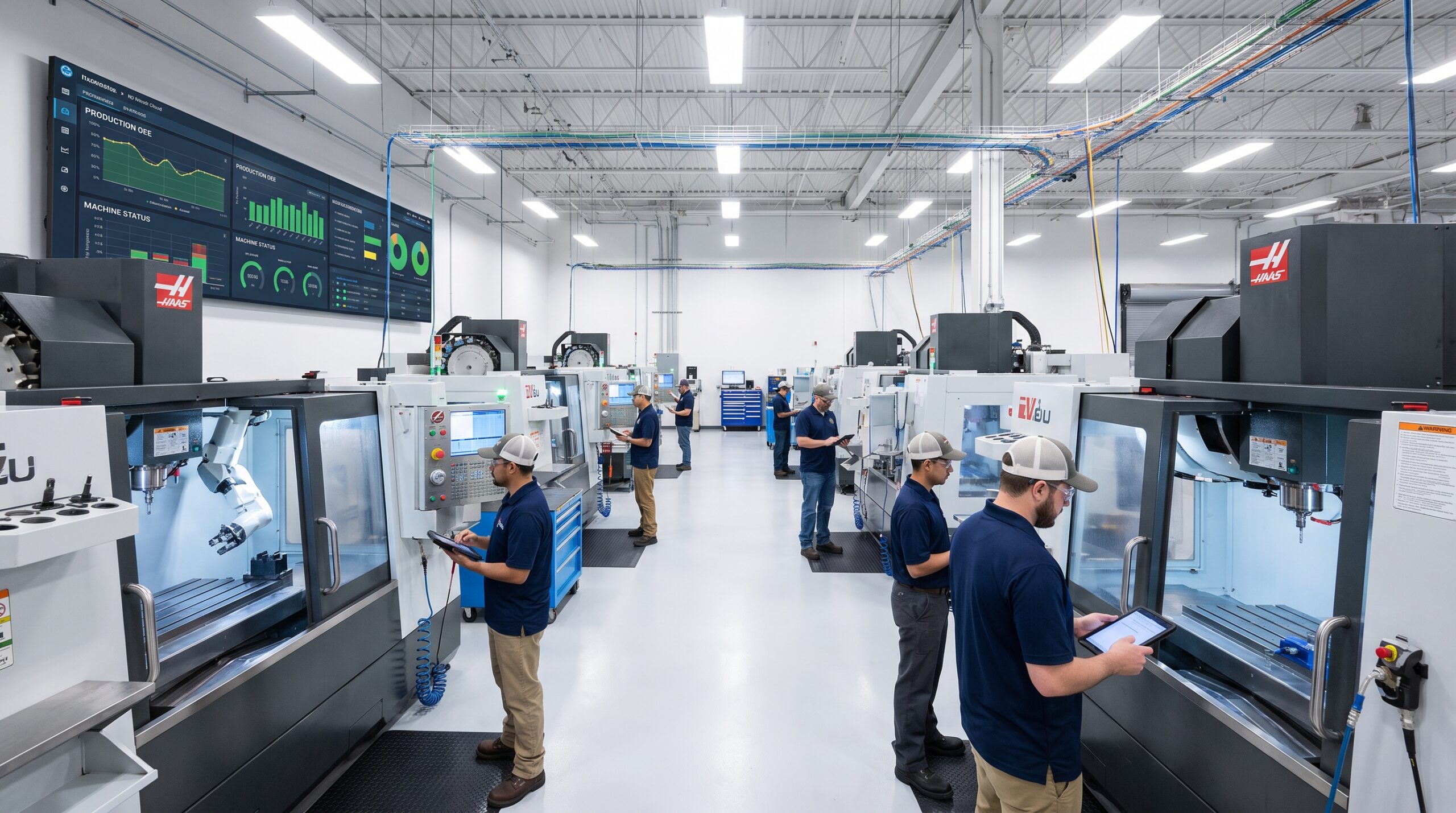
A Warehouse Control System (WCS) is the software layer that directs and coordinates automated material handling equipment inside a facility. Think of it as the conductor of an orchestra. The conveyors, sorters, palletizers, pick-to-light systems, and robotic pickers are the musicians. Each can do its job, but without coordination, you get noise rather than music. The WCS provides the timing, sequencing, and decision-making that turns individual machines into a working system.
Why does this matter for your operation? Because automation without orchestration produces inconsistent results. A conveyor running at full speed feeding a sorter that can’t keep up creates jams. A robotic picker waiting for instructions wastes valuable cycles. A pick-to-light wall lighting up the wrong locations leads to mispicks and customer complaints. The WCS prevents all of these problems by managing the real-time flow of work across every connected device.
What Problems Does a WCS Solve?
Before discussing features, it helps to look at the operational headaches a WCS addresses directly:
- Equipment idle time: Without a control layer, automation often waits for instructions or sits unused while other parts of the system are overloaded.
- Bottlenecks: Manual coordination between zones almost always produces uneven workloads. A WCS balances flow dynamically.
- Mispicks and routing errors: Hardware-only solutions lack the intelligence to verify that the right item went to the right destination.
- Lack of visibility: When something breaks down, operators need to know immediately. A WCS provides real-time status across the entire automation network.
- Scaling challenges: Adding new equipment without a control system means rebuilding integrations every time. WCS platforms are designed to absorb new hardware with less custom work.
The financial impact adds up quickly. Facilities running automation without proper control software typically see throughput well below their theoretical capacity, while well-orchestrated operations consistently approach their design limits.
Smarter Warehouse Management Starts Here
ASCTrac WMS delivers real-time visibility, automated workflows, and seamless ERP integration for warehouses of every size.
Request a Demo
How Does a WCS Warehouse Control System Actually Work?
A wcs warehouse control system operates at the equipment level, communicating directly with PLCs (programmable logic controllers), motor drives, scanners, scales, and other hardware. It receives high-level instructions, often from a Warehouse Management System (WMS) or host ERP, and translates those instructions into specific commands for each piece of equipment.
Here’s a simplified example of what happens when a single order moves through an automated facility:
- The WMS releases an order to be picked. It sends the WCS the list of SKUs, quantities, and the destination shipping lane.
- The WCS determines which automated zones contain those SKUs and sequences the pick instructions to optimize flow.
- As totes move through the system, the WCS tracks each one in real time using barcode scans, RFID reads, or weight checks.
- At each pick station, the WCS triggers pick-to-light displays, put walls, or robotic arms to retrieve the correct items.
- Once the order is complete, the WCS routes the tote to the correct shipping lane, palletizer, or staging area.
- Throughout the process, the WCS reports status, exceptions, and performance data back to the WMS and to operators on the floor.
All of this happens in milliseconds, often across hundreds of orders simultaneously. The control system makes thousands of routing decisions per minute based on current conditions: queue lengths, equipment availability, priority orders, and exception handling.
What Equipment Does a WCS Typically Control?
Modern wcs software solutions integrate with a wide range of automation, including:
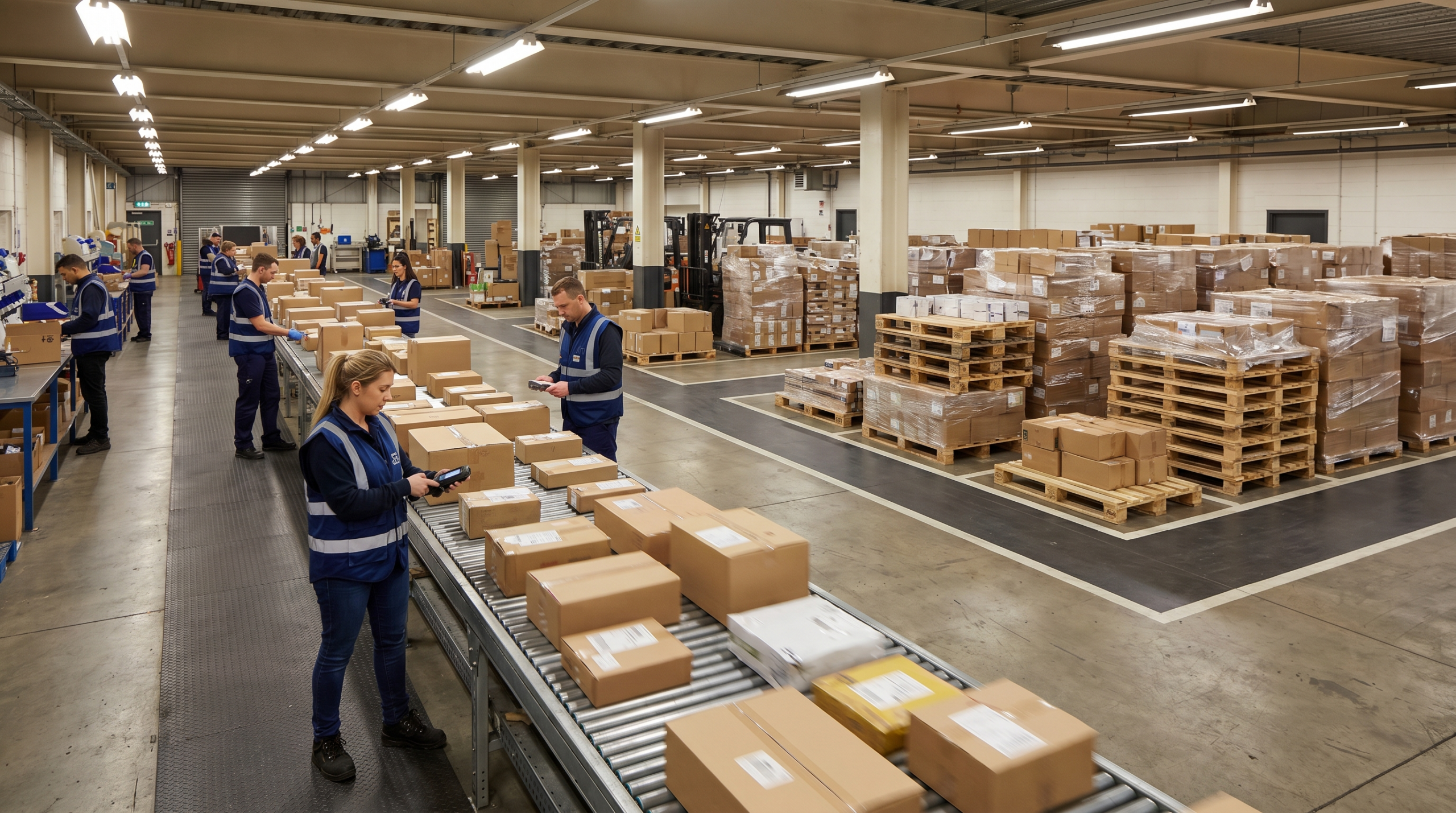
- Conveyor systems and sortation equipment
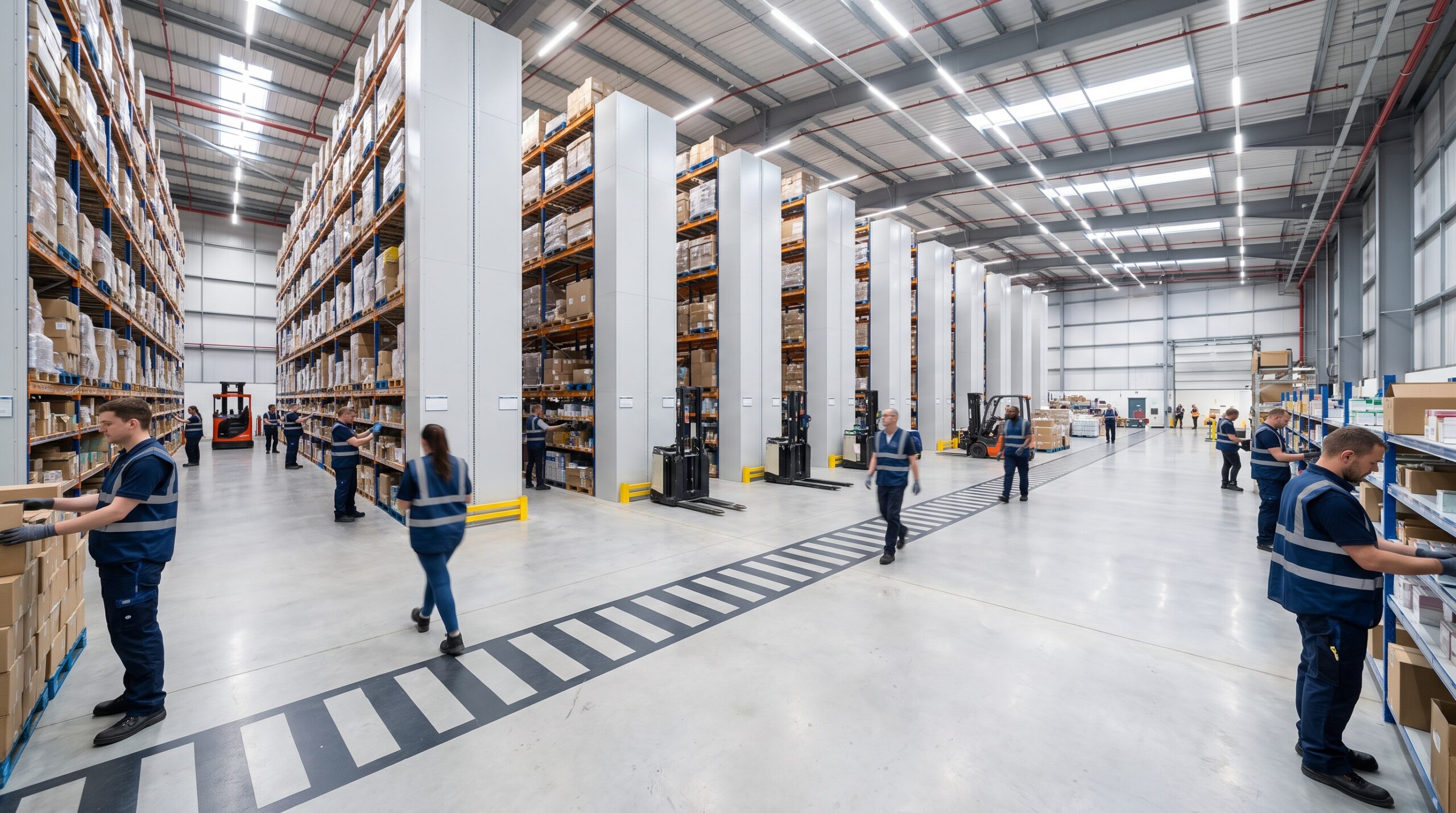
- Automated storage and retrieval systems (AS/RS)
- Pick-to-light and put-to-light systems
- Voice-directed picking technology
- Robotic pickers and autonomous mobile robots (AMRs)
- Print-and-apply labeling machines
- Carousels and vertical lift modules
- Palletizers and depalletizers
- Weight verification stations and dimensional scanners
The breadth of supported equipment is one reason a quality warehouse control system platform is worth the investment. Replacing or upgrading individual machines becomes far easier when the control layer abstracts the integration work.

WCS vs WMS: What’s the Real Difference?
This is one of the most common questions in warehouse technology discussions, and the answer matters because choosing the wrong system, or worse, assuming one can do the job of the other, leads to expensive mistakes. The wcs vs wms debate isn’t about which is better. They serve different functions, and most modern distribution operations need both.
What Does a WMS Do?
A Warehouse Management System manages the business logic of warehouse operations. It handles:
- Inventory tracking by location, lot, serial, and expiration
- Order management and wave planning
- Receiving and putaway logic
- Cycle counting and inventory accuracy
- Labor management and task assignment
- Shipping documentation and carrier integration
- Reporting and analytics on operational performance
The WMS answers questions like “What inventory do we have?”, “Where is it stored?”, “What orders need to ship today?”, and “Who should pick what next?” It’s the brain that decides what work needs to happen. For a deeper look at this layer, our overview of warehouse management software capabilities covers the topic in detail.
What Does a WCS Do?
A Warehouse Control System executes the physical movement of goods. It handles:
- Real-time equipment control and sequencing
- Routing decisions for totes, cartons, and pallets
- Sortation logic and divert control
- Equipment health monitoring and alarming
- Throughput optimization across automated zones
- Exception handling for jams, misreads, and equipment faults
The WCS answers questions like “Which conveyor should this tote take next?”, “Is the sorter ready to receive?”, and “What needs to happen if this scanner can’t read the label?” It’s the nervous system that makes physical movement happen.
When Do You Need Both?
If your facility has minimal automation, a WMS alone may be enough. Manual picking, basic conveyance, and standard shipping operations don’t require the depth of equipment control a WCS provides. But once you add sortation, AS/RS, robotics, or any complex material flow, the WMS by itself starts to struggle. It wasn’t designed to manage millisecond-level decisions about which divert to fire or how to balance load between two pick modules.
The reverse is also true. A WCS without a WMS can run the equipment, but it has no understanding of inventory accuracy, order priorities, or shipping requirements. The two systems work together: the WMS tells the WCS what needs to happen, and the WCS makes it happen on the floor.
Where Does WES Fit In?
You may also hear about Warehouse Execution Systems (WES), which blend elements of WMS and WCS into a single platform. A WES typically includes wave management, labor coordination, and equipment control in one product. Whether to choose separate WMS and WCS systems or a unified WES depends on your operation’s complexity, your existing technology investments, and how much customization you need at each layer.
How Does WCS Fit Into the Broader Supply Chain?
The wcs supply chain conversation has grown louder as companies pursue end-to-end visibility and faster fulfillment. A WCS doesn’t just affect what happens inside one building, it influences the entire flow of goods from supplier to customer.
Inbound Coordination
When trucks arrive at the dock, the WCS coordinates the receiving conveyance, scanning, and putaway routing. Faster inbound processing means inventory becomes available for picking sooner, which directly improves order cycle time. For operations using cross-docking, the WCS routes inbound product directly to outbound staging without ever entering storage, which is only possible with tight equipment coordination.
Outbound Velocity
On the outbound side, the WCS determines how quickly orders move from pick face to truck. Sortation throughput, shipping lane balancing, and parcel manifest integration all depend on real-time control. A facility running 5,000 orders per shift has a very different requirement than one running 50,000, and the control system is what makes the higher volume possible.
Cross-Functional Visibility
Modern supply chains run on data. A WCS generates a continuous stream of operational telemetry: equipment uptime, throughput by zone, exception rates, dwell times, and more. This data feeds into supply chain analytics platforms that help leaders identify bottlenecks, plan capacity, and forecast labor needs. According to publications covering distribution trends like Logistics Management and Supply Chain Digital, real-time operational data has become a major differentiator for high-performing networks.
Supporting Different Industries
The role of WCS shifts based on industry requirements. In food and beverage distribution operations, the system must support FIFO logic, lot tracking, and temperature zone management. For pharmaceutical fulfillment environments, serialization, chain of custody, and regulatory compliance drive how the WCS handles each item. In third-party logistics fulfillment centers, the WCS must support multiple clients with different SLAs, billing rules, and packaging requirements, often within the same building.
What Should You Look for in WCS Software Solutions?
Not all wcs software solutions are built the same. Some are tightly coupled to specific equipment vendors. Others offer broader hardware compatibility but less depth. When evaluating platforms, consider the following criteria:
Hardware Agnosticism
Can the WCS communicate with equipment from multiple vendors, or is it locked to a single manufacturer? Vendor lock-in becomes painful when you need to upgrade, replace, or expand. A platform that supports diverse hardware gives you flexibility for years to come.
Real-Time Performance
How quickly does the system respond to events on the floor? In high-throughput operations, even small delays in routing decisions accumulate into major slowdowns. Look for platforms with proven track records at the throughput levels you need.
Integration Depth
How well does the WCS integrate with your existing WMS, ERP, and other business systems? Strong integration capabilities reduce custom development costs and keep data flowing reliably. Consider whether the platform supports standard protocols and modern APIs.
Configuration vs Customization
Can you adjust workflows, routing rules, and exception handling through configuration, or does every change require custom coding? Configurable platforms adapt faster to operational changes and cost less to maintain over time.
Visibility and Reporting
What kind of dashboards, alerts, and reports does the platform provide? Operators need real-time floor visibility, supervisors need shift performance data, and executives need long-term trends. A good WCS supports all three audiences.
Scalability
Will the platform grow with you? Adding new zones, new equipment, or new buildings should be a manageable project, not a wholesale rebuild. Ask vendors about their largest deployments and how those facilities scaled over time.
Support and Expertise
WCS implementations involve real-world equipment, real-time decisions, and high stakes. The vendor’s support model matters as much as the software itself. Look for partners with deep operational experience, not just software licenses to sell.
How Do You Successfully Integrate WCS Into an Existing Operation?
Adding a WCS to a running warehouse is rarely a simple plug-and-play exercise. Equipment already exists. Workflows are established. People have habits. A successful integration requires planning, phasing, and clear communication.
Step 1: Map Current Equipment and Flows
Before introducing new software, document what you have. Every conveyor segment, every divert, every scanner, every pick station should be cataloged along with its current control method. This map becomes the baseline for the integration project.
Step 2: Define Operational Goals
What do you want the WCS to accomplish? Higher throughput? Lower labor costs? Better accuracy? Faster order cycle times? The goals shape every subsequent decision, from platform selection to workflow design.
Step 3: Plan the Integration Architecture
Decide how the WCS will communicate with the WMS and other systems. Will it be a one-way feed of order data, or will the WCS send real-time status back? Will inventory updates flow through the WMS or directly to the ERP? These architectural choices affect performance and reliability.
Step 4: Phase the Rollout
Avoid the temptation to flip a switch and convert the entire facility at once. Phasing the rollout, starting with one zone, one shift, or one product line, lets you find and fix problems before they become facility-wide outages. Each phase should have clear success criteria and a rollback plan.
Step 5: Train Operators and Supervisors
The best software fails if the people running it don’t trust it. Training should cover normal operations, exception handling, and basic troubleshooting. Operators who understand what the system is doing, and why, become advocates rather than skeptics.
Step 6: Monitor, Measure, Adjust
After go-live, the work isn’t done. Real operational data will reveal opportunities for tuning: routing rules that need adjustment, equipment that’s underutilized, exceptions that happen too often. Treat the first 90 days as a period of active optimization.
Operations spanning multiple disciplines, like those in discrete and process manufacturing facilities or wholesale distribution networks, often benefit from a structured implementation methodology that addresses these phases explicitly.
What Future Trends Are Shaping WCS Technology?
The pace of change in warehouse automation has accelerated, and the control layer is evolving alongside the hardware. Several trends will shape what wcs software solutions look like over the next several years.
Machine Learning for Predictive Routing
Traditional WCS platforms use rule-based logic to make routing decisions. Newer systems are starting to apply machine learning models that adapt routing based on historical patterns, current conditions, and predicted future state. The result is smarter load balancing and fewer bottlenecks, especially during peak periods.
Digital Twins
Some operations now run digital twins of their physical warehouse, virtual replicas that simulate equipment behavior in real time. The WCS feeds the twin with live data, and operators can test changes, troubleshoot issues, and train new staff in a risk-free environment. As this technology matures, expect tighter integration between WCS platforms and simulation tools.
Mobile Robotics and Autonomous Systems
Autonomous mobile robots (AMRs) introduce new control challenges because they don’t follow fixed paths. The WCS must coordinate fleets of robots that share aisles with people, react to obstacles, and reroute on the fly. This is fundamentally different from controlling fixed conveyance, and it’s pushing WCS platforms to incorporate fleet management capabilities.
Cloud-Based Architectures
WCS software has historically been on-premises because of latency requirements. That’s changing as cloud infrastructure improves and hybrid architectures emerge. Time-critical control logic stays close to the equipment, while analytics, configuration, and reporting move to the cloud for easier access and updates.
Tighter MES and ERP Integration
For manufacturers, the line between warehouse and production floor continues to blur. WCS platforms increasingly integrate with manufacturing execution system platforms to coordinate raw material movement, work-in-process buffering, and finished goods staging. This convergence supports just-in-time production models that depend on precise material flow.
Sustainability and Energy Optimization
Energy costs and corporate sustainability goals have become serious operational considerations. Modern WCS platforms can optimize equipment cycles to reduce energy consumption, idle motors when not needed, and balance loads to extend equipment life. These small efficiencies add up across thousands of operating hours per year.
Bringing It All Together
A wcs warehouse control system is no longer a nice-to-have for operations running serious automation. It’s the layer that makes hardware investments pay off, the layer that turns equipment specifications into actual throughput, and the layer that gives supply chain leaders the visibility they need to manage modern distribution.
The wcs vs wms question isn’t really about choosing one or the other, it’s about understanding how each fits into a complete operational stack. The WMS manages business logic and inventory. The WCS executes physical movement. Together, they form the foundation of a high-performing wcs supply chain.
If you’re evaluating wcs software solutions for your facility, start by understanding your goals, mapping your current state, and looking for a partner with deep operational expertise rather than just a software product. The technology matters, but so does the team behind it.
Ready to take the next step? Contact ASC Software for a personalized consultation on how a warehouse control system can fit into your operation. You can also explore our complete portfolio of warehouse and supply chain solutions to see how WCS, WMS, and related technologies work together. For teams just beginning their evaluation, schedule a discovery call with our specialists to discuss your specific automation goals and current operational challenges.
Frequently Asked Questions
What is a WCS warehouse control system?
A WCS warehouse control system is software that manages automated equipment in a facility. It coordinates conveyors, sorters, and robotic pickers to ensure efficient operation. Without it, automation can lead to bottlenecks and mispicks. By orchestrating these systems, a WCS enhances productivity and accuracy, transforming disparate machines into a cohesive operation.
How does a WCS warehouse improve efficiency?
A WCS warehouse improves efficiency by orchestrating automated material handling equipment. It reduces idle time and bottlenecks by dynamically balancing workload across systems. This coordination prevents jams and mispicks, ensuring smooth operations. As a result, it enhances throughput and accuracy, crucial for meeting modern logistics demands.
What are the differences between WCS vs WMS?
WCS and WMS differ primarily in their scope and function within a warehouse. A WCS focuses on real-time control of equipment and material flow, while a WMS manages overall inventory and order processing. WMS provides strategic oversight, whereas WCS ensures operational efficiency. Together, they optimize warehouse performance but address different aspects of logistics management.
Why is WCS software solutions important in supply chain?
WCS software solutions are crucial for supply chains because they enhance the efficiency of automated systems. By coordinating equipment like conveyors and robots, WCS minimizes downtime and errors. This leads to faster, more accurate order fulfillment, which is essential in a competitive market. Without it, supply chains may face operational inefficiencies and customer dissatisfaction.
How does WCS software prevent warehouse bottlenecks?
WCS software prevents warehouse bottlenecks by dynamically managing the flow of materials. It adjusts the workload across different zones to ensure balanced operations. This real-time coordination prevents overloading any single part of the system, reducing delays. Consequently, it maintains a steady throughput, essential for meeting high-volume demands efficiently.