
Cold chain management in pharmaceuticals is the practice of maintaining strict temperature control throughout every stage of a drug’s journey—from manufacturing through distribution to the patient. Imagine a distribution center receiving a shipment of temperature-sensitive vaccines that traveled thousands of miles, only to discover that a brief temperature excursion during transit has compromised the entire batch. This scenario plays out far too often in the pharmaceutical industry, where cold chain logistics directly affects patient outcomes and regulatory standing. Pharmaceutical cold chain operations require precision at every handoff, from manufacturing to final delivery, and the components of cold chain systems must work in concert to protect product integrity. Understanding cold chain logistics pharmaceuticals at a deep level, and refining cold chain distribution for pharmaceutical products, has become a defining capability for any organization serving healthcare markets.
This guide examines the practices, technologies, and strategic decisions that separate successful temperature-controlled supply chains from those that struggle. Whether you manage logistics for biologics, vaccines, or specialty medications, the fundamentals covered here will help you build more reliable distribution operations.
Why Cold Chain Management Matters in Pharmaceutical Distribution
Temperature-sensitive medications represent a growing share of the global pharmaceutical market. Biologics, mRNA vaccines, insulin, blood products, and certain specialty drugs all require strict temperature control from production through patient administration. A single deviation outside the validated range can render an entire shipment unusable, creating financial losses and, more importantly, supply gaps for patients who depend on these therapies.
The regulatory environment surrounding pharmaceutical distribution has tightened considerably. Agencies including the U.S. Food and Drug Administration require detailed documentation of temperature conditions throughout the supply chain. You can review current guidance directly at the FDA’s pharmaceutical quality resources, which outline expectations for storage, handling, and distribution practices. Industry publications like Pharmaceutical Online regularly cover evolving compliance standards and best practices.
Beyond compliance, cold chain performance has business implications. Product losses, recalls, insurance claims, and reputational damage can all stem from temperature failures. Organizations that invest in strong cold chain capabilities tend to win more contracts with manufacturers and healthcare systems that prioritize reliability.
The Stakes for Patient Safety
When a vaccine loses potency due to temperature abuse, patients may receive doses that fail to provide protection. With biologics and other complex molecules, even minor temperature deviations can alter molecular structures in ways that affect therapeutic outcomes. This is why pharmaceutical cold chain operations carry responsibilities that extend well beyond standard logistics.
Financial Impact of Cold Chain Failures
The cost of a single failed shipment of biologics can reach hundreds of thousands of dollars. Multiply that across an annual distribution volume, and the case for investing in better monitoring, training, and infrastructure becomes clear. Insurance often covers a portion of losses, but premiums rise for distributors with poor track records, and some manufacturers will simply move their business elsewhere.
Purpose-Built for Pharmaceutical Compliance
ASCTrac helps pharmaceutical operations stay GMP-compliant with lot tracking, serialization, and DSCSA-ready workflows.
Request a Demo
Core Components of Cold Chain Systems
A reliable cold chain depends on multiple elements working together. No single piece of equipment or software can guarantee product integrity. Instead, the components of cold chain operations form an interconnected system where each element supports the others.
Temperature-Controlled Storage
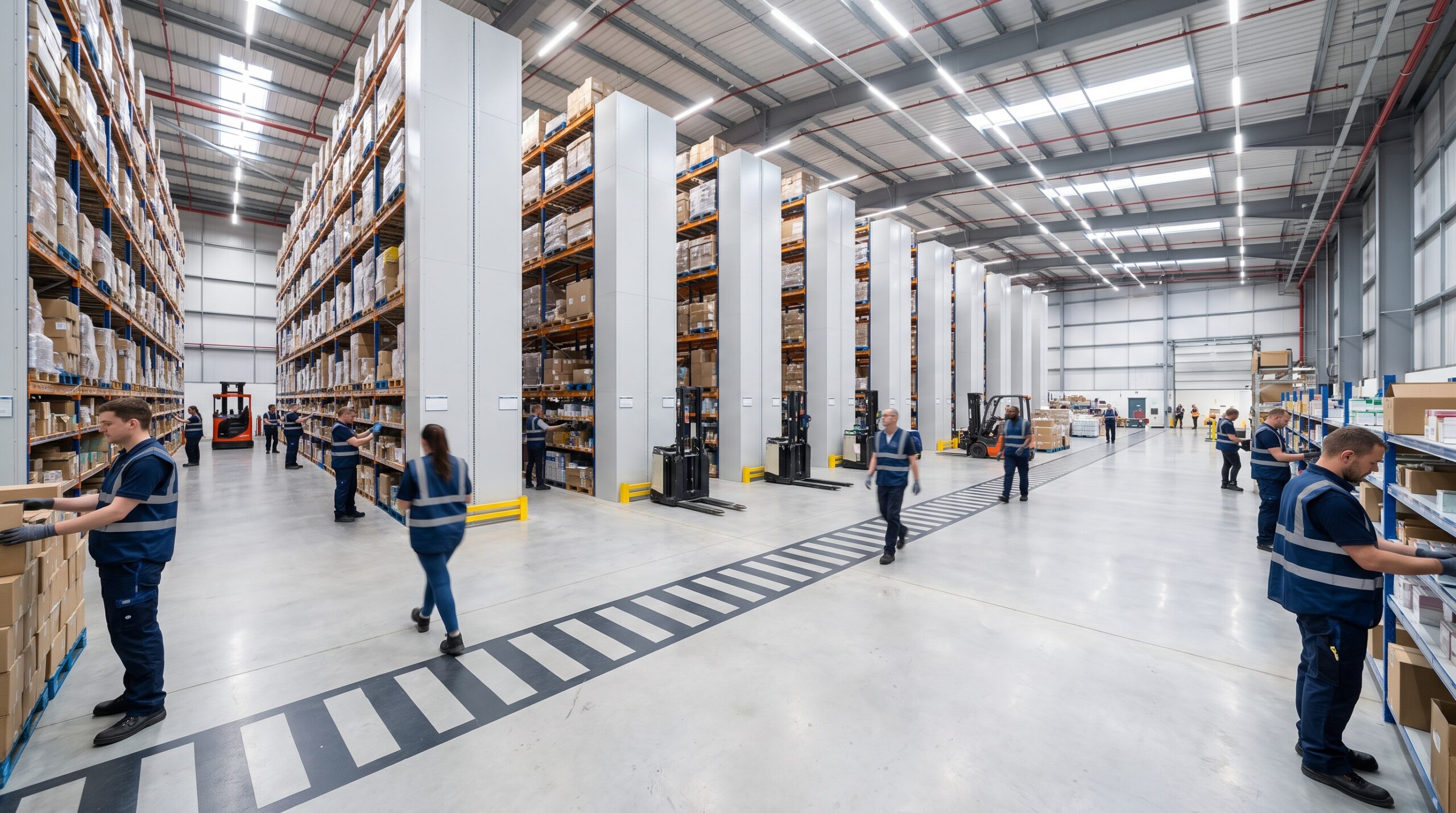
Storage facilities form the foundation. Pharmaceutical warehouses typically maintain several temperature zones to accommodate different product requirements:
- Ultra-low temperature freezers (-80°C to -60°C) for certain mRNA vaccines and biological samples
- Standard freezers (-25°C to -15°C) for frozen products
- Refrigerated zones (2°C to 8°C) for the majority of biologics, vaccines, and insulin
- Controlled room temperature areas (15°C to 25°C) for products requiring stable but not refrigerated conditions
Each zone needs redundant cooling systems, backup power, and validated mapping studies to confirm uniform temperature distribution. Air circulation patterns matter as much as the cooling capacity, since hot spots near doors or warm spots at upper rack levels can compromise specific pallets while average readings appear normal.
Qualified Transport Equipment
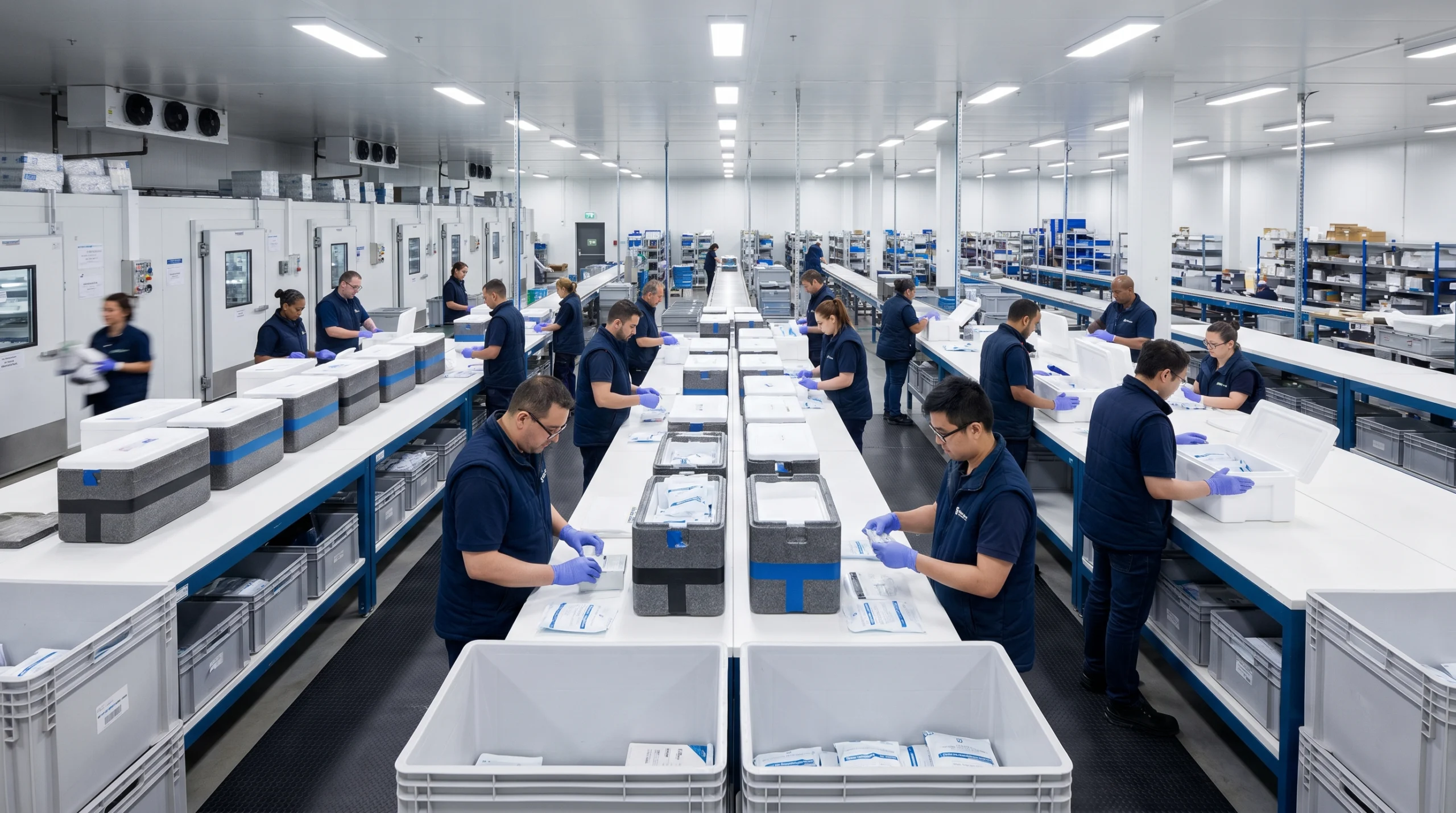
Movement between facilities introduces the highest risk of temperature excursions. Refrigerated trucks, qualified shipping containers, and active or passive packaging systems all play roles depending on shipment size, duration, and destination conditions. Active containers use mechanical or electric cooling; passive systems rely on phase-change materials, gel packs, or dry ice combined with insulated packaging.
Selecting the right transport solution requires understanding the route, the season, the duration, and any handoffs between carriers. A shipment moving from a manufacturer in the Midwest to a clinic in Florida during August faces very different challenges than one traveling within a regional network in spring.
Real-Time Monitoring and Data Loggers
Continuous temperature monitoring has shifted from a nice-to-have feature to a baseline expectation. Modern data loggers transmit readings via cellular or satellite networks, allowing logistics teams to see conditions inside containers as shipments move. When temperatures approach upper or lower limits, automated alerts trigger interventions before products are compromised.

Documentation and Traceability
Every product unit needs traceability from manufacture through delivery. Lot numbers, serial identifiers, temperature histories, and chain-of-custody records must be available for audits and recall investigations. Strong software for pharmaceutical compliance ties these data streams together, creating a single source of truth that supports both daily operations and regulatory reporting.
Trained Personnel and Standard Operating Procedures
Equipment and software cannot replace people who understand the stakes. Receiving clerks need to know how to inspect incoming shipments for signs of temperature abuse. Picking teams must follow proper procedures for moving products between zones. Drivers need training on what to do if equipment fails mid-route. Written SOPs supported by regular training keep these practices consistent across shifts and locations.
Common Challenges in Pharmaceutical Cold Chain Distribution
Even well-designed cold chains encounter problems. Recognizing the most common failure points helps logistics leaders build defenses before incidents occur.
Last-Mile Delivery Complications
The final leg of distribution often presents the highest risk. Delivery vehicles may make multiple stops, opening doors repeatedly and exposing products to ambient conditions. Recipients may not be ready to receive shipments, leaving products on loading docks longer than planned. Rural deliveries can extend transit times beyond the validated stability period of passive packaging.
Addressing last-mile risk requires coordination between distributors, carriers, and recipients. Pre-arrival notifications, signature requirements, and refusal protocols for compromised shipments all reduce exposure.
Equipment Failures and Power Outages
Compressors break down. Generators fail to start. Storms knock out power for days. Any of these events can threaten an entire facility’s inventory. Redundant systems, regular preventive maintenance, and tested emergency response plans are the standard defenses, but many operations discover gaps only when an incident exposes them.
Regulatory Complexity Across Jurisdictions
Distributors operating across state or national borders face overlapping regulations from multiple agencies. The FDA, state boards of pharmacy, the DEA for controlled substances, and international authorities for cross-border shipments all impose requirements. Keeping current with changing rules consumes significant resources, and missteps can result in license suspensions or product seizures.
Cost Pressures
Cold chain operations are expensive. Refrigerated storage costs more per square foot than ambient warehousing. Qualified shipping containers and monitoring devices add per-shipment costs. Specialized labor commands higher wages. Distributors must balance these costs against pricing pressure from customers, often without being able to pass through the full expense of compliance.
Data Silos and Visibility Gaps
Many operations still piece together information from separate systems: a warehouse management system in one place, transportation management in another, monitoring data in a third. When something goes wrong, reconstructing what happened requires manually combining records from multiple sources. This delay slows response times and complicates root cause analysis.
Technology Driving Modern Cold Chain Logistics
The pace of innovation in cold chain logistics has accelerated significantly. Tools that once seemed advanced are now standard, and emerging capabilities promise further improvements in reliability and efficiency.
IoT Sensors and Connected Devices
Internet-connected sensors now monitor far more than temperature. Humidity, light exposure, shock, tilt, and door openings all generate data streams that paint a complete picture of shipment conditions. Devices have become smaller, cheaper, and longer-lasting, making it practical to monitor individual cartons rather than just full pallets or trailers.
Predictive Analytics and Machine Learning
Historical temperature data combined with route information, weather forecasts, and equipment performance records can predict where excursions are likely to occur. Some operations use these models to choose between routing options or to decide which shipments need extra protective packaging. Over time, machine learning systems identify patterns that human analysts might miss, such as specific carrier-route-season combinations that consistently underperform.
Blockchain for Chain of Custody
Distributed ledger technology offers tamper-evident records of every handoff in the supply chain. While adoption remains uneven across the industry, blockchain pilots have demonstrated value for high-stakes shipments where multiple parties need to verify authenticity and handling history. Combined with serialization data required for the Drug Supply Chain Security Act, blockchain implementations are gaining traction.
Integrated Warehouse and Transportation Systems
Connecting warehouse management software for pharmaceuticals with transportation systems eliminates many of the data silos that plague older operations. When temperature data, inventory records, and shipment status all flow into a unified view, logistics teams can respond faster and make better decisions. Integration also supports automation: a temperature alert can automatically trigger a quarantine status change in the warehouse system, preventing accidental picking of potentially compromised inventory.
Automated Storage and Retrieval Systems
For high-volume cold chain operations, automated storage systems reduce door-open times and minimize human exposure to harsh conditions. Automated cranes and shuttles can operate efficiently in temperatures that would be uncomfortable or unsafe for workers, and they execute picks with consistent accuracy. Warehouse control system technology coordinates these automated assets with the broader operation.
Building Resilience Through Process and Technology
Resilient cold chains share certain characteristics regardless of the products they handle or the markets they serve. Examining these characteristics offers a roadmap for operations looking to improve.
Validated Processes and Continuous Mapping
Validation is not a one-time event. Storage facilities should be remapped periodically and after any significant change to layout, equipment, or HVAC systems. Shipping lanes need requalification when carriers, routes, or seasons change. Treating validation as ongoing maintenance rather than a project keeps documentation current and identifies drift before it becomes a problem.
Risk-Based Approaches to Investment
Not every product needs the same level of protection. A risk-based framework helps allocate resources where they matter most. Products with narrow temperature ranges, short stability windows, or high values warrant more sophisticated monitoring and packaging. Lower-risk products can use simpler approaches, freeing budget for the cases that need it.
Supplier and Carrier Qualification
Cold chain integrity depends on every partner in the chain. Qualifying carriers means more than checking insurance certificates; it requires reviewing their equipment, training programs, and incident histories. Periodic audits and performance reviews keep partners accountable. Some distributors have moved toward smaller networks of deeply qualified carriers rather than spreading volume across many providers with varying capabilities.
Incident Response Planning
When something goes wrong, response speed matters. Documented procedures should specify who gets notified, what investigations occur, how decisions about product disposition are made, and how customers are informed. Tabletop exercises and post-incident reviews keep these procedures sharp and identify gaps before real events test them.
Data-Driven Continuous Improvement
The best operations treat every shipment as a data point. Aggregating temperature records, transit times, and incident reports reveals trends that point to systemic issues or improvement opportunities. A small but consistent uptick in excursions on a particular lane might indicate a carrier issue, a packaging change, or seasonal stress that needs attention.
Practical Steps for Improving Cold Chain Performance
Operations leaders looking to strengthen their cold chain capabilities can take concrete steps that build on existing infrastructure. Improvement does not require rebuilding from scratch; it usually means reinforcing weak points and connecting systems that already exist.
Conduct an Honest Assessment
Start by mapping current state. Where does product travel? Which lanes have the highest excursion rates? Which carriers and packaging configurations underperform? Where do data gaps exist? An honest assessment, ideally informed by both internal data and external review, identifies the highest-priority issues to address.
Close Visibility Gaps
If your operation still relies on USB data loggers that get downloaded after delivery, upgrading to real-time monitoring should be a priority. Real-time visibility shifts the response model from after-the-fact investigation to in-flight intervention, which can save shipments that would otherwise be lost.
Invest in Training
Equipment fails predictably. Software does what it is configured to do. People are the variable that determines whether procedures get followed in practice. Investing in training, especially for receiving staff, drivers, and shift supervisors, often produces better returns than equivalent spending on technology.
Integrate Systems Where Possible
The friction created by disconnected systems compounds over time. Each manual data transfer is an opportunity for error and a delay in response time. Building integrations between warehouse management, transportation management, and monitoring platforms simplifies daily work and creates a foundation for analytics. For operations serving multiple manufacturers, EDI integration solutions further reduce manual handling of shipment data.
Plan for Growth
Cold chain capacity tends to be harder to scale than ambient capacity. Refrigeration equipment has long lead times. Qualified facilities are not built overnight. Looking ahead three to five years and planning capacity expansions accordingly prevents the disruptive scrambles that occur when growth outpaces infrastructure.
The Future of Pharmaceutical Cold Chain Operations
Several trends will shape pharmaceutical cold chain operations in the coming years. Distributors that anticipate these changes will be better positioned than those reacting after the fact.
Growing Volume of Temperature-Sensitive Products
The pipeline of biologics, cell therapies, gene therapies, and other complex molecules continues to expand. Many of these products have stricter temperature requirements than traditional pharmaceuticals, and some require ultra-low temperature handling that few distributors currently support. Building capability ahead of demand will be a competitive advantage.
Sustainability Pressures
Cold chain operations consume significant energy and generate considerable packaging waste. Manufacturers, customers, and regulators are all paying more attention to environmental impact. Reusable packaging systems, more efficient cooling technologies, and route optimization to reduce transportation emissions are all areas of active development.
Direct-to-Patient Distribution
Specialty pharmacies and direct-to-patient models are growing, particularly for therapies that patients self-administer at home. These models create new last-mile challenges, since residential deliveries lack the infrastructure of healthcare facilities. Solutions involving smart packaging, scheduled delivery windows, and patient education are emerging to address these needs.
Increased Use of Automation
Labor shortages combined with the difficult working conditions of cold storage are accelerating automation adoption. Robotic systems that work effectively in cold environments, automated guided vehicles, and sortation systems designed for temperature-controlled spaces will become more common.
Tighter Regulatory Scrutiny
Regulators continue to raise expectations for documentation, traceability, and risk management. The Drug Supply Chain Security Act has driven significant investment in serialization and traceability infrastructure, and similar requirements are expanding internationally. Staying ahead of regulatory changes requires both technology capable of supporting new requirements and processes for monitoring evolving rules.
Bringing It All Together
Cold chain management in pharmaceuticals is a discipline that rewards attention to detail and punishes shortcuts. The components of cold chain operations, from validated storage and qualified transport to real-time monitoring and trained personnel, only deliver value when they work together as an integrated system. Strong cold chain logistics protect patients, satisfy regulators, and create commercial advantages for distributors who invest in doing it well.
Pharmaceutical cold chain success comes from treating temperature control as a system property rather than a series of isolated tasks. Each shipment is an opportunity to validate that the system works, and each excursion is data that can drive improvement. Cold chain logistics pharmaceuticals demands ongoing attention to process, technology, and people, and cold chain distribution for pharmaceutical products will only grow more demanding as therapy pipelines evolve.
Ready to strengthen your pharmaceutical distribution operations? Explore ASC Software’s full suite of solutions built for temperature-sensitive supply chains. To see how a connected platform can support your specific cold chain needs, schedule a demo with our team and discuss your operational goals. You can also contact us directly for a deeper conversation about cold chain optimization strategies that match your business.
Frequently Asked Questions
Why is cold chain logistics crucial for pharmaceuticals?
Cold chain logistics is crucial for pharmaceuticals because it ensures temperature-sensitive medications remain effective. Medications like vaccines and biologics require precise temperature control from production to delivery. A single temperature deviation can render a shipment unusable, causing financial losses and supply gaps. Effective cold chain logistics helps meet regulatory requirements and maintain product integrity.
What are the components of cold chain logistics pharmaceuticals?
The components of cold chain logistics pharmaceuticals include temperature-controlled storage, transportation, and monitoring systems. These components work together to maintain the integrity of temperature-sensitive products. Proper packaging, real-time tracking, and compliance with regulatory standards are also essential. Together, they ensure that medications reach patients in optimal condition, preventing potential health risks.
How does cold chain distribution impact patient safety?
Cold chain distribution impacts patient safety by ensuring medications remain effective and safe for use. Temperature-sensitive drugs require strict control to prevent degradation. Any failure in maintaining the required temperature can lead to ineffective treatments and health risks. Reliable cold chain distribution minimizes these risks, ensuring patients receive potent and safe medications.
What role does the pharmaceutical cold chain play in compliance?
The pharmaceutical cold chain plays a critical role in compliance by adhering to regulatory standards for temperature control. Agencies like the FDA require detailed documentation of temperature conditions throughout the supply chain. Compliance ensures product integrity and prevents financial losses from recalls. Adhering to these standards also enhances trust with healthcare systems and manufacturers.
Why is cold chain distribution for pharmaceutical products essential?
Cold chain distribution for pharmaceutical products is essential to maintain the efficacy of temperature-sensitive medications. It involves precise temperature management from production to delivery. This distribution method prevents degradation, ensuring that drugs remain effective and safe for patients. Effective cold chain distribution also helps meet regulatory requirements and minimizes financial losses from compromised shipments.