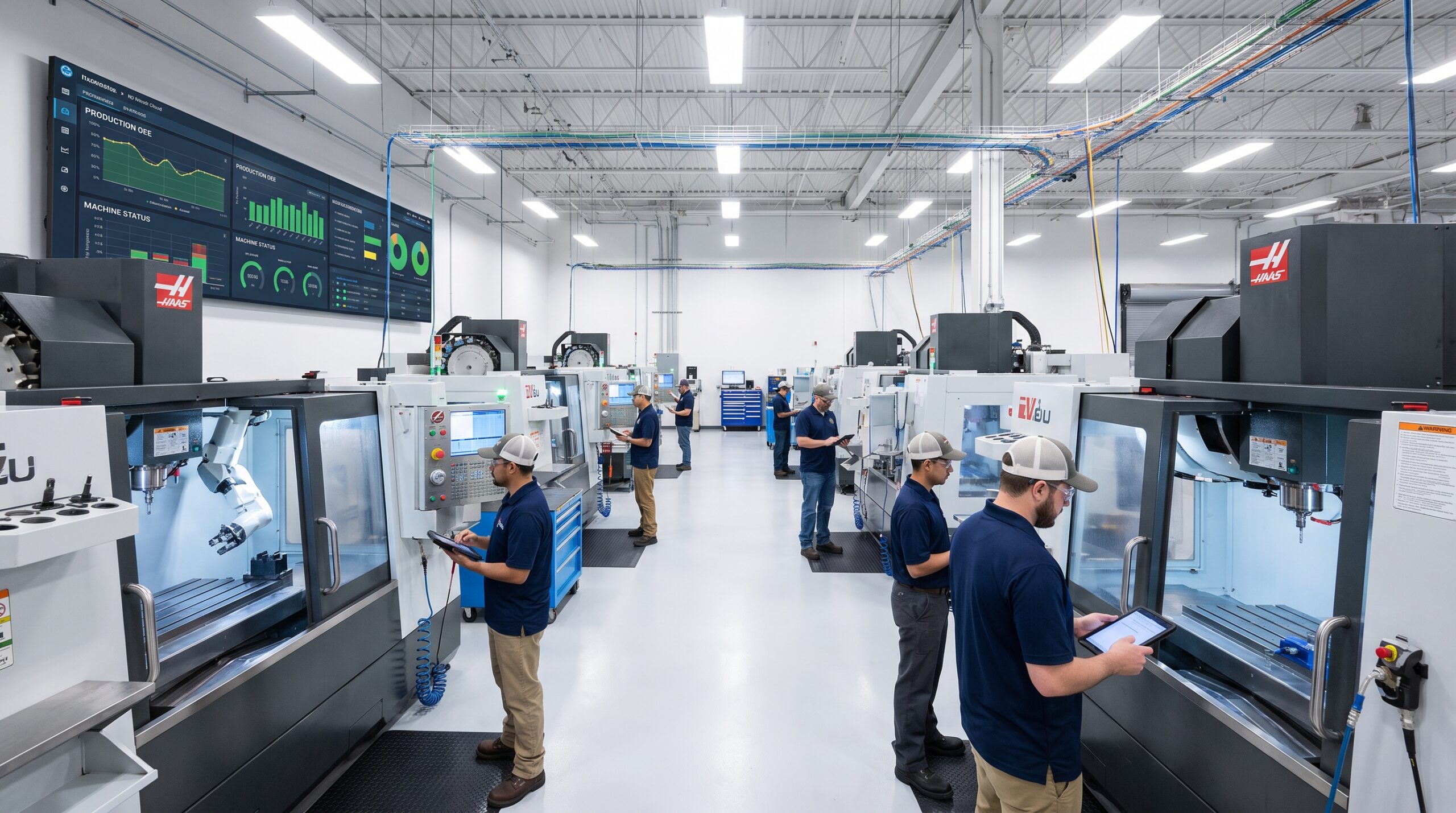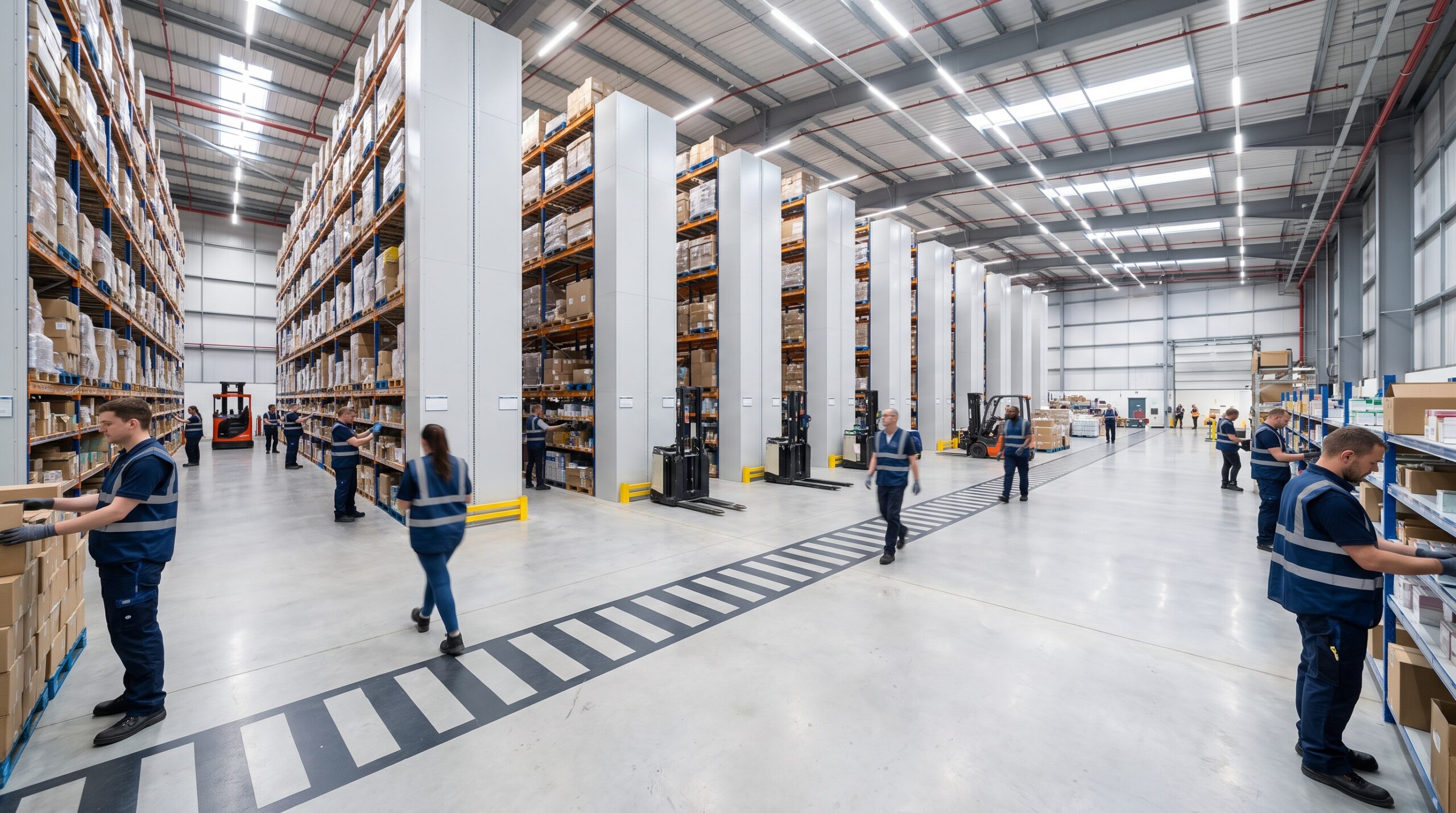
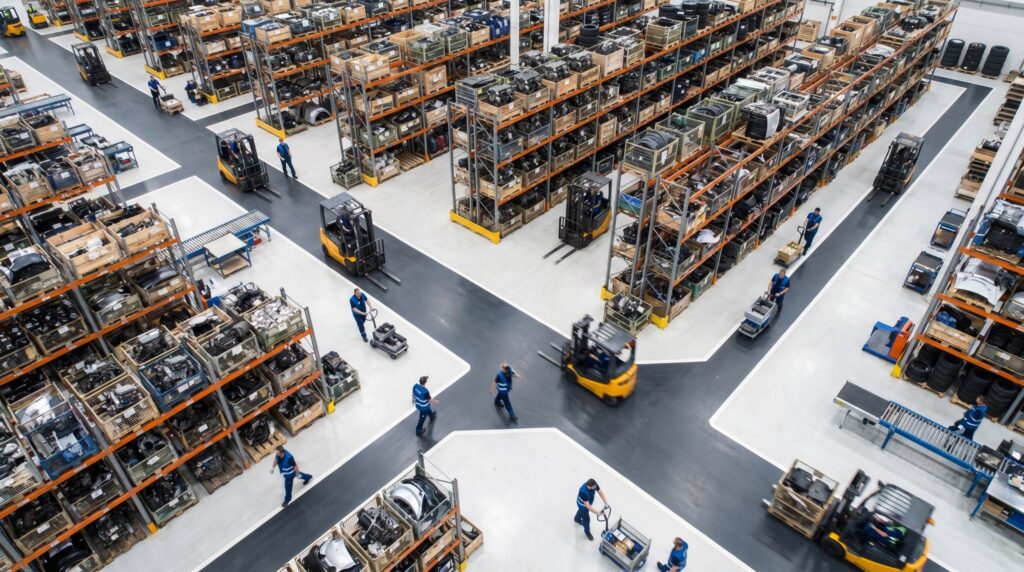
Automotive supply chain software helps manufacturers, Tier 1 suppliers, and logistics teams coordinate the thousands of parts and handoffs required to keep production lines running on schedule. The modern vehicle contains roughly 30,000 parts sourced from suppliers across dozens of countries, and getting all of those components to the right assembly line at the right moment is one of the most demanding logistics problems in any industry. Effective automotive supply chain management has become a defining competitive advantage, separating manufacturers that hit production targets from those plagued by line stoppages, recalls, and runaway inventory costs. As automakers shift toward electrification, software-defined vehicles, and regional production strategies, the pressure on automobile industry supply chain management has only grown.
This guide compares the major approaches to automotive supply chain solutions available today, weighing legacy ERP-centric methods against modern platforms, manual coordination against automated workflows, and traditional just-in-time models against more resilient hybrid strategies. The goal is to help OEMs, Tier 1 and Tier 2 suppliers, and supply chain leaders make informed decisions about which combination of tools, processes, and technologies fits their operations. Along the way, we will examine where automotive supply chain management software adds the most value, how Industry 4.0 technologies are reshaping car supply chain management, and what trends will define the next decade.
Understanding Automotive Supply Chain Management Today
The automotive supply chain stretches from raw material extraction through smelting, component manufacturing, sub-assembly, final vehicle assembly, distribution, dealer networks, and aftermarket parts. Each link involves different stakeholders, contracts, quality standards, and information systems. A single Tier 1 supplier might serve five OEMs while sourcing from hundreds of Tier 2 and Tier 3 partners, creating a web of dependencies that resists simple management.
Three forces have reshaped this network in recent years. Semiconductor shortages exposed how thin the buffers had become in just-in-time systems. Trade policy shifts pushed companies to reconsider single-source arrangements with distant suppliers. And the transition to electric vehicles introduced entirely new supplier categories, from battery cell producers to power electronics specialists, while reducing demand for traditional powertrain components.
The Evolution from Linear Chains to Connected Networks
Automotive supply chains began as relatively linear sequences: raw materials flowed to component makers, components flowed to assemblers, and vehicles flowed to dealers. Toyota’s production system in the 1970s introduced pull-based replenishment and lean inventory practices that became industry standard. By the 1990s, electronic data interchange (EDI) connected trading partners with structured messages for purchase orders, advance ship notices, and invoices.
The 2000s brought enterprise resource planning systems that consolidated finance, procurement, and production data inside individual companies. The 2010s added cloud platforms, supplier portals, and early analytics. Today’s networks operate as connected meshes where data, materials, and decisions move in multiple directions simultaneously. A delay at a Tier 3 chip foundry can trigger automated rescheduling at an OEM assembly plant within hours, provided the right visibility tools are in place.
Persistent Challenges in the Automotive Industry
Several challenges continue to test automobile industry supply chain management:
- Demand volatility: Consumer preferences shift between sedans, SUVs, hybrids, and EVs faster than production capacity can adjust.
- Component complexity: A modern vehicle integrates mechanical parts, electronics, software, and increasingly, AI components, each with different supply dynamics.
- Quality and traceability: Recalls can cost hundreds of millions of dollars, making lot-level tracking essential across every tier.
- Geopolitical risk: Tariffs, sanctions, and export controls can render entire sourcing strategies obsolete overnight.
- Sustainability requirements: Regulators and consumers expect carbon accounting and ethical sourcing documentation that many legacy systems cannot produce.
- Labor and capacity constraints: Skilled labor shortages affect both manufacturing and logistics operations.
Industry publications such as Supply Chain Dive regularly document how these pressures interact, often producing cascading effects that touch every tier of the network.
End-to-End Supply Chain Visibility
Connect demand planning, inventory control, and order management with ASCTrac's integrated platform.
Request a Demo
Comparing Approaches to Automotive Supply Chain Solutions
When evaluating how to manage an automotive supply chain, leaders typically choose among several broad approaches. Each has merits and drawbacks, and most successful operations blend elements from multiple models rather than committing fully to one.
Manual and Spreadsheet-Based Coordination vs. Dedicated Software
Smaller suppliers and aftermarket operations sometimes manage scheduling, inventory, and supplier communications through spreadsheets, email, and phone calls. This approach has low upfront costs and total flexibility. Staff can adjust processes without waiting for IT changes, and there is no software licensing burden.
The drawbacks become severe at scale. Spreadsheet errors are common and hard to detect. Information lives in individual inboxes rather than shared systems, so when key staff are unavailable, decisions stall. Audit trails are weak, which complicates quality investigations and compliance reporting. And manual coordination cannot keep pace with sequenced delivery requirements that may demand part arrivals timed to within minutes.
Dedicated automotive supply chain management software addresses these gaps with structured data, role-based access, automated alerts, and integration with shop floor systems. The trade-off is implementation time, change management effort, and ongoing licensing costs. For any operation handling more than a few hundred SKUs or coordinating with multiple OEMs, dedicated software almost always pays back its investment.
ERP-Centric Models vs. Best-of-Breed Platforms
Many automotive companies extend their ERP system, such as SAP or Oracle, to cover supply chain functions including procurement, inventory, and production planning. The advantage is a single source of truth across finance and operations, with data flowing naturally between modules.
The limitations show up in specialized areas. ERP procurement modules often lack the depth needed for complex supplier scorecards, capacity planning across multi-tier networks, or real-time logistics visibility. Warehouse operations, in particular, frequently outgrow ERP-native functionality and benefit from a dedicated warehouse management system for automotive operations that handles wave planning, slotting optimization, and labor management.
Best-of-breed platforms specialize in narrower functions and typically offer richer features, faster innovation cycles, and better user experiences. The cost is integration complexity. Connecting a specialized transportation management system, a warehouse management system, a manufacturing execution system, and an ERP requires careful interface design and ongoing maintenance.
| Factor | ERP-Centric | Best-of-Breed |
|---|---|---|
| Functional depth | Adequate for basics | Strong in specialty areas |
| Integration effort | Lower (single vendor) | Higher (multiple vendors) |
| Innovation pace | Slower release cycles | Faster updates |
| Total cost | Predictable, often lower | Variable, can be higher |
| User experience | Generic interfaces | Role-tailored interfaces |
Just-in-Time vs. Just-in-Case Inventory Strategies
For decades, just-in-time (JIT) inventory dominated automotive thinking. Parts arrived as needed, sometimes hours before installation, minimizing carrying costs and exposing quality problems quickly. The 2020-2022 disruptions made the fragility of pure JIT painfully clear when chip shortages and port congestion idled assembly lines for weeks at a time.
Just-in-case (JIC) approaches hold strategic safety stock for critical components, accepting higher carrying costs in exchange for production continuity. Some manufacturers now build six to twelve weeks of safety stock for semiconductors, wiring harnesses, and other high-risk parts.
The pragmatic answer is a tiered strategy. Standard, easily sourced commodities continue under JIT principles. Strategic, single-sourced, or geopolitically sensitive parts move to JIC buffers. Predictive analytics help classify parts dynamically as risk profiles change. Modern car supply chain management platforms support this tiering with configurable inventory policies and automated reorder logic.
Where Automotive Supply Chain Management Software Adds the Most Value
Software cannot fix every supply chain problem, but it addresses several pain points that resist manual solutions. Understanding where the highest returns appear helps prioritize investment.
End-to-End Visibility Across Tiers
Most OEMs have reasonable visibility into their Tier 1 suppliers. Visibility into Tier 2 and Tier 3 is often poor, which is why a single fire at an obscure resin plant can disrupt vehicle production globally. Modern automotive supply chain solutions use supplier mapping, shared data platforms, and increasingly, blockchain or distributed ledger approaches to extend visibility several tiers deep.
Practical benefits include earlier warning of disruptions, better dual-sourcing decisions, and faster response when problems emerge. A purchasing team that knows their primary chip supplier sources wafers from a specific region can monitor that region for typhoons, power outages, or political events, and pre-position alternatives.
Production Synchronization and Sequencing
Automotive assembly often requires sequenced delivery, where parts arrive in the exact order vehicles will be built. A driver’s seat for a red SUV with leather and heated cushions must arrive at station 47 just before that specific vehicle does, not before or after. Coordinating sequenced delivery across hundreds of suppliers requires tight integration between OEM build schedules and supplier production systems.
This is where manufacturing execution system capabilities become essential, connecting shop floor activities to supply chain plans in real time. Without this synchronization, sequencing errors create line stoppages, rework, and quality risks.
EDI and Supplier Communication
The automotive industry has used EDI longer than almost any other sector. Standards such as ANSI X12 and EDIFACT govern how purchase orders, ship notices, and invoices flow between trading partners. Modern EDI integration solutions handle these document exchanges automatically, validating data, translating formats, and triggering downstream actions.
The alternative, manual document handling, introduces errors, delays, and reconciliation work that consumes administrative capacity. For any supplier serving major OEMs, robust EDI is not optional; OEM compliance scorecards penalize trading partners who cannot meet electronic communication standards.
Quality Traceability and Recall Management
When a defective component triggers a recall, the cost depends heavily on how precisely affected vehicles can be identified. Lot-level traceability tracks which specific batch of parts went into which specific vehicles, allowing surgical recalls rather than blanket actions covering millions of units. Software platforms maintain these genealogies automatically, capturing supplier lot numbers as parts move through receiving, kitting, and assembly.
The cost difference between targeted and blanket recalls can run into hundreds of millions of dollars for major events. Quality traceability also supports warranty cost recovery from suppliers when defects originate upstream.
Inventory Optimization Across Locations
Automotive operations often involve dozens of distribution centers, plant warehouses, and supplier-managed inventory locations. Optimizing stock levels across all of them requires algorithms that consider lead times, demand variability, transportation costs, and service level targets. Spreadsheet-based reorder points cannot match what modern warehouse management software can do with multi-echelon inventory optimization and machine learning forecasts.
Comparing Implementation Approaches for Supply Chain Software
Choosing the right software is only part of the decision. How the software gets implemented matters as much as what it does.
Big Bang vs. Phased Rollouts
Big bang implementations switch all sites or functions to new systems on a single cutover date. The advantage is faster total project completion and immediate elimination of legacy systems. The risk is that any unforeseen issues affect the entire operation simultaneously, with no fallback.
Phased rollouts deploy software site by site or function by function. Early sites become reference cases that inform later deployments, and problems are contained to one location at a time. The trade-off is longer total project duration and the need to maintain integration between new and legacy systems during the transition.
Most automotive operations choose phased approaches, often starting with a pilot at a single plant or distribution center, refining processes, then rolling out to additional sites. The exception is when legacy systems are about to fail or contractual deadlines force faster transitions.
Cloud vs. On-Premise Deployment
Cloud deployment offers faster setup, lower upfront costs, and automatic updates. The vendor handles infrastructure, security patches, and scaling. Cloud also makes it easier to extend access to suppliers, carriers, and other external partners.
On-premise deployment gives more control over data, customization, and integration with internal systems. Some automotive companies still prefer on-premise for shop floor systems where network outages cannot interrupt production. Hybrid models keep production-critical systems local while moving analytics, supplier collaboration, and reporting to the cloud.
Standard vs. Customized Configurations
Off-the-shelf configurations get operations running faster and benefit from vendor best practices accumulated across many customers. Heavy customization extends implementation timelines, increases costs, and complicates future upgrades, but may be necessary for unique processes.
The pragmatic middle ground is configuration without customization. Modern platforms support extensive parameter-based adjustment, workflow design, and reporting changes through configuration tools rather than code. This preserves upgradeability while accommodating real operational differences.
Real-World Patterns from Automotive Implementations
While specific case studies vary, common patterns emerge from successful automotive supply chain transformations.
OEM-Scale Improvements
Consider a hypothetical large OEM operating multiple assembly plants across North America. Before modernization, each plant ran its own warehouse and supplier management systems, with limited cross-plant visibility. Inventory imbalances were common: one plant might have surplus brake assemblies while another faced shortages of the same part. After consolidating onto a unified supply chain platform, the OEM gains visibility across all plants, enables inventory transfers between sites, and reduces total safety stock while improving line-side fill rates.
The transformation typically involves more than software. Process standardization, supplier onboarding, and labor retraining all play roles. Companies that focus only on technology while ignoring change management often see disappointing results regardless of which platform they choose.
Tier Supplier Innovations
A mid-sized Tier 1 supplier producing seating systems faces different challenges than an OEM. The supplier must serve multiple OEM customers, each with unique EDI requirements, packaging standards, sequencing protocols, and quality reporting formats. Manual handling of these differences consumes administrative capacity and introduces errors.
Modern platforms allow Tier suppliers to maintain customer-specific configurations within a single system, automating translation between internal processes and each OEM’s requirements. This frees engineering and operations staff to focus on production improvements rather than administrative compliance. Smaller Tier 2 and Tier 3 suppliers benefit similarly when their systems can speak the language of multiple Tier 1 customers without manual intervention.
Aftermarket and Service Parts
The aftermarket presents distinct challenges. Vehicles remain in service for fifteen years or more, requiring parts availability long after production has ended. Demand patterns are erratic, with most SKUs selling slowly while a few move quickly. Distribution networks span dealers, independent repair shops, and consumer outlets.
Companies operating in this space often benefit from solutions designed for wholesale distribution operations, which handle slow-moving inventory, complex pricing, and multi-channel fulfillment more naturally than systems designed primarily for production logistics.
Future Trends Reshaping Automotive Supply Chain Management
Looking ahead, several trends will influence how automotive supply chains operate over the next decade. Decision-makers evaluating today’s investments should consider how those choices position them for these shifts.
Industry 4.0 and Digital Transformation
Industry 4.0 refers to the integration of physical production with digital systems, including IoT sensors, advanced robotics, AI-driven analytics, and digital twins. In automotive supply chains, this manifests as connected machines that report status continuously, AI models that predict component failures before they happen, and digital twins that simulate supply chain responses to disruptions.
The practical implication is that supply chain platforms must integrate with shop floor sensors, vehicle telematics, and partner systems to capture and act on real-time data. Platforms that treat data as a static asset, refreshed once daily through batch processes, increasingly fall short of operational needs.
Electric Vehicles and Battery Supply Chains
The shift to electric vehicles introduces battery cells, packs, and modules as the highest-value components in many vehicles. Battery supply chains have unique characteristics: long lead times, geographic concentration in specific countries, complex chemistry tracking, hazardous material handling, and end-of-life recycling requirements.
OEMs are responding with vertical integration strategies, joint ventures with battery producers, and entirely new supplier ecosystems. Software platforms must accommodate these new flows, including chain-of-custody tracking for battery materials and integration with recycling networks.
Sustainability and Carbon Accounting
Regulators in Europe, North America, and Asia increasingly require carbon footprint disclosure for vehicles and components. Some markets are implementing carbon border adjustment mechanisms that tax embedded emissions in imported goods. Major OEMs are passing these requirements down to their suppliers, demanding granular emissions data alongside traditional cost and quality metrics.
Supply chain platforms now need to capture energy use, transport emissions, and material origins. Companies that established this capability early are positioned to compete in markets where uncomforted suppliers face increasing exclusion. Coverage from IndustryWeek and similar outlets details how these requirements are reshaping supplier relationships.
Nearshoring and Regional Manufacturing
The era of optimizing exclusively for low cost is giving way to balancing cost with resilience. Many automotive companies are shifting production closer to demand markets, building parallel regional supply chains in North America, Europe, and Asia rather than relying on global networks centered in any one region.
This shift increases capital costs but reduces exposure to long-distance disruptions, currency volatility, and trade policy changes. Software platforms must support this multi-regional architecture, including the ability to optimize regionally while maintaining global visibility.
Autonomous Logistics and Robotics
Inside warehouses and distribution centers, autonomous mobile robots (AMRs), automated storage and retrieval systems (AS/RS), and robotic picking are becoming standard rather than experimental. Yard management is moving toward autonomous yard trucks. Long-haul transport is testing autonomous trucking on dedicated routes.
Each of these technologies generates and consumes data, requiring integration with broader supply chain systems. Warehouse control systems coordinate the physical orchestration of these automated assets, while supply chain platforms feed them work and capture their results.
Integrating Industry 4.0 Technologies with Supply Chain Platforms
The ability to connect modern technologies with supply chain platforms determines how much value those technologies actually deliver. Integration patterns have matured considerably, but design choices still affect outcomes.
IoT and Sensor Networks
IoT sensors track temperature in cold-chain shipments, vibration in machinery, location of containers, and dozens of other variables. The challenge is filtering signal from noise. A typical automotive plant generates terabytes of sensor data daily, most of which has no operational relevance.
Effective integration applies edge computing to filter and aggregate data near its source, sending only meaningful events to central systems. A vibration sensor on a stamping press might monitor 1,000 readings per second locally but send only alerts when patterns suggest impending failure. This approach keeps central systems responsive while preserving the operational value of sensor data.
Artificial Intelligence and Machine Learning
AI in supply chains takes several forms: demand forecasting, predictive maintenance, anomaly detection, route optimization, and increasingly, generative AI for tasks such as supplier communication and exception handling. Different applications have different maturity levels.
Demand forecasting using machine learning is well-established and reliably outperforms traditional statistical methods for most products. Predictive maintenance is mature for common equipment but requires significant historical data to train effectively. Generative AI applications are still evolving, with many promising use cases but few proven at scale.
The pragmatic approach is to apply AI where evidence supports value, maintain human oversight for high-stakes decisions, and continue experimenting with newer applications without betting operations on unproven technology.
Real-Time Analytics and Decision Support
Traditional supply chain reporting answers questions about what happened yesterday or last week. Real-time analytics answer questions about what is happening right now and what is likely to happen next. The shift requires data architectures that support continuous queries rather than overnight batch processing.
For decision-makers, the value lies in faster response to emerging issues. A spike in defect rates from a specific supplier triggers immediate investigation rather than appearing in next month’s quality review. A delivery falling behind schedule prompts automatic rebooking with alternative carriers. These compressed response cycles compound into significant operational improvements over time.
Digital Twins for Supply Chain Simulation
A digital twin replicates a physical system in software, allowing simulation of changes before they happen. In supply chains, digital twins model entire networks, including suppliers, transportation routes, warehouses, and customer demand. Planners can test scenarios such as adding a new supplier, closing a distribution center, or responding to a major disruption, observing likely outcomes without operational risk.
Building useful digital twins requires accurate data and ongoing maintenance. Twins that drift from physical reality produce misleading simulations. Companies that have invested in this capability gain a meaningful advantage in scenario planning and risk management.
Choosing the Right Path for Your Operation
Given the variety of approaches available, how should automotive supply chain leaders decide what to do? A structured evaluation typically considers several dimensions.
Match Solutions to Operational Complexity
An aftermarket parts distributor with 50,000 SKUs and 200 suppliers has different needs than a Tier 1 supplier producing sequenced seats for three OEM customers. Sophisticated platforms add value when they handle complexity that simpler tools cannot. They can become unnecessary overhead when applied to simpler operations.
An honest assessment of current and projected complexity guides appropriate sizing. Operations growing rapidly should plan for complexity beyond their current state, since switching platforms later is disruptive. Stable operations can match tools more closely to current scale.
Prioritize Integration Capabilities
Few automotive operations replace all their systems at once. Most integrate new platforms with existing ERPs, financial systems, MES, and partner systems. The integration capability of any new platform may matter more than its standalone features. Look for proven integration patterns, modern APIs, support for industry standards, and a track record of working alongside the systems already in place.
Consider Total Cost of Ownership
License costs are visible but represent only part of total cost. Implementation, training, integration, ongoing administration, and eventual upgrades all add to the total. Platforms with lower licensing but higher implementation complexity may cost more over five years than apparently more expensive alternatives.
A useful exercise is building a five-year total cost projection that includes all of these elements, then comparing alternatives on that basis rather than license fees alone.
Evaluate Vendor Stability and Roadmap
Supply chain software is a long-term commitment. The vendor’s financial stability, customer base, and product roadmap all affect the value of the investment. A vendor focused on automotive customers will likely deliver features relevant to automotive needs faster than a generalist serving many industries.
Reference customers in similar operations provide the most reliable evidence. Conversations with peer companies running candidate platforms typically surface practical issues that vendor demonstrations gloss over.
Conclusion
Effective automotive supply chain management requires balancing many competing priorities: cost against resilience, automation against flexibility, standardization against customer-specific requirements, and immediate efficiency against long-term adaptability. There is no single right answer for every operation, and the best automotive supply chain solutions blend technologies and approaches rather than committing fully to any single model.
What is clear is that the gap between leaders and laggards in automobile industry supply chain management is widening. Companies with modern platforms, integrated data, and disciplined processes respond faster to disruptions, recover more reliably, and serve customers better than those still managing through email and spreadsheets. As Industry 4.0 technologies mature and sustainability requirements expand, that gap will likely grow further.
The path forward starts with honest assessment of current capabilities, clear prioritization of the highest-value improvements, and disciplined execution against a multi-year roadmap. Whether you are an OEM, Tier supplier, or aftermarket distributor, the time to begin is now.
Ready to explore how modern automotive supply chain management software can fit your operation? Schedule a demo with our team to see real-world capabilities applied to your specific challenges. You can also explore our full range of supply chain solutions to understand which combination matches your needs, or contact our sales team for a consultation on building a roadmap toward more resilient, efficient operations.
Frequently Asked Questions
How does automotive supply chain management impact production?
Automotive supply chain management is crucial for meeting production targets. It ensures timely delivery of 30,000 parts from global suppliers to assembly lines, minimizing line stoppages and recalls. Efficient management also helps in controlling inventory costs. As automakers transition to electrification, the complexity of supply chains increases, requiring robust management to maintain competitive advantage.
What are automotive supply chain solutions available today?
Automotive supply chain solutions range from legacy ERP systems to modern platforms. These solutions include automated workflows and hybrid strategies that combine just-in-time models with more resilient approaches. The right combination of tools and technologies is essential for OEMs and suppliers to optimize operations, especially with the growing complexity due to electrification and regional production shifts.
Why is automotive supply chain management software important?
Automotive supply chain management software is vital for streamlining operations and enhancing efficiency. It helps manage complex networks of suppliers and stakeholders, ensuring smooth component flow from raw materials to final assembly. Software solutions provide real-time data analytics and support Industry 4.0 technologies, which are crucial for adapting to evolving trends like electrification and global trade policy changes.
What challenges do automotive supply chains face today?
Automotive supply chains face challenges like semiconductor shortages and trade policy shifts. These issues highlight the vulnerabilities in just-in-time systems and single-source dependencies. The shift to electric vehicles adds complexity, introducing new supplier categories and reducing demand for traditional components. Effective supply chain management is essential to navigate these challenges and maintain production efficiency.
How are car supply chain management strategies evolving?
Car supply chain management strategies are evolving from linear chains to connected networks. Modern strategies incorporate pull-based replenishment and lean inventory practices, initially popularized by Toyota. The focus is now on building resilient supply chains that can withstand disruptions like component shortages and geopolitical shifts. Hybrid models and advanced technologies are increasingly adopted to enhance flexibility and responsiveness.