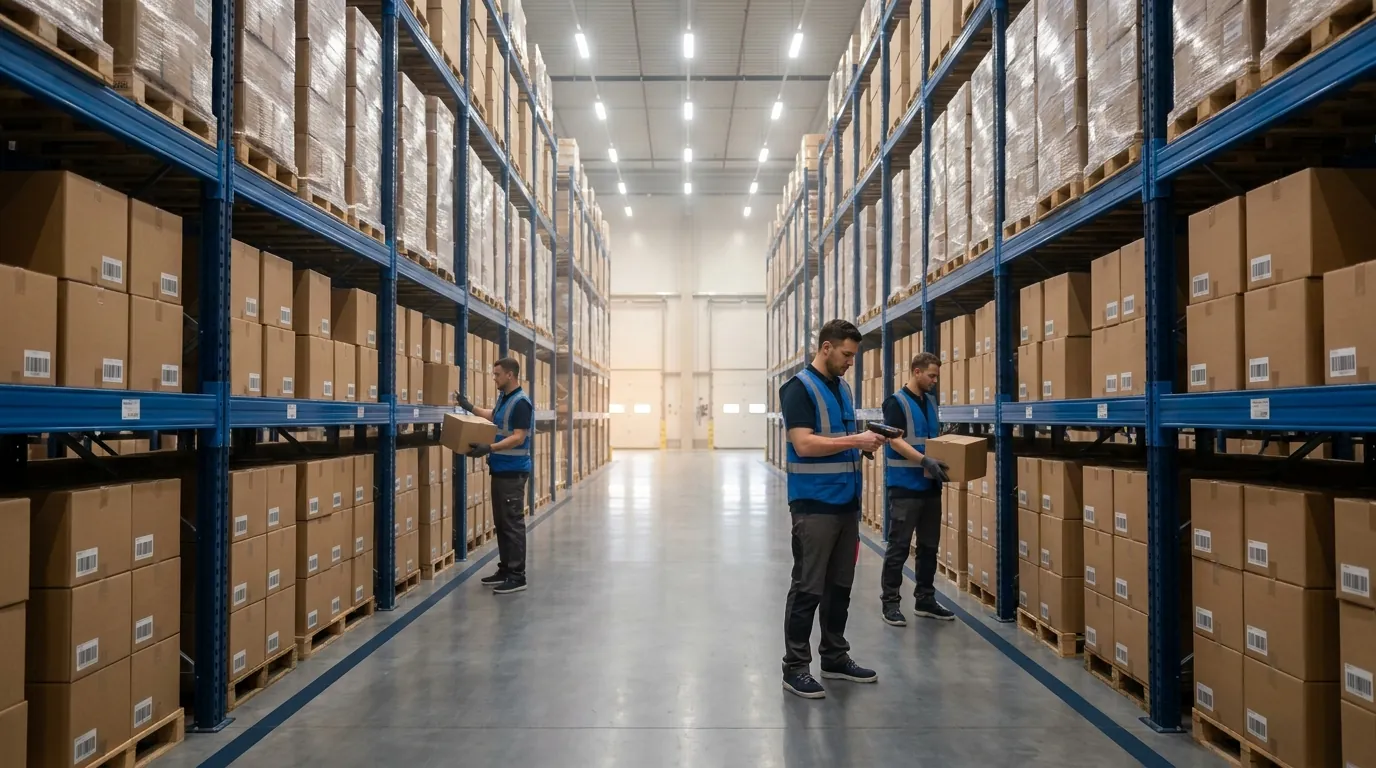





GMP for Warehousing: Compliance for Optimal Storage
Kurt AdamsPublished: December 31, 2024 | Updated: September 30, 202624 minutes

Ensuring GMP for warehousing is crucial for maintaining product quality and safety in the pharmaceutical industry. This article covers essential guidelines and practices to help you comply with GMP standards, avoid costly mistakes, and protect your products.
Key Takeaways
-
Good Manufacturing Practices (GMP) are essential for ensuring the quality and safety of pharmaceutical products in warehouses, minimizing risks of contamination and product deterioration.
-
Key GMP regulations include proper storage conditions, pest control measures, and personnel hygiene training, which are critical for maintaining compliance and product integrity.
-
Implementing advanced technology, such as automated inventory management and data analytics, enhances operational efficiency and compliance monitoring in pharmaceutical warehousing.
Purpose-Built for Pharmaceutical Compliance
ASCTrac helps pharmaceutical operations stay GMP-compliant with lot tracking, serialization, and DSCSA-ready workflows.
Request a Demo
The Importance of GMP in Warehousing
Good Manufacturing Practices (GMP) are the backbone of quality and safety in the pharmaceutical industry and pharmaceutical warehousing. These regulations ensure consistent quality, integrity, and safety of products stored in warehouses, including those in a gmp warehouse. Adhering to GMP guidelines ensures the identity, strength, quality, and purity of pharmaceutical products, preserving their efficacy and safety for consumers. Pharmaceutical warehouses play a crucial role in this process, acting as the custodians of these valuable products until they reach their final destination.
Failure to comply with GMP standards can lead to severe consequences, including product recalls and significant damage to a company’s reputation. Beyond regulatory compliance, it demonstrates a commitment to producing high-quality products that consumers trust.
GMP guidelines minimize contamination risks and maximize product quality and efficacy, ensuring every product leaving the warehouse is fit for use. This commitment to quality control and safety is vital in maintaining consumer confidence and ensuring public health.
What GMP Covers in a Warehouse
Good Manufacturing Practices are a set of regulations and guidelines that set the minimum requirements for the facilities, equipment, personnel, and processes involved in producing, storing, and distributing pharmaceutical products. In a warehouse, that means controlling the environment, documenting every activity, training the people who handle product, and proving that processes consistently deliver the intended outcome.
Storage is often where compliance succeeds or fails. Products spend far more time in a warehouse than in active processing, and the conditions of that storage determine whether a finished good reaches the patient in the same state it left the production floor. Several principles underpin every successful GMP storage operation:
-
Prevention over detection. Build conditions that prevent quality failures rather than relying on testing to catch them afterward.
-
Documented evidence. If it is not written down, it did not happen. Every receipt, movement, temperature reading, and corrective action must be captured.
-
Trained personnel. Even the best procedures fail when staff do not understand or follow them.
-
Continuous improvement. Audits, deviations, and customer feedback should drive measurable changes to procedures and infrastructure.
Key GMP Regulations for Pharmaceutical Warehouses
GMP regulations ensure product safety, efficacy, quality, integrity, and identity in pharmaceutical warehouses. Regulatory agencies like the FDA have established stringent GMP rules that warehouses must follow to maintain compliance. These regulations focus on various aspects of warehousing processes, including proper storage conditions, handling procedures, and documentation.
The key aspects of these regulations will be explored in detail in the following subsections.
Regulatory Frameworks That Apply
The specific regulations depend on product type and geography. A pharmaceutical warehouse in the United States operates under 21 CFR Parts 210 and 211, with additional requirements for controlled substances, biologics, and medical devices. European facilities work to EU GMP and the Good Distribution Practice guidelines overseen by the European Medicines Agency. The U.S. Food and Drug Administration and the WHO Good Manufacturing Practices guidelines publish detailed guidance that operators should review regularly.
Across these frameworks, several themes recur:
-
Written procedures for every significant activity, reviewed and approved by quality personnel.
-
Trained and qualified staff with documented evidence of competency for the tasks they perform.
-
Equipment qualification demonstrating that storage units, monitoring devices, and material handling equipment perform as intended.
-
Change control ensuring that changes to facilities, equipment, or procedures are reviewed for quality impact before implementation.
-
Deviation management capturing, investigating, and resolving any departure from approved procedures or specifications.
-
Self-inspection programs that identify gaps before regulators do.
Storage and Distribution Requirements
Storage and distribution requirements are vital for maintaining the integrity of pharmaceutical products. GMP regulations for storing raw materials include separate quarantine areas, temperature control, off-floor storage, expiration tracking, periodic inspections, and sealed containers. Finished products must be stored off the floors and away from walls, under appropriate conditions to maintain their integrity. Rejected stock must be placed into a separate, locked area to ensure proper segregation and prevent contamination.
Accurate documentation of storage conditions and labeling is essential to meet compliance, and all roller doors must be closed when not in use to maintain environmental controls. These measures ensure that the materials stored retain their quality and safety throughout their lifecycle.
Following these storage and distribution practices helps warehouses manage inventory and maintain high standards of product quality and supply chain safety.
Pest Control Measures
Pest control measures are critical in maintaining a clean and compliant warehouse environment. Routine pest control, sealing entry points, maintaining cleanliness, and monitoring for signs of pest activity are key practices to prevent infestations.
Common pests in pharmaceutical warehouses include rats, mice, birds, ants, and cockroaches, all of which can pose significant risks to product safety and integrity. These measures prevent contamination, ensuring stored products remain safe for consumer use.
A documented integrated pest management (IPM) program shows inspectors that the risk is under control even when no product contamination has occurred. Effective programs combine mapped rodent stations, insect light traps, and pheromone monitors on a documented inspection schedule; licensed contractors using GMP-compatible chemistries with detailed service reports; and trend analysis that tracks findings over time to spot hot spots and seasonal patterns.
Personnel Hygiene and Training
Strict hygiene practices and regular training for warehouse personnel are essential for preventing contamination and ensuring product safety. Personnel must adhere to hygiene practices such as proper handwashing and wearing protective clothing.
Training should cover contamination control and proper product handling to keep staff informed about best practices. Regular audits and assessments of hygiene practices are also necessary to ensure compliance with GMP standards.
Eating, drinking, and smoking should be restricted to designated areas away from product. Training should also cover emergency response procedures, and training records must be kept with competency assessed regularly. New hires should not handle GMP product unsupervised until a documented competency assessment is complete, and experienced staff should requalify when procedures change or audit findings point to gaps. Building a stable, qualified warehouse workforce makes this far easier to sustain.
Designing a GMP Storage Facility
GMP storage facilities are not ordinary distribution buildings with extra paperwork. The structure, the equipment inside it, and the procedures that govern its use are all qualified, meaning they have been formally tested and proven to perform as intended. A poorly designed building creates contamination risks, workflow bottlenecks, and audit findings that no amount of procedural rigor can fully overcome. Key design elements include:
-
Surfaces and finishes. Floors, walls, and ceilings should be smooth, non-shedding, and easy to clean. Epoxy-coated concrete floors with coved bases at wall junctions prevent dust accumulation. Exposed beams, unsealed concrete, and porous materials are red flags during inspection.
-
Zoning and segregation. Receiving, quarantine, released stock, returns, rejected material, and shipping should occupy clearly defined, physically separated zones, with color-coded floor markings, signage, and barriers. High-potency or hazardous materials need dedicated, restricted areas.
-
Air handling. HVAC systems should provide controlled temperature, humidity, and where applicable filtration, with pressure differentials for certain product categories.
-
Lighting. Adequate illumination supports accurate picking, label reading, and inspection. Fixtures should be sealed, easy to clean, and fitted with shatterproof covers.
-
Pest exclusion. Door sweeps, air curtains, sealed dock plates, mesh on vents, and an intact building envelope keep rodents and insects out.
-
Security. Access control, video surveillance, and alarm systems protect against theft and unauthorized entry.
Layout also affects daily compliance. A facility that forces forklifts across foot traffic, or places quarantine racks far from receiving, will generate either safety incidents or shortcuts that compromise compliance. Designated areas for receiving, quarantine, storage, and shipping should follow a logical product flow.
Implementing Temperature Control in Pharmaceutical Warehouses

Temperature control is a critical aspect of pharmaceutical warehousing, as many medications are sensitive to heat or cold and require specific temperature ranges to maintain their efficacy. Proper temperature control maintains pharmaceutical quality and ensures regulatory compliance.
This section will explore the various systems and practices for temperature monitoring, mapping, and cold storage management necessary to maintain these conditions.
Temperature Monitoring Systems
Temperature monitoring systems are essential for maintaining compliance with GMP standards. Automated data logging within these systems ensures accurate and accessible records. Monitoring instruments must be readable, calibrated to national standards, and equipped with high/low-temperature alarms to alert personnel to any deviations. Recording both air and product temperatures is critical for comprehensive monitoring.
Strategically placing temperature sensors throughout the warehouse guarantees comprehensive monitoring and exposes hidden vulnerabilities. Effective data management involves reviewing, analyzing, and filing records of temperature monitoring appropriately. Establishing a robust alarm system that operates reliably and independently of the main electrical system is also crucial to respond to temperature deviations promptly.
Conducting Temperature Mapping
Temperature mapping is a process used to identify specific areas in the warehouse. These areas are prone to fluctuations in temperature. Conducting a thermal mapping study is essential to identify these deviations for proactive management. The first step in creating a temperature map is to develop a validation protocol. By studying the temperature profile, potential hot and cold areas can be identified using appropriate monitoring instruments.
The initial temperature profiling test aims to identify areas needing attention and those stable enough for storage. If significant risks are identified during a thermal mapping study, it is essential to address these risks and conduct a new risk assessment.
Data from temperature sensors should be accessed through secure channels and tabulated according to standardized regulations. Graphs and tables are commonly used representations for temperature data in reports.
Cold Storage Management
Cold storage management prevents product degradation from temperature fluctuations. Climate-controlled zones are necessary for storing temperature-sensitive items, with required storage temperature ranges for cold storage of products between 2°C-8°C and frozen materials below -20°C/-70°C. Chemicals that can deteriorate with heat exposure need proper storage. They should be kept at controlled temperatures or frozen.
Facilities must validate temperature recording instrumentation and processes for successful cold storage operation. Maintaining records of procedures and alarm responses is vital for cold storage operations. A written action plan for temperature changes affecting frozen materials must include contingency measures for potential relocation.
LED lighting is recommended in cold storage areas to maintain stable environmental temperatures.
Cold Chain Resilience and Excursion Response
Stable cold storage starts with equipment sized for the load, with capacity headroom for peak receipts, door openings, and ambient extremes. Undersized refrigeration struggles in summer or after large receipts, leading to slow recovery and more excursions. Several practices keep cold rooms within range:
-
Redundant refrigeration. Critical units should have dual compressors or backup systems that switch on automatically. Ultra-low freezers may need on-site liquid CO2 or LN2 backup.
-
Backup power. Generators with adequate fuel reserves and tested transfer switches keep refrigeration running during outages, with uninterruptible power supplies covering generator startup.
-
Door management. Strip curtains, air locks, and door-open alarms that escalate after a set interval limit warm air infiltration.
-
Preventive maintenance. Scheduled inspection of compressors, condensers, evaporators, defrost systems, and door seals catches degradation before it causes excursions.
-
Minimal staging time. Pallets left in ambient receiving areas while paperwork is processed can drift significantly. Dedicated refrigerated receiving docks are ideal for high-value cold chain product.
Alerting should escalate from email warnings at the first deviation to phone calls, text messages, and on-call rosters as conditions worsen or persist, and documented excursions should automatically trigger a deviation workflow and product hold. When an alarm fires, trained staff should confirm the reading, verify the sensor, check the equipment, secure the affected product, notify quality, and document every step. A 3 a.m. alarm with no clear protocol becomes a finding waiting to happen.
Humidity and Other Storage Conditions
Temperature gets most of the attention, but GMP storage conditions also include humidity, light exposure, particulate matter, and ventilation. These matter most for hygroscopic powders, photosensitive APIs, and finished dosage forms in permeable packaging.
Humidity Control
Excessive humidity degrades tablets, capsules, and powders by drawing moisture into the product, while very dry air causes static, brittle packaging, and cracking in some materials. Most pharmaceutical storage targets below 60 or 65 percent relative humidity, though stability data may set tighter limits for specific products.
In humid climates, dehumidification must handle peak summer conditions plus moisture from personnel, dock door openings, and incoming product, and desiccant systems can supplement mechanical cooling when very low humidity is required. In dry climates or winter, humidification may be needed. Humidity monitoring follows the same rules as temperature: calibrated sensors at qualified locations, continuous logging, automated alerts, and alarm thresholds based on the most sensitive products handled.
Best Practices for GMP Compliance
Adhering to GMP regulations requires the implementation of best practices to ensure compliance and maintain product quality. These include strict hygiene and sanitation protocols, ongoing employee training, and the integration of advanced technologies. Regular audits and inspections, proper documentation, and effective risk management strategies are also crucial.
Following these best practices helps create a culture of quality and continuous learning, which is essential for effective current good manufacturing practice compliance.
Regular Audits and Inspections
Regular audits and inspections are crucial for ensuring GMP compliance. Audits help identify areas of non-compliance within the warehouse system. A robust internal auditing system can help warehouses stay proactive in addressing GMP-related issues. Monitoring adverse trends during audits helps address issues before they escalate.
Warehouse personnel must be trained on GMP rules, standard operating procedures, and safe handling to maintain compliance. Effective training increases awareness of GMP requirements among personnel, thereby supporting ongoing compliance. Regularly updating training content keeps staff knowledgeable about the evolving GMP landscape.
A comprehensive audit checklist should include all areas of warehouse activities to ensure thorough evaluations. During an audit, internal or external auditors review documentation, observe operations, interview staff, and inspect storage conditions, cleanliness, and equipment maintenance.
What a GMP Warehouse Audit Checklist Should Cover
A GMP warehouse audit checklist guides internal self-inspections, prepares teams for regulatory and customer audits, and creates evidence of active quality oversight. It should reflect the regulations that apply, the product categories handled, and customer commitments. Typical categories include:
-
Facility and grounds: building exterior, dock cleanliness, pest exclusion, security systems, signage, and emergency exits.
-
Receiving: inspection of incoming shipments, temperature checks on cold chain receipts, documentation review, quarantine, and damaged goods handling.
-
Storage areas: zone segregation, racking condition, aisle clearance, lighting, sensor placement, and housekeeping.
-
Environmental controls: temperature and humidity records, alarm response documentation, equipment qualification status, and calibration currency.
-
Inventory management: lot traceability, FEFO compliance, cycle count accuracy, quarantine and rejected stock controls, and expired product handling.
-
Picking and shipping: order accuracy, packing procedures, cold chain packaging qualification, and shipment documentation.
-
Documentation and records: procedure currency, training records, lot records, deviation reports, change control files, and electronic audit trails.
-
Personnel: hygiene, gowning where required, training currency, and visible adherence to procedures.
-
Cleaning and pest control: cleaning log completeness, sanitizer usage, pest monitoring records, and corrective action follow-through.
-
Equipment: forklift inspections, scale calibration, scanner functionality, and refrigeration maintenance.
-
Quality system integration: CAPA effectiveness, management review, supplier qualification, and self-inspection execution.
Each item should state the evidence needed, the acceptance criteria, and the consequence of non-conformance. "Verify cleanliness" produces inconsistent results; "confirm cleaning log entries are complete for the past 30 days, with no gaps exceeding the procedural cleaning interval" produces reliable ones.
Audit Frequency
Audit frequency should reflect risk. Cold storage, controlled substances, and quarantine operations warrant more frequent self-inspection than lower-risk activities. Many operations use a tiered schedule:
-
Daily walkthroughs by supervisors covering housekeeping, environmental readings, and obvious issues.
-
Weekly focused inspections rotating through functional areas such as receiving, cold storage, and shipping.
-
Monthly cross-functional self-inspections using part of the full checklist, with findings logged in the quality system.
-
Annual comprehensive self-inspections using the full checklist, ideally led by quality staff from outside the warehouse for objectivity.
-
External audits by customers, certification bodies, and regulators, supplemented by periodic mock inspections.
Findings from every cycle should feed a corrective and preventive action (CAPA) system tracked to closure. Trending CAPA data reveals systemic issues that point-in-time audits miss: a facility that finds the same observation on three consecutive audits has not actually corrected anything, whatever the closure paperwork says.
Proper Documentation and Record-Keeping
Accurate documentation demonstrates GMP compliance and ensures effective traceability. A well-documented report is essential for regulatory approval and ensuring product safety. Digital data must be stored securely to prevent unauthorized alterations and ensure data integrity. Compliance with regulations like US FDA 21 CFR Part 11 is necessary for digital record keeping in pharmaceutical warehouses.
Documenting stored products is vital for efficient inventory management, detailing batch numbers and expiry dates. Data analytics tools facilitate compliance monitoring by providing insights into inventory levels and expiration dates.
Records should cover incoming and outgoing products, stock movements, temperature logs, cleaning schedules, pest control, equipment calibration, training, change controls, and any deviations with their corrective actions. Inspectors judge compliance largely through these records, so a warehouse with excellent practices can still fail an audit if documentation is incomplete. Effective GMP records are:
-
Contemporaneous: created when the activity happens, not reconstructed afterward.
-
Attributable: every entry identifies who made it, through unique logins or initials and signatures.
-
Legible and permanent: paper corrections use a single-line strikethrough with initials, date, and reason; electronic records keep full audit trails.
-
Accessible: retrievable quickly during an audit and readable for the full retention period, often seven to ten years or longer.
-
Reviewed: critical records get a documented second-person review, and significant deviations go through quality review.
Risk Management Strategies
Risk management strategies should involve continuous improvement and proactive identification of potential GMP compliance issues. Everything in its place minimizes mix-ups and improves safety.
Leveraging data analytics enhances compliance monitoring by providing insights into operational processes and identifying potential areas of non-compliance.
Preventing Contamination and Deterioration
Preventing contamination and deterioration of pharmaceutical products is paramount in maintaining product quality and safety. Following GMP prevents contamination, mix-ups, and errors during storage and distribution.
This section will explore the critical measures that need to be taken, including segregation of materials and maintaining cleanliness and housekeeping practices, to ensure a compliant warehouse environment.
Segregation of Materials
Segregating materials ensures defective or recalled products do not mix with good stock. This practice helps maintain product integrity and minimizes the risk of contamination and mix-ups in the warehousing process.
It is acceptable for raw materials and finished products to not be segregated when managed through validated electronic inventory controls.
Cleanliness and Housekeeping
Maintaining cleanliness in pharmaceutical warehouses involves regular cleaning, proper storage, and immediate spill response. Cleaning practices must be comprehensive and include all surfaces, equipment, and storage areas to meet GMP standards.
Sealing entry points is a key pest control measure to prevent pests from entering pharmaceutical warehouses. Routine monitoring for pest activity maintains a compliant warehouse environment.
Security Measures in Pharmaceutical Warehouses

A secure environment protects pharmaceutical products from theft or tampering. This section will cover the necessary security measures, split into two subsections: Physical Access Controls and Digital Security Protocols. Implementing these measures ensures the safety and integrity of the products stored in the warehouse.
Physical Access Controls
Physical access controls are crucial in pharmaceutical warehouses to restrict unauthorized entry and safeguard products. Access control systems, surveillance, and secure storage for dangerous substances are essential security measures.
These controls mitigate risks and ensure safety by limiting access to sensitive areas and preventing theft or tampering.
Digital Security Protocols
Digital security protocols are equally important in pharmaceutical warehousing to protect sensitive information and ensure compliance with regulations. Limiting access to digital records to authorized individuals prevents unauthorized access.
Implementing stringent digital security protocols maintains data integrity and safeguards information, which is crucial for maintaining an efficient and compliant warehouse environment.
Developing a GMP Program for Your Warehouse
Developing a GMP program tailored to your warehouse operations is essential for maintaining compliance and ensuring product quality. Understanding regulatory requirements, identifying critical control points, and selecting appropriate equipment are fundamental for creating a robust GMP system.
By combining regulatory knowledge, critical control point identification, and proper equipment selection, warehouses can implement a comprehensive GMP program that meets all necessary standards.
Steps to GMP Compliance
Start with a gap assessment of existing practices: warehouse layout, storage conditions, personnel training, and documentation systems. Use the findings to build an action plan that closes each gap against the applicable regulations. Then put quality control measures in place (regular inspections, audits, and quality assurance checks) so that deviations are detected and corrected promptly rather than discovered by an inspector.
Challenges in GMP Implementation
Common obstacles include cost constraints, resistance to change, and the complexity of updating existing infrastructure. Keeping practices consistent across every shift, site, and employee is also difficult. Careful planning, training, and ongoing monitoring address most of these, along with staying current on regulatory changes and building a culture of quality across the organization.
Continuous Improvement
GMP practices should evolve with changing regulations and industry practice. Encourage feedback from the people who do the work, update standard operating procedures, and invest in technology that strengthens quality control. Procedures should describe what actually happens on the floor, not an aspirational version staff routinely shortcut. When written procedure and actual practice drift apart, either update the procedure or correct the practice; never ignore the gap.
The Role of Technology in GMP Warehousing
Technology plays a vital role in ensuring GMP compliance and optimizing warehouse operations. Regular audits and the integration of advanced technologies like automation and AI significantly enhance GMP standards and operational efficiency.
This section will explore how technology can be leveraged to improve compliance and streamline processes in pharmaceutical warehousing.
Automated Systems for Inventory Management
Automated inventory management systems enhance accuracy and reduce human error by enabling real-time tracking and monitoring of pharmaceutical products. These systems ensure precise tracking of pharmaceuticals, maintain optimal inventory levels, and prevent product mismanagement.
This automation is crucial for maintaining product integrity and supporting efficient warehouse operations. A capable warehouse management system enforces procedural steps at the point of execution and captures electronic records as work happens. Practices that distinguish high-performing GMP warehouses include:
-
First-expiry, first-out (FEFO) picking so older inventory ships before newer stock.
-
License plate tracking that ties every pallet, case, and unit to a unique identifier linked to lot, expiry, and storage history.
-
Directed putaway that places product in the right zone based on temperature requirements, hazard class, or release status.
-
System-enforced holds that block picking from quarantined or rejected lots even when the product is physically in the rack.
-
Cycle counting that maintains inventory accuracy without the disruption of full physical counts.
-
Barcode or RFID scanning at receipt, putaway, picking, and shipping to eliminate transcription errors and create an unbroken audit trail.
Advanced Data Analytics
Advanced data analytics provide valuable insights that help pharmaceutical warehouses monitor compliance in real-time and optimize overall operations. Predictive analytics enhance decision-making by identifying potential compliance issues and optimizing warehouse operations through demand forecasting and effective stock management.
Using digital platforms for data management improves accuracy and access to critical information across warehouse operations.
The Impact of Non-Compliance
Non-compliance with GMP is not only a legal matter; it directly affects the safety and quality of the products patients receive. A single lapse, such as a batch contaminated in storage or a lot whose temperature history cannot be proven, can force the destruction of an entire lot or put patients at risk.
Risks and Consequences
Failing GMP can lead to costly recalls, lawsuits from patients harmed by compromised product, lost customer contracts, and reputational damage that takes years to repair. Regulators may require corrective action plans and increase inspection frequency, adding cost and disruption long after the original issue.
Legal Implications
Regulatory authorities can issue FDA warning letters, impose fines, place import restrictions or import alerts, order facility shutdowns, and suspend or revoke manufacturing licenses. Where intentional misconduct or negligence harms patients, non-compliance can lead to criminal investigations and charges against responsible individuals. Robust quality control, regular audits, and ongoing training are the most reliable protection.
ASC Software: Your Partner in GMP-Compliant Warehousing
Achieving and maintaining GMP compliance is a complex yet essential task in pharmaceutical software solutions. ASC Software simplifies this process with innovative solutions tailored to meet stringent regulatory requirements while optimizing operational efficiency.
Key Features of ASC Software’s GMP Solutions:
-
Automated Inventory Management: Real-time tracking of inventory ensures accurate stock levels, reduces human error, and prevents product mix-ups.
-
Temperature and Environmental Monitoring: Integrated systems continuously monitor and log temperature, humidity, and other critical factors, ensuring compliance with regulatory standards.
-
Advanced Data Analytics: Gain actionable insights into inventory trends, compliance status, and risk areas to make informed decisions and streamline processes.
-
Comprehensive Documentation Tools: Meet requirements like FDA 21 CFR Part 11 with secure, digital record-keeping solutions that ensure data integrity and traceability.
-
Scalable and Customizable: Our solutions grow with your operations and can be tailored to address the specific needs of your warehouse.
Benefits of Choosing ASC Software:
-
Enhance compliance with GMP standards while reducing operational risks.
-
Increase efficiency through automation and integration of advanced technologies.
-
Build trust with customers and regulators by ensuring consistent product quality and safety.
With ASC Software, you don’t just meet GMP compliance, you set the standard for excellence in pharmaceutical warehousing.
Summary
In summary, adhering to GMP regulations in pharmaceutical warehousing is essential for maintaining product quality, safety, and efficacy. From understanding the importance of GMP to implementing best practices and leveraging advanced technologies, each aspect plays a crucial role in ensuring compliance and optimizing warehouse operations. By following these guidelines, warehouses can ensure that every product reaches consumers in its best possible condition. Remember, maintaining GMP standards is not just about compliance; it’s about commitment to quality and consumer safety.
Ready to see GMP-compliant warehousing in action? Request a demo to see how ASCTrac supports compliant storage and distribution.
Frequently Asked Questions
Why are GMP regulations important in pharmaceutical warehousing?
GMP regulations are essential in pharmaceutical warehousing as they safeguard the quality and safety of products by minimizing contamination risks and ensuring regulatory compliance. Adhering to these standards helps maintain the integrity and effectiveness of pharmaceutical goods.
What are the key storage and distribution requirements under GMP?
Key storage and distribution requirements under GMP involve maintaining separate quarantine areas, ensuring temperature control, storing materials off the floor, tracking expiration dates, conducting periodic inspections, and documenting storage conditions properly. Adhering to these requirements is essential for compliance and product integrity.
How does temperature control impact pharmaceutical product quality?
Effective temperature control is essential for ensuring the efficacy and safety of pharmaceutical products, as it prevents degradation and maintains their quality. Proper monitoring and storage are vital in safeguarding these temperature-sensitive medications.
What role does automation play in GMP warehousing?
Automation plays a crucial role in GMP warehousing by enhancing accuracy and reducing human error through real-time tracking and monitoring of pharmaceutical products, ultimately ensuring optimal inventory management. This leads to improved compliance and efficiency in the handling of regulated materials.
Why are regular audits and proper documentation important for GMP compliance?
Regular audits and proper documentation are essential for GMP compliance as they help pinpoint non-compliance issues and enhance operational efficiency. Furthermore, they guarantee traceability, regulatory adherence, and the safety of products.
What are Good Manufacturing Practices for pharmaceutical warehouses?
Good Manufacturing Practices are regulations ensuring pharmaceutical products are consistently produced, stored, and distributed according to quality standards. For warehouses, GMP covers facility design, equipment maintenance, personnel training, documentation, and quality control procedures, protecting product integrity and patient safety from manufacturing through delivery.
What facility requirements does GMP specify for pharmaceutical warehouses?
GMP requires adequate space, proper lighting, and controlled environmental conditions including temperature and humidity. Facilities need designated areas for receiving, quarantine, storage, and shipping, along with pest control, cleaning procedures, and security measures. Building design must prevent contamination and allow a logical product flow.
How does GMP address personnel requirements in pharmaceutical warehouses?
Personnel must be trained for their responsibilities, including handling procedures, documentation requirements, and hygiene standards. Training records must be maintained and competency assessed regularly. Supervisors need additional training on quality systems and the regulatory requirements that apply to their oversight.
What documentation does GMP require for warehouse operations?
GMP requires detailed records of all activities affecting product quality: receiving logs, storage condition records, inventory movements, cleaning logs, and equipment calibration records. Documentation must be accurate, contemporaneous, and retained for specified periods, and any deviation requires investigation and documented corrective action.
What should a GMP warehouse audit checklist include?
A GMP warehouse audit checklist should cover facility and grounds, receiving, storage areas, environmental controls, inventory management, picking and shipping, documentation, personnel, cleaning and pest control, equipment, and quality system integration. Each item should state the evidence required and the acceptance criteria so different auditors reach consistent results.
What humidity levels should a GMP warehouse maintain?
Most pharmaceutical storage targets below 60 or 65 percent relative humidity, though stability data for specific products may set tighter limits. Humidity should be monitored continuously with calibrated sensors and alarm thresholds based on the most sensitive products stored.
What happens if a pharmaceutical warehouse fails GMP compliance?
Non-compliance can result in warning letters, product recalls, import restrictions, or facility shutdown. Regulators may require corrective action plans and increase inspection frequency, and companies face reputational damage and potential legal liability. Severe violations can lead to criminal charges against responsible individuals.