Automated storage and retrieval systems (AS/RS) use computer-controlled equipment to store and retrieve loads from defined locations, replacing manual putaway and picking with high-speed, high-density automation. Picture this scenario: your warehouse team is working overtime, pickers are walking miles each shift, inventory accuracy is slipping, and orders are still going out late. Sound familiar? If you’ve ever struggled with the limits of manual storage, the rising cost of warehouse labor, or the constant pressure to fit more SKUs into the same square footage, an automated storage system may be the answer you’ve been looking for. Whether you’re evaluating a unit load ASRS for pallet-heavy operations, a mini load ASRS for fast-moving small parts, or weighing broader automated storage solutions for an asrs warehouse retrofit, the decision deserves careful thought.
This guide walks through how these systems work, how mini load and unit load configurations differ, what successful integration looks like, and how to calculate the return on investment. Along the way, we’ll look at practical implementation tips, real-world application patterns, and where the technology is heading next. By the end, you’ll have a clearer picture of which approach fits your facility and how to plan a project that actually delivers results.
Understanding Automated Storage and Retrieval Systems
An automated storage and retrieval system is a combination of equipment and controls that automatically places loads into storage and retrieves them on demand. Instead of forklift drivers searching aisles or pickers walking to bins, the system brings goods to a stationary operator or directly to a packing station. The result is a denser, faster, and more accurate operation that runs with far less human effort.
At the hardware level, ASRS technology includes vertical lift modules, horizontal carousels, vertical carousels, shuttle systems, crane-based aisles, and robotic cube storage. Each variation suits different load sizes, throughput targets, and building footprints. What unifies them is the software layer, typically a warehouse control system working alongside warehouse management software, that orchestrates every move with precision.
According to the Material Handling Institute, ASRS technology has been part of industrial operations for decades, but recent advances in robotics, sensors, and machine learning have made these systems more flexible and accessible than ever. Smaller distributors, third-party logistics providers, and manufacturers now deploy automation at price points that would have been unreachable just a few years ago.
The core appeal is straightforward: storage that uses cubic space rather than just floor space, picking that eliminates travel time, and inventory tracking that updates in real time as every load moves. For operations facing labor shortages, growing SKU counts, or expanding e-commerce demands, these capabilities directly address pressure points that manual processes cannot solve at scale.
Smarter Warehouse Management Starts Here
ASCTrac WMS delivers real-time visibility, automated workflows, and seamless ERP integration for warehouses of every size.
Request a Demo
Benefits and Features of Modern Automated Storage Solutions
The advantages of automated storage solutions extend well beyond simple labor reduction. While headcount savings are often the headline number in a business case, the broader operational improvements frequently deliver even greater long-term value.
Here are the primary benefits warehouse leaders typically see after a successful deployment:
- Higher storage density: Vertical and high-bay configurations can store three to five times more inventory in the same footprint compared with conventional racking, freeing space for value-added activities or deferring expensive facility expansions.
- Improved inventory accuracy: When every put-away and pick is system-directed and confirmed, accuracy typically climbs above 99.9 percent, reducing cycle counts, write-offs, and customer complaints.
- Faster order fulfillment: Goods-to-person workflows eliminate travel time, allowing operators to pick several times faster than they could in a traditional aisle layout.
- Better ergonomics and safety: Workers no longer climb ladders, drive forklifts at height, or carry heavy loads across long distances, which reduces injury risk and worker compensation costs.
- Real-time visibility: Every transaction is captured digitally, giving managers live data on stock levels, order status, and equipment performance.
- Lower energy and lighting costs: Lights-out or low-light operation is possible in fully automated zones, cutting utility expenses.
- Reduced product damage: Mechanical handling is more consistent than manual handling, leading to fewer dropped or mishandled items.
Beyond these direct benefits, ASRS implementations often improve workforce morale. Repetitive walking and lifting tasks are replaced with higher-skill roles in system supervision, exception handling, and quality control. For facilities struggling to retain associates, this shift can be just as valuable as the labor savings themselves.

Mini Load ASRS vs Unit Load ASRS: Choosing the Right Fit
One of the most important decisions in any ASRS project is matching the system type to the actual loads moving through your facility. Mini load and unit load are the two most common configurations, and while they share architectural similarities, they serve very different operational profiles.
The difference comes down to load size, throughput, and how product is presented to operators or downstream processes. Selecting the wrong type, or trying to force one system to do the work of the other, is a common cause of underperforming automation projects. Understanding each option in detail helps avoid that trap.
Mini Load ASRS: Built for Small Parts and High Pick Rates
A mini load ASRS handles totes, trays, cartons, and small containers, typically weighing up to about 200 pounds each. These systems excel in environments with thousands of SKUs, frequent picks, and a need for rapid order assembly. Think electronics distributors, pharmaceutical fulfillment centers, spare parts operations, and e-commerce facilities handling apparel or small consumer goods.
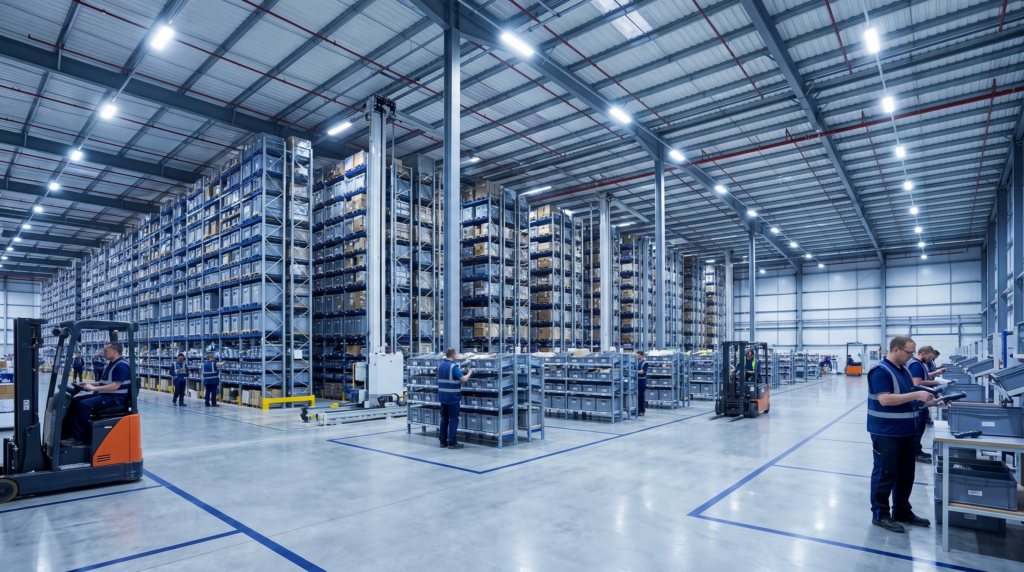
Crane-based mini load systems use a slim aisle with a fast-moving extractor that retrieves totes from racks up to 80 feet high. Shuttle-based variations place a robot on each level of the rack, allowing parallel movement and dramatically higher throughput. Both deliver totes to ergonomic pick stations where operators select the required quantity and the tote returns to storage automatically.
Key strengths of a mini load configuration include:
- Extremely high pick rates, often 300 to 1,000 lines per operator per hour
- Excellent SKU density in a compact footprint
- Ergonomic, sit-or-stand workstations that reduce fatigue
- Strong fit for batch picking, wave picking, and order consolidation
- Easy integration with conveyor, sortation, and packing automation
For distributors handling pharmaceutical products or other regulated goods, the accuracy and traceability of a mini load system aligns well with compliance requirements common in the pharmaceutical industry compliance environment.
Unit Load ASRS: Designed for Pallets and Bulk Storage
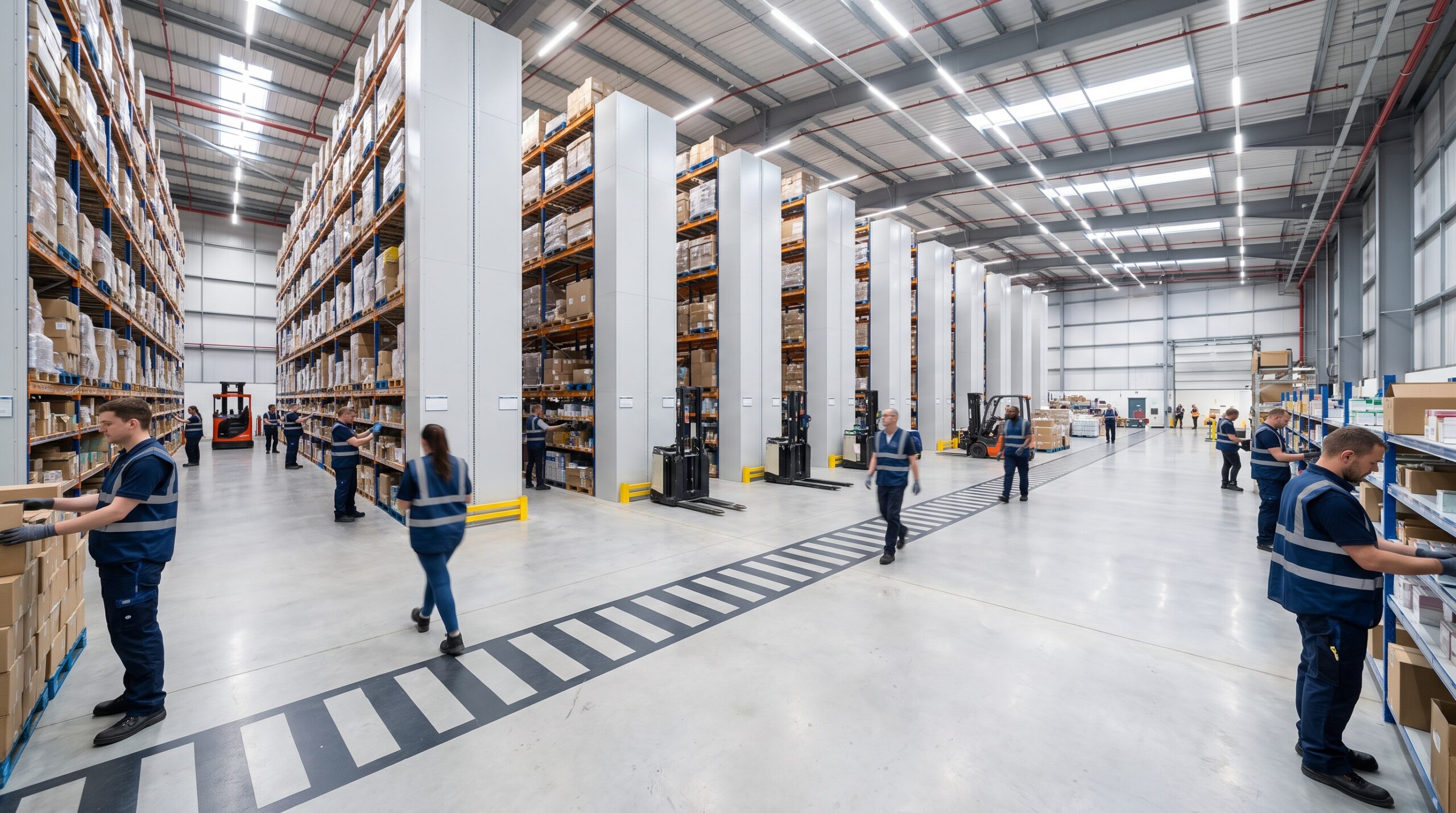
A unit load ASRS handles full pallets, large containers, and oversized loads, typically ranging from 1,000 to 5,000 pounds or more. These systems are the workhorses of high-bay warehouses, manufacturing buffer storage, cold storage, and bulk distribution. Picture a beverage producer staging finished pallets, a paper mill storing massive rolls, or a frozen food distributor managing tens of thousands of pallet positions in a freezer.
Unit load systems usually feature stacker cranes operating in narrow aisles, with rack heights frequently exceeding 100 feet. Some configurations use shuttle carts within deep-lane racking to maximize density, particularly useful when product velocity is high but SKU count is moderate. The system pulls full pallets for shipping, replenishment, or production line feeding.
Common advantages of unit load configurations include:
- Maximum cube utilization, particularly valuable for expensive real estate or refrigerated space
- Strong throughput for full-pallet movements, often 30 to 60 pallets per crane per hour
- Ability to operate in extreme environments such as freezers down to negative 20 degrees Fahrenheit
- Reduced forklift traffic, which improves safety and lowers equipment costs
- Excellent fit for first-in-first-out rotation in food, beverage, and pharmaceutical operations
Operations in the food and beverage sector with lot tracking needs often pair unit load ASRS with strict rotation rules, automatically directing the oldest acceptable lot to the next outbound order without operator intervention.
Choosing Between Them or Combining Both
Many modern facilities use both system types together. A unit load ASRS handles bulk reserve storage, replenishing forward pick areas. A mini load ASRS handles each-pick and case-pick activities for outbound orders. The two systems coordinate through warehouse software that knows which inventory should live where based on velocity, size, and demand patterns.
When evaluating which approach fits your operation, consider these questions:
- What percentage of your outbound volume is full pallet, full case, or each pick?
- How many active SKUs do you carry, and how is velocity distributed across them?
- What are your peak throughput requirements, both daily and seasonally?
- How tall can you build, and what are the constraints of your existing or planned facility?
- What is your tolerance for downtime, and what redundancy do you need?
Honest answers to these questions point toward the right configuration far more reliably than vendor brochures or generic industry benchmarks.
Implementing ASRS in Your Warehouse: Integration and ROI
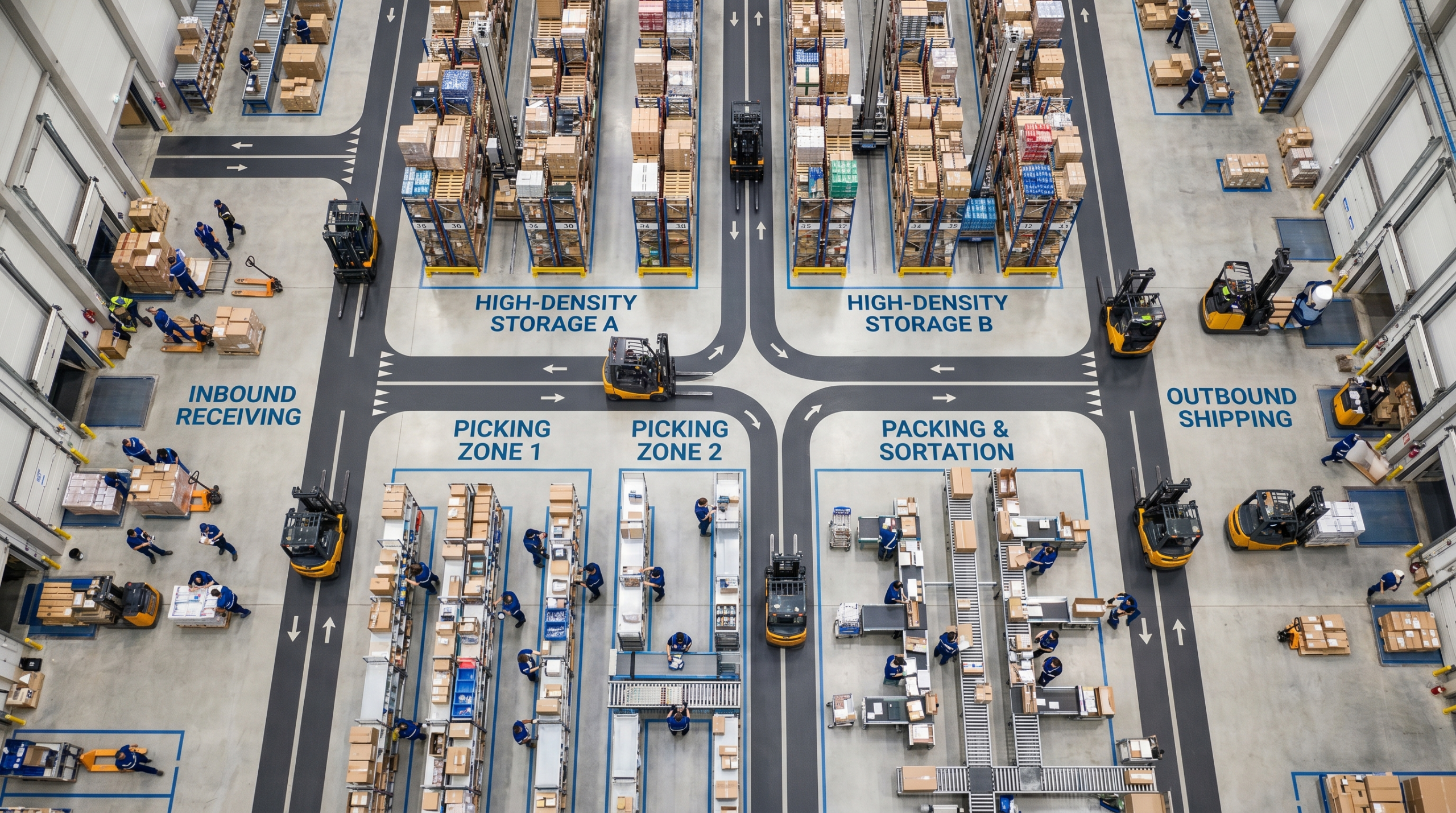
Even the best-designed automated storage system underperforms if it is poorly integrated or financially misaligned with the business. Successful projects share two characteristics: thoughtful integration with existing systems and processes, and a clear-eyed view of the financial returns. Both deserve serious attention before any equipment is ordered.
Integration Tips for a Smooth Deployment
Integration is where many automation projects stumble. The mechanical equipment usually arrives and installs on schedule, but the software layer connecting the new automation to the rest of the operation is often underestimated. A few practical tips help avoid common pitfalls.
Start with the data model. Your warehouse management software is the system of record for inventory, orders, and labor. The ASRS controls layer needs accurate, real-time information from the WMS to function correctly. Before installation, audit your master data: item dimensions, weights, packaging hierarchies, and storage rules. Garbage in produces garbage out, and automation amplifies the consequences of bad data.
Define clear roles between the WMS and the warehouse control system. The WMS typically handles order management, inventory, and labor. The warehouse control system orchestrating automation equipment handles real-time equipment commands, conveyor routing, and exception handling. When these layers are well-defined, troubleshooting becomes far easier and future upgrades are less disruptive.
Other integration practices that consistently pay off include:
- Map every process before automating it: Document current put-away, picking, replenishment, and shipping flows. Identify which steps the ASRS will replace, which will change, and which will stay manual.
- Plan for exceptions: Damaged loads, system faults, and inventory discrepancies all need defined recovery procedures. Without them, a single fault can stall an entire shift.
- Build in redundancy: Single-aisle systems are vulnerable to downtime. Where throughput is critical, design with multiple aisles or backup pick paths.
- Train operators early and often: Familiarity with the new workflow before go-live reduces ramp-up pain. Cross-train enough people to cover all shifts.
- Pilot before full cutover: Run the new system in parallel with existing processes for a defined period. Validate accuracy, throughput, and exception handling under real conditions.
- Engage IT and OT teams jointly: Information technology and operational technology must work together. Network reliability, cybersecurity, and data flow all depend on this collaboration.
For third-party logistics providers managing multiple clients in one facility, integration becomes even more nuanced. Each client may have different SKU profiles, service-level agreements, and reporting needs. A flexible 3PL warehouse management approach built around configurable rules helps the same automated equipment serve diverse customer requirements without custom code for each account.
Calculating ROI on Your Automated Storage Investment
An honest ROI analysis for an asrs warehouse project includes both the obvious savings and the less visible benefits. Skipping either side of the equation leads to projects that look good on paper but disappoint in practice, or to projects that get rejected even though they would have paid back handsomely.
Start with quantifiable cost reductions:
- Direct labor: Compare current labor hours for storage, retrieval, and replenishment with projected hours after automation. Include benefits, turnover costs, and seasonal premiums.
- Real estate: Calculate the cost per square foot of avoided expansion or the lease savings from consolidating into a smaller footprint.
- Equipment: Forklifts, batteries, charging infrastructure, and maintenance all decline when automation handles the core work.
- Energy: Lights-out aisles, optimized HVAC zones, and reduced forklift charging all lower utility costs.
- Damage and shrinkage: Lower handling damage and tighter inventory control reduce write-offs.
Next, quantify the harder-to-measure improvements:
- Throughput gains: If automation lets you ship more orders per day, what is the revenue impact during peak season?
- Accuracy: Customer chargebacks, returns, and lost accounts from shipping errors all decline with system-directed picking.
- Service levels: Faster cycle times can support same-day shipping commitments that win new business.
- Compliance: Regulated industries gain audit-ready documentation, which has real value even if it is hard to put a dollar amount on.
- Workforce stability: Lower physical demands reduce turnover, training costs, and injury claims.
Most well-scoped ASRS projects show payback periods of three to seven years, depending on labor markets, facility costs, and utilization rates. Operations running multiple shifts and high volumes typically see faster returns than single-shift, low-volume facilities. As Logistics Management has noted, the financial case for automation has strengthened considerably as labor costs have risen and equipment prices have come down.
One often-overlooked factor is scalability. A system sized for today’s volumes may need expansion in three years. Designing with future capacity in mind, even if it means slightly higher upfront cost, usually delivers better lifetime ROI than a system that needs replacement when growth outpaces it.
Real-World Applications Across Industries
Automated storage technology is not industry-specific, but each sector applies it differently based on operational priorities. Looking at how various industries use these systems offers practical lessons for any facility considering automation.
Pharmaceutical distribution: Imagine a regional pharmaceutical distributor handling tens of thousands of SKUs with strict lot tracking, expiration management, and chain-of-custody requirements. A mini load ASRS pulls totes containing controlled and high-value products to secure pick stations, where operators verify lot and expiration data before each pick. The system enforces FIFO rotation automatically, and every transaction creates an audit trail. Manual error risk drops sharply, and regulatory inspections become far easier to support.
Food and beverage manufacturing: Consider a beverage producer with a high-bay unit load ASRS positioned between production and shipping. Finished pallets move directly from filling lines into automated storage, where they wait until trucks arrive. The system rotates inventory by production date, holds pallets until quality release, and stages outbound orders by route. Forklift traffic in the warehouse drops dramatically, and the cold-chain integrity improves because pallets spend less time outside controlled temperatures.
E-commerce fulfillment: Picture a multi-channel retailer using mini load ASRS for fast-moving SKUs and traditional racking for slower items. Goods-to-person stations handle the bulk of unit picks, while a wave-planning module in the warehouse software groups orders to maximize tote efficiency. During peak season, the same equipment processes two to three times normal volume without adding proportional headcount.
Manufacturing buffer storage: A discrete manufacturer producing complex assemblies uses a unit load ASRS as a work-in-process buffer between production stages. Components flow into storage after the first operation, then are pulled in the right sequence for downstream assembly based on the production schedule. This eliminates floor staging, frees space for additional production lines, and reduces handling damage on partially completed assemblies. Tight integration with manufacturing execution system production control ensures the right materials arrive at the right station at the right time.
Wholesale distribution: A mid-sized industrial distributor combines a mini load ASRS for small parts with conventional storage for larger items. The automated zone handles roughly 80 percent of order lines from 20 percent of the SKUs, using less than half the labor previously required. Service levels improve, same-day shipping cutoffs extend later into the afternoon, and the operation handles growth without adding facility space. This pattern is common in B2B wholesale distribution operations where the Pareto principle plays out clearly in pick activity.
Future Trends Shaping Automated Storage Systems
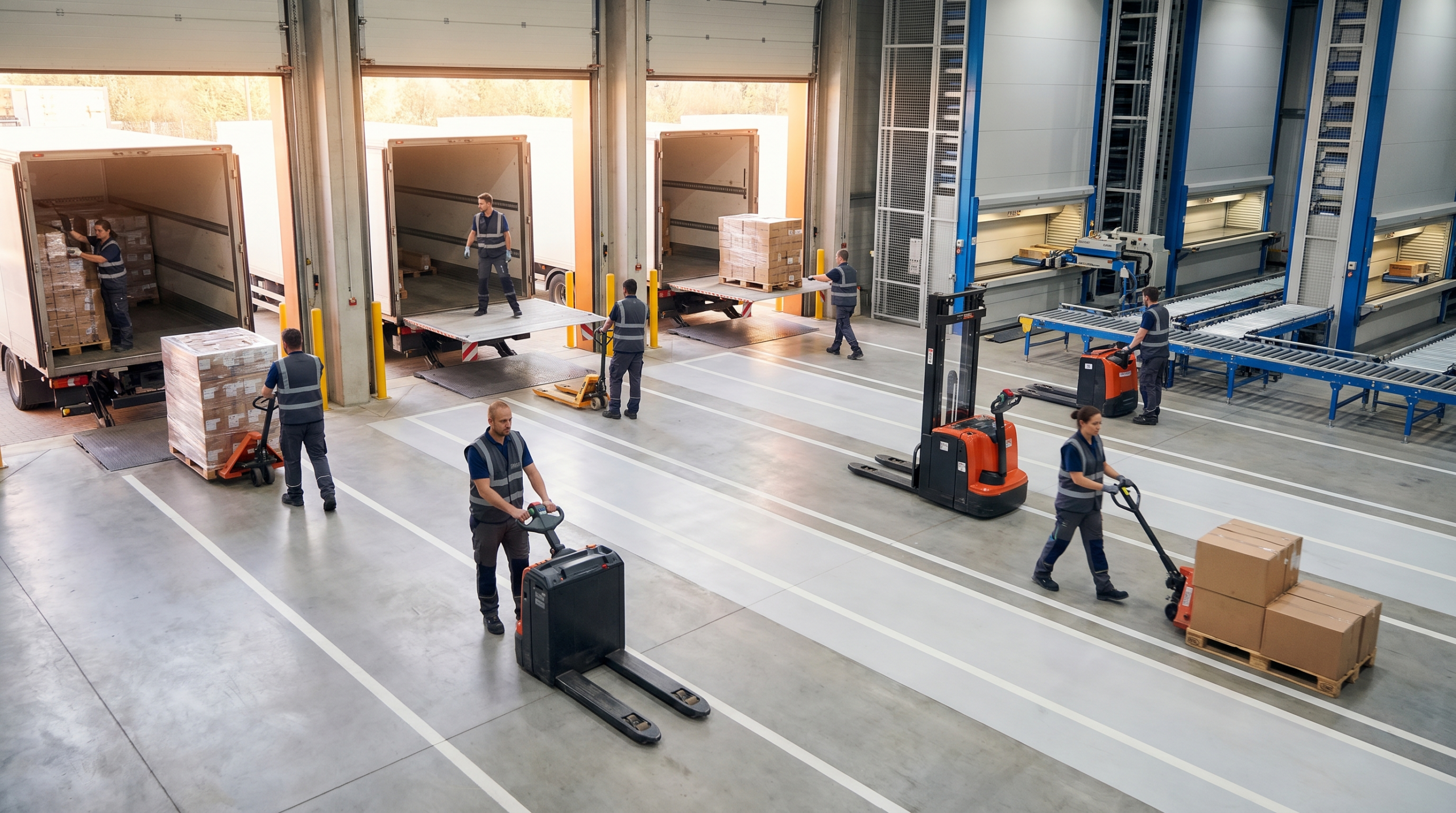
The technology powering automated storage continues to advance quickly, and several trends are worth watching as you plan for the next five to ten years. Some are extensions of current capabilities, while others represent meaningful shifts in how warehouses will operate.
Artificial intelligence and machine learning: AI is increasingly used to optimize slotting, predict equipment failures, and dynamically adjust workflows based on real-time conditions. Machine learning models analyze historical pick data to relocate inventory automatically, putting the right items in the right slots without manual analysis. Predictive maintenance algorithms catch bearing wear, motor degradation, and conveyor anomalies before they cause downtime.
Robotic cube storage and goods-to-person systems: Newer cube-based systems use small robots running on top of dense storage grids to retrieve totes from below. These systems offer extreme density, modular scalability, and fast deployment. They are particularly attractive for e-commerce operations and smaller facilities that cannot justify a traditional crane-based system.
Mobile robots integrated with fixed automation: Autonomous mobile robots handle the transport between automation zones, pack stations, and shipping docks. The combination of fixed ASRS for storage and AMRs for transport offers flexibility that pure conveyor-based designs cannot match.
Cloud-based control systems: Software architectures are shifting toward cloud and edge computing, allowing remote monitoring, faster updates, and easier multi-site coordination. Operations with several facilities can manage them from a single control plane, sharing best practices and balancing workloads across sites.
Sustainability features: Energy-recovery systems on cranes, regenerative braking, low-energy lighting, and optimized motion algorithms all reduce the carbon footprint of warehouse automation. As sustainability reporting becomes more important, these features matter to corporate buyers and investors.
Tighter integration with EDI and supply chain partners: Real-time data exchange with suppliers, carriers, and customers makes the warehouse a more responsive node in the broader supply chain. Strong EDI integration for trading partners ensures that automated facilities can react quickly to demand signals and ship status changes.
Workforce transformation: As automation handles more physical work, the warehouse workforce shifts toward technical roles. Maintenance technicians, controls specialists, data analysts, and process engineers become the dominant job categories. Forward-looking operators are already investing in training programs to build these skills internally.
None of these trends require waiting. Most are available in some form today, and operations that adopt them gradually will be better positioned than those that wait for a perfect moment that never quite arrives.
Moving Forward with Automated Storage
Automated storage and retrieval systems represent one of the highest-impact investments available to warehouse and logistics leaders today. Whether the right answer is a mini load ASRS for fast-moving small parts, a unit load ASRS for pallet-heavy operations, or a hybrid approach combining both, the underlying value proposition is consistent: more density, more accuracy, more throughput, and a more sustainable workforce model.
The key is making decisions based on your actual operational profile rather than industry hype. Audit your data, map your processes, define clear integration boundaries between your warehouse management software platform and the automation controls layer, and build a financial case that captures both direct savings and harder-to-measure benefits. Plan for exceptions, train your team, and design with future growth in mind.
Ready to take the next step? Contact ASC Software for a personalized consultation to discuss how automated storage solutions fit your specific operation. Explore the full range of warehouse software and automation solutions available to support your project from planning through go-live and beyond. And if you want to keep learning about practical warehouse technology, sign up for the ASC Software newsletter to stay informed on emerging trends, implementation best practices, and case studies from operations like yours.
Frequently Asked Questions
How does an automated storage system improve warehouse efficiency?
An automated storage system enhances warehouse efficiency by reducing manual labor and increasing accuracy. It automates the placement and retrieval of goods, minimizing human intervention and errors. This leads to faster operations and improved inventory management. For example, systems like unit load ASRS or mini load ASRS can be tailored to specific operational needs, ensuring optimal space utilization and streamlined workflows.
What are the benefits of a unit load ASRS?
A unit load ASRS offers benefits like efficient handling of large pallet loads and increased storage density. It automates heavy load movements, reducing reliance on forklifts and manual labor. This system is ideal for high-volume operations requiring quick access to bulk inventory. Additionally, it integrates seamlessly with warehouse management systems, providing real-time inventory tracking and enhancing overall operational efficiency.
Why choose mini load ASRS for small parts storage?
Mini load ASRS is ideal for small parts storage due to its speed and space efficiency. It automates the retrieval of small, fast-moving items, minimizing picker travel time and maximizing storage density. This system is particularly beneficial in environments with high SKU variability and demand for quick order fulfillment. It also supports precise inventory management, ensuring accurate stock levels and reducing picking errors.
How does an ASRS warehouse differ from traditional storage?
An ASRS warehouse differs from traditional storage by automating the retrieval and placement of goods. This reduces manual labor and increases operational speed and accuracy. Unlike traditional systems, ASRS uses vertical and horizontal space more efficiently, allowing for higher storage density. With integrated software, it provides real-time inventory updates and seamless coordination across operations, enhancing overall productivity and reducing operational costs.
What factors influence the choice of automated storage solutions?
The choice of automated storage solutions depends on factors like load type, throughput requirements, and space constraints. Different systems, such as unit load ASRS or mini load ASRS, cater to specific operational needs. Evaluating these factors helps determine the most suitable technology for optimizing warehouse efficiency. Additionally, integration capabilities with existing warehouse management systems are crucial for seamless operation and maximum return on investment.