

If you operate a 3PL that handles prescription drugs, OTCs, or medical devices, you already know that pharmaceutical warehousing carries obligations that generic logistics never does. Your customers are not just shipping product to you; they are extending their FDA-regulated quality system into your four walls. That is precisely why choosing a pharmaceutical 3PL WMS matters more than choosing any other line-of-business software you will ever run. DSCSA violations can halt distribution. GMP storage failures can trigger recalls. A weak lot-tracking record can turn a manageable quality event into a federal investigation with your name on the file.
The core issue is not that standard 3PL platforms lack useful features. It is that they lack compliance infrastructure. Serialization, lot-level chain of custody, quarantine enforcement, and 21 CFR Part 11 audit trails are not add-ons you bolt onto a general-purpose system. They have to be built into the transaction model itself. This article walks through what your software must actually do to keep a pharmaceutical 3PL operation compliant, auditable, and competitive.
What Makes Pharmaceutical 3PL Different from Standard 3PL
A conventional 3PL optimizes for throughput, accuracy, and cost per unit. A pharmaceutical 3PL optimizes for those things too, but inside a regulatory perimeter that shapes every transaction. The FDA’s oversight of drug distributors under 21 CFR Parts 210, 211, and 205 applies to any 3PL that stores, handles, or ships prescription drugs, regardless of whether the 3PL takes title to the product.
Several factors separate a 3PL pharmaceutical warehouse from a standard fulfillment operation:
- DSCSA transaction data at every ownership transfer. A 3PL must receive, verify, retain, and pass electronic Transaction Information, Transaction History, and Transaction Statement records at every inbound and outbound event involving a prescription drug.
- Environmental control. Temperature-controlled storage zones, humidity monitoring, and documented excursion handling are non-negotiable for most pharmaceutical SKUs.
- Product sensitivity. Expiry dates, quarantine periods, and lot-based hold and release workflows dictate what can and cannot ship on any given day.
- Customer quality audits. Pharmaceutical manufacturers audit their 3PL partners against their own quality management systems. Failing one of these audits is not just a nonconformance; it is often a lost account.
- Controlled substances. If you handle Schedule II-V products, DEA registration and record-keeping obligations layer on top of everything else. See DEA 3PL registration requirements for the specifics.
The upshot: a 3rd party pharmaceutical logistics operation is running two systems simultaneously – a warehouse and a compliance program. Your WMS has to serve both.
Core WMS Requirements for Pharmaceutical 3PLs
The following capabilities are what separate a functional pharmaceutical 3PL WMS from a general-purpose warehouse platform. Each maps to a specific regulatory or customer requirement, and each has to work at production speed without slowing pickers or receivers down.
Lot and Serial Number Tracking
Every pharmaceutical unit that enters your building must be tied to its lot number at receiving, and that association has to persist through every subsequent movement: putaway, replenishment, picking, packing, shipping, and returns. When a recall hits, you cannot afford to reconstruct chain of custody from paper records or spreadsheets. The WMS must be able to answer, in one query, which customers received product from a specific lot, when, and in what quantities.
This is not a feature you can optionally enable. It is required for DSCSA compliance and for the quality agreements your pharmaceutical customers make you sign. For a deeper look at the requirements, see our overview of critical elements of a pharmaceutical WMS.
DSCSA Serialization and Verification
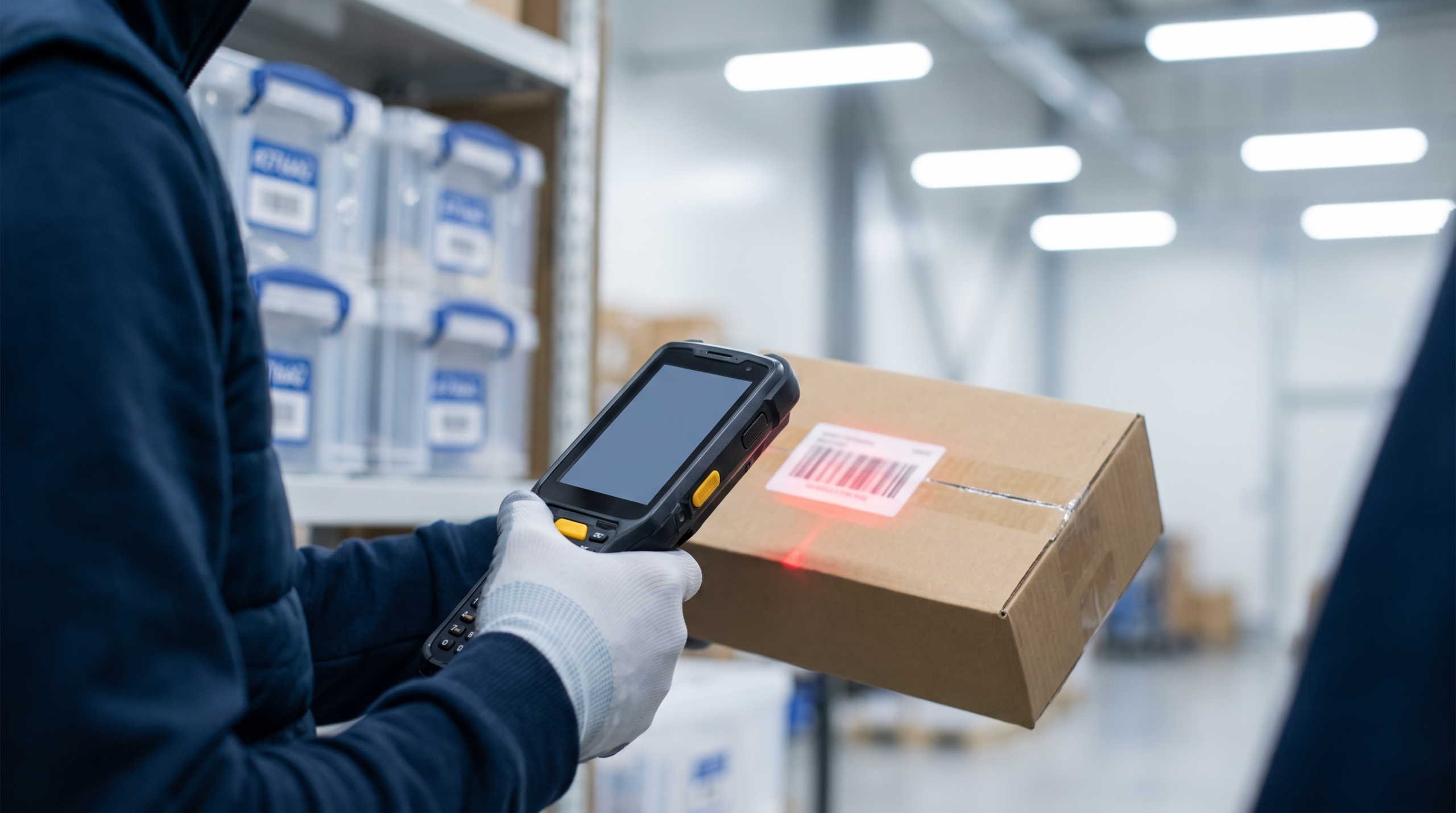
DSCSA obligations for 3PLs differ from those on manufacturers, but they are just as strict. Your WMS needs to scan and decode the 2D DataMatrix barcodes on saleable units, verify serialized product against manufacturer records where applicable, generate compliant transaction data for outbound shipments, and handle suspect or illegitimate product according to FDA procedures.
Saleable returns deserve special attention. Under DSCSA, returned prescription drugs must be verified before they can re-enter saleable inventory. If your system cannot verify a returned serial number against original transaction data, that product legally cannot be resold. For a full breakdown, see our guide to DSCSA compliance requirements and the FDA’s DSCSA guidance.
GMP Storage and Quarantine Management
GMP storage means the WMS understands temperature zones and enforces them at the transaction level. Ambient, controlled room temperature (15-25 degrees C), refrigerated (2-8 degrees C), and frozen zones each need dedicated locations, and product cannot be misdirected into the wrong zone without the system flagging the error.
Quarantine is equally critical. Product received but not yet released by the customer’s QA function must be blocked from picking. When a lot is placed on hold for investigation, every unit of that lot has to become instantly unpickable across the entire facility. See our detailed treatment of GMP requirements for warehousing for the operational specifics.
FEFO Picking and Expiry Date Management
First Expired, First Out is the default pick rule for pharmaceutical inventory, not an option. The WMS should enforce FEFO automatically, direct pickers to the correct lot without requiring judgment calls, and honor minimum remaining shelf life requirements at both receiving and shipping. If a customer requires 12 months of remaining shelf life on outbound shipments, the system has to block any pick that would violate that rule.
Expiry alerts should be proactive. Product approaching expiration needs to appear on operational dashboards weeks before it becomes non-saleable, giving customers time to redistribute, return, or destroy inventory. Our FEFO inventory management guide covers implementation in more depth.
Recall Support
Recall response is where a pharmaceutical 3PL WMS earns its keep. Given a lot number, the system must immediately return every customer who received product from that lot, every shipment date, every quantity, and the remaining on-hand inventory across every zone in the facility. Response time matters: FDA and manufacturer expectations for recall data are measured in hours, not days.
A capable recall workflow also supports customer notification (typically templated communications tied to shipment records) and FDA reporting where required.

Temperature and Cold Chain Documentation
Cold chain integrity is the top risk area in most pharmaceutical audits. Your WMS should integrate with continuous temperature monitoring systems, log excursion events automatically, and tie every excursion to the specific lots stored in the affected zone at the time. Investigation records, corrective actions, and QA disposition decisions all need to live where auditors can find them without a scavenger hunt.
For a broader treatment of the operational challenges, our guide to cold chain management covers monitoring hardware, excursion protocols, and documentation requirements.
3PL Billing
Pharmaceutical 3PL billing tends to be more complex than standard fulfillment billing. Storage might be charged by pallet, by lot, or by temperature zone. Handling fees vary by transaction type: standard picks, cold chain picks, controlled substance picks, and quality-hold releases each carry different rates. Special events – lot releases, quarantine holds, destruction handling – all need to appear on customer invoices with full traceability.
Any serious 3PL software solutions package must include activity-based billing that captures every billable event automatically from operational transactions, with customer-specific rate tables and clear audit trails. For more on the broader operational picture, see our 3PL industry solutions overview.
FDA Audit Readiness: What Your WMS Must Provide
When an FDA inspector arrives at a pharmaceutical 3PL, the questions are predictable: show me your DSCSA records, show me storage conditions for a specific lot over a specific period, show me the disposition of a specific quantity of product, show me your excursion investigations. The WMS is where most of those answers live.
Audit readiness comes down to several concrete capabilities:
- 21 CFR Part 11 electronic records. Every transaction needs an audit trail that cannot be edited after the fact. User authentication, electronic signatures on quality-critical actions, and immutable history are all required.
- Retrievability in hours, not days. Complete transaction history for any product, any lot, any customer, any date range must be exportable on demand.
- Linked documentation. SOPs and training records typically live outside the WMS, but the system should be able to link operational events to the SOP versions in effect at the time.
- Disposition tracking. Every unit that enters the facility must have a documented outcome: shipped, returned, destroyed, or held. Missing dispositions are one of the most common audit findings.
Getting audit-ready is not about producing binders on demand. It is about running an operation where the daily record of transactions is inherently audit-quality. That only works if the WMS was designed for it.

How ASC Software Supports Pharmaceutical 3PL Operations
ASC Software’s WMS is purpose-built for regulated industries, including pharmaceutical 3PL. The platform handles lot and serial tracking, DSCSA transaction data workflows, FEFO enforcement, quarantine and hold management, recall response, cold chain monitoring integration, and activity-based 3PL billing in a single unified system. Every transaction is captured against a 21 CFR Part 11-compliant audit trail, which means the operational record you generate every day is the same record your customers’ quality auditors and FDA inspectors will review.
Because ASC has decades of experience with pharmaceutical clients and their manufacturer partners, ASC Software’s WMS is designed to satisfy both the 3PL’s operational efficiency goals and the pharmaceutical manufacturer’s quality audit requirements. Implementation is handled by U.S.-based teams familiar with the pharmaceutical regulatory environment, and support is delivered by people who understand what a GMP deviation report actually is. Learn more on our pharmaceutical industry solutions page.
If your current 3PL warehouse management platform is missing any of the compliance layers described above, the risk is not theoretical. Talk to us before your next quality audit.
Request a demo of ASC Software’s WMS or explore our full solutions portfolio to see how a purpose-built pharmaceutical 3PL WMS changes what your operation can commit to.
Frequently Asked Questions
Do pharmaceutical 3PLs need a specialized WMS?
Yes. Generic 3PL warehouse management software typically lacks the compliance infrastructure required for pharmaceutical operations, specifically DSCSA serialization, lot-level traceability, GMP storage management, and 21 CFR Part 11-compliant audit trails. Using a non-compliant system exposes the 3PL and its pharmaceutical customers to regulatory risk that far exceeds the cost savings of a general-purpose platform.
What is DSCSA and what does it require of 3PLs?
The Drug Supply Chain Security Act requires 3PLs handling prescription drugs to receive and verify electronic transaction data, maintain product traceability records, handle suspect and illegitimate product according to FDA procedures, and pass transaction data to downstream trading partners. 3PLs must also verify saleable returns before returning product to inventory. These obligations apply whether or not the 3PL takes title to the product.
What WMS features are most important for pharmaceutical 3PLs?
Lot and serial tracking, DSCSA serialization and verification, FEFO picking, quarantine and hold management, expiry date controls, cold chain monitoring integration, recall support, and 21 CFR Part 11-compliant electronic records. Activity-based 3PL billing tied to operational transactions is also essential for accurate customer invoicing.
How do pharmaceutical 3PLs handle temperature-sensitive products?
Temperature-sensitive pharmaceuticals require dedicated storage zones with continuous monitoring, documented excursion investigation, and audit records tied to specific lots. The WMS should integrate with temperature monitoring hardware and log all excursion events automatically. Any product that experiences a temperature deviation must be quarantined pending quality investigation before any further handling can occur.
What is the difference between a standard WMS and one built for pharma 3PL?
A standard WMS handles inventory, picking, and shipping. A pharmaceutical 3PL WMS adds compliance layers: lot-level traceability, DSCSA transaction data management, GMP storage controls, FEFO enforcement, quarantine workflows, and 21 CFR Part 11 audit trails. The difference is not cosmetic. It is the difference between passing and failing a pharmaceutical manufacturer’s quality audit, and between defensible and indefensible responses to FDA inspection.
Frequently Asked Questions
Why is a pharmaceutical 3PL WMS essential?
A pharmaceutical 3PL WMS is essential for ensuring compliance with FDA regulations. It helps manage serialization, lot-level chain of custody, and audit trails, which are crucial for legal compliance. Unlike standard systems, it incorporates these features into its core transaction model. Without it, companies risk DSCSA violations, GMP storage failures, and potential recalls.
What makes pharmaceutical 3PL different from standard 3PL?
Pharmaceutical 3PL differs by operating within a strict regulatory framework. Compliance with FDA guidelines, such as 21 CFR Parts 210, 211, and 205, is mandatory. These regulations require stringent controls over environmental factors, product sensitivity, and transaction data. Unlike standard 3PLs, pharmaceutical 3PLs also face regular audits from manufacturers to ensure adherence to quality management systems.
How does a pharmaceutical 3PL WMS handle compliance?
A pharmaceutical 3PL WMS handles compliance by integrating necessary regulatory features into its design. It manages serialization, lot tracking, and audit trails automatically, ensuring all transactions meet FDA requirements. The system also supports environmental controls and quarantine enforcement. This built-in compliance infrastructure minimizes the risk of violations and recalls.
What are the key features of a pharmaceutical 3PL WMS?
Key features of a pharmaceutical 3PL WMS include serialization, lot-level tracking, and comprehensive audit trails. These features ensure compliance with FDA regulations and facilitate seamless transaction management. The system also supports environmental controls, such as temperature and humidity monitoring. These capabilities are vital for handling sensitive pharmaceutical products safely and legally.
Why is compliance critical in pharmaceutical 3PL?
Compliance is critical in pharmaceutical 3PL to avoid legal penalties and ensure product safety. Adhering to FDA regulations prevents DSCSA violations and GMP storage failures, which can lead to costly recalls. Compliance also maintains customer trust and ensures the integrity of the supply chain. Regular audits and stringent controls are necessary to meet these high standards.