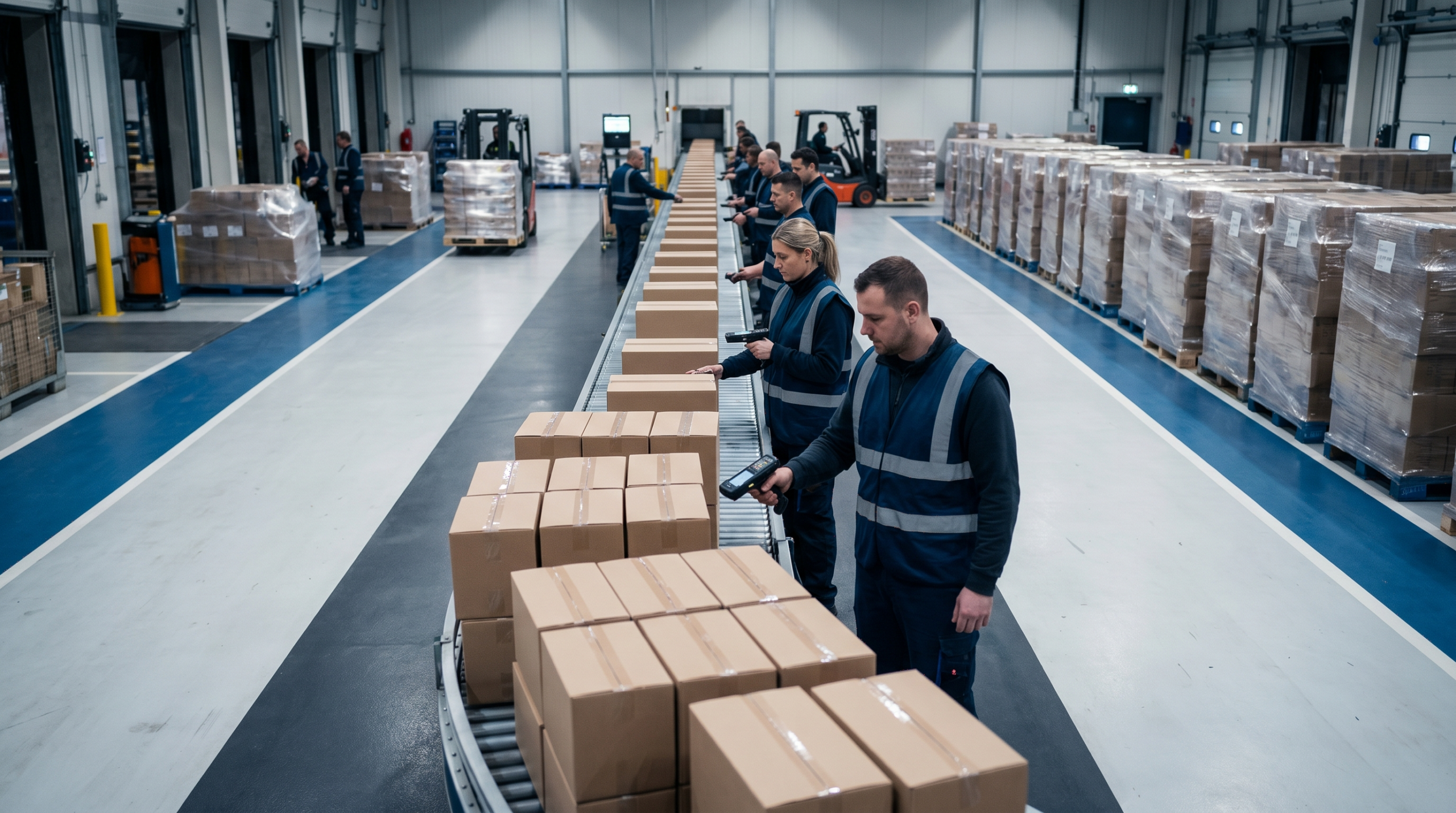
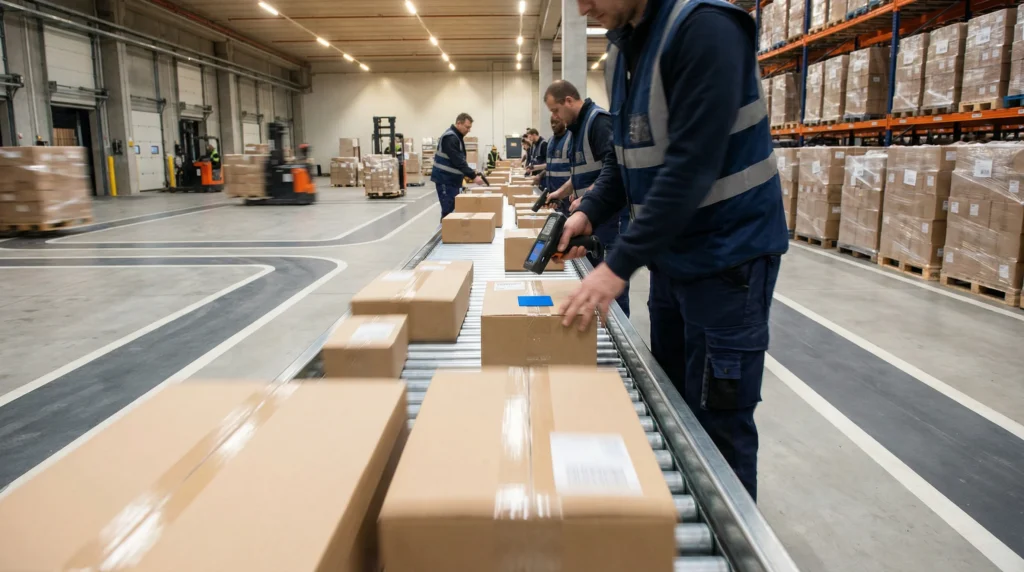
Food traceability software has become essential for modern food businesses. If you have ever faced a recall situation where you could not quickly identify which batches were affected, which suppliers provided the raw materials, or which retailers received the finished products, you understand the critical importance of traceability software in the food industry. Supply chain traceability has become non-negotiable for food manufacturers, distributors, and retailers who must protect consumers, comply with regulations, and safeguard their brand reputation. Food safety software provides the foundation for tracking products from farm to fork, enabling rapid response when problems arise and preventing issues before they escalate into costly crises.
The stakes have never been higher. According to the FDA, foodborne illnesses affect approximately 48 million Americans each year, resulting in 128,000 hospitalizations and 3,000 deaths. For food industry professionals, these statistics translate into regulatory pressure, liability concerns, and the constant challenge of maintaining consumer trust. This guide examines the essential components of effective traceability systems, explores emerging technologies shaping the future of food safety, and provides practical insights for selecting and implementing solutions that match your operational needs.
Understanding Food Traceability and Why It Matters
Traceability in the food industry refers to the ability to follow the movement of food products and ingredients through every stage of production, processing, and distribution. This capability allows companies to identify the origin of raw materials, track processing steps, monitor storage conditions, and document the chain of custody until products reach consumers. Without this visibility, responding to contamination events, quality issues, or regulatory inquiries becomes nearly impossible.
The concept extends beyond simple record-keeping. True traceability software in food manufacturing creates a digital thread that connects disparate data points into a coherent narrative. When a quality issue emerges, this thread allows you to trace backward to identify the source and trace forward to locate affected products in the market. The speed and accuracy of this process can mean the difference between a contained incident and a widespread public health emergency.
The Regulatory Landscape Driving Traceability Requirements
Government agencies worldwide have intensified their focus on food traceability requirements. In the United States, the FDA’s Food Safety Modernization Act (FSMA) established new requirements for preventive controls and supply chain verification. The FDA’s Food Traceability Final Rule, which took effect in 2023, requires companies handling foods on the Food Traceability List to maintain detailed records and share critical tracking events with supply chain partners.
These regulations specify that companies must be able to trace products one step forward and one step backward in the supply chain within 24 hours of a request. For many food companies operating with paper-based systems or disconnected spreadsheets, meeting this requirement presents significant challenges. traceability solutions provide the infrastructure needed to capture, store, and retrieve traceability data quickly enough to satisfy regulatory expectations.
Beyond federal requirements, many retailers and foodservice operators have implemented their own traceability mandates for suppliers. Major grocery chains now require suppliers to demonstrate lot-level traceability, temperature monitoring capabilities, and rapid recall response procedures. Meeting these customer requirements has become a competitive necessity for food manufacturers and distributors seeking to maintain or expand their market access.

Business Benefits Beyond Compliance
While regulatory compliance drives many traceability investments, the business benefits extend far beyond avoiding penalties. Supply chain traceability provides operational visibility that enables better decision-making across multiple functions. Quality teams can identify patterns in supplier performance and product issues. Operations managers can optimize inventory rotation and reduce waste from expired products. Sales teams can differentiate their offerings to customers who value transparency.
Consider the financial impact of improved recall management. Industry this software across food operations reduces these costs by enabling more precise, targeted recalls. Instead of withdrawing an entire product line from the market, companies with lot-level traceability can identify and retrieve only the specific batches affected by an issue.
Consumer expectations have also shifted significantly. Today’s shoppers increasingly want to know where their food comes from, how it was produced, and whether it meets their standards for safety, sustainability, and ethical sourcing. Food and beverage companies that can provide this transparency build stronger relationships with their customers and command premium positioning in competitive markets.
Food Safety and Traceability, Simplified
Meet FSMA 204 requirements with end-to-end traceability, cold chain monitoring, and recall-ready documentation.
Request a Demo
Key Features of Effective these solutions in food manufacturing
Selecting the right food safety software requires understanding which capabilities deliver the most value for your specific operations. While every food business has unique requirements, certain core features distinguish effective traceability solutions from basic inventory management tools. Evaluating these capabilities helps ensure your investment addresses both current needs and future requirements.
Real-Time Tracking and Visibility
The foundation of any traceability system is the ability to capture and display product movement information as it happens. Real-time tracking eliminates the delays associated with batch data entry and paper-based documentation. When products move through receiving, production, storage, and shipping, the system should immediately update to reflect their current status and location.
Effective real-time tracking relies on several technical components working together:
- Barcode or RFID scanning at key checkpoints throughout your facility
- Mobile devices that enable workers to capture data at the point of activity
- Integration with production equipment and packaging lines to automate data collection
- Dashboard displays that provide at-a-glance visibility into current inventory status
- Alert systems that notify appropriate personnel when exceptions occur
The value of real-time visibility extends beyond traceability itself. Operations teams can monitor work-in-progress, identify bottlenecks, and make adjustments before delays cascade through the schedule. Shipping teams can confirm order completeness and accuracy before products leave the facility. Customer service teams can provide accurate delivery estimates based on actual inventory status rather than outdated reports.
Lot and Batch Management
Lot tracking forms the core of supply chain traceability for food manufacturers. Each lot represents a discrete quantity of product produced under uniform conditions, typically during a single production run or within a defined time period. Effective lot management captures the relationship between finished product lots and the ingredient lots used to produce them, creating the traceability links needed for recall response.
When evaluating traceability software, examine how the system handles lot assignment, tracking, and genealogy. The solution should support your specific production processes, whether you operate batch manufacturing, continuous processing, or mixed-mode operations. It should also accommodate the variety of lot identification schemes used by your suppliers, since raw material traceability depends on accurately capturing incoming lot information.
Beyond basic lot tracking, consider how the software manages lot attributes that affect product quality and safety. Expiration dates, production dates, origin information, and quality test results should all be associated with the lot record. This rich data set enables FIFO (first-in, first-out) inventory rotation, quarantine of suspect lots, and detailed quality analysis across production history.
Compliance Documentation and Reporting
Food safety software must simplify the documentation burden associated with regulatory compliance. The system should generate required records automatically as part of normal operations, eliminating the need for separate data entry to satisfy compliance requirements. When auditors or regulators request information, retrieving and presenting the necessary documentation should take minutes rather than days.
Key compliance features to evaluate include:
- Automated generation of lot genealogy reports showing ingredient-to-product relationships
- Configurable retention policies that maintain records for required time periods
- Audit trail functionality that documents who accessed or modified records and when
- Export capabilities that produce reports in formats acceptable to regulatory agencies
- Support for FSMA recordkeeping requirements, including Key Data Elements and Critical Tracking Events
The reporting capabilities should also support internal quality management needs. Trend analysis, supplier performance tracking, and production quality metrics help identify improvement opportunities and demonstrate continuous improvement to customers and auditors.
Supply Chain Traceability Across Multiple Partners
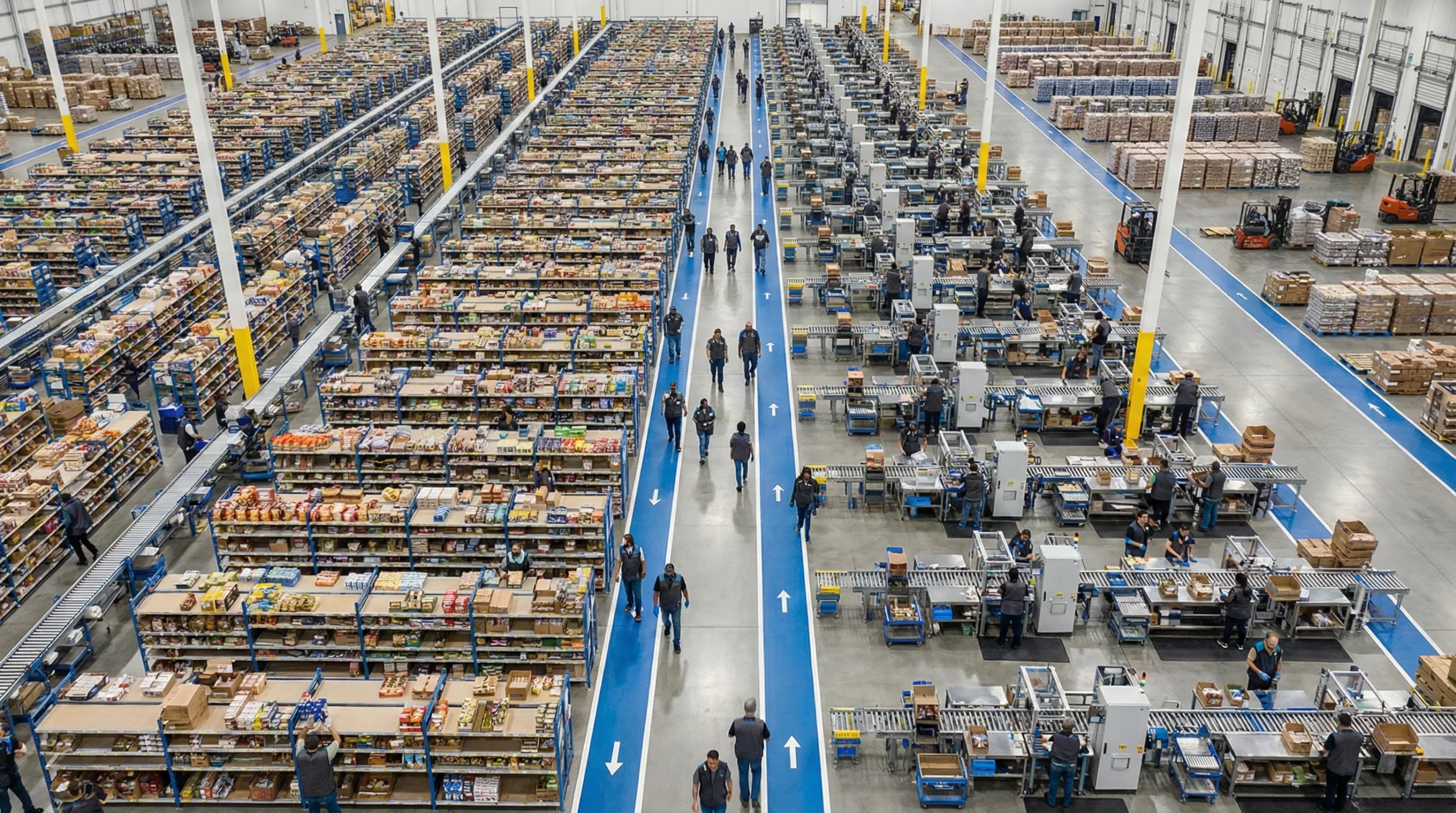
Traceability does not stop at your facility’s walls. Effective supply chain traceability requires connecting information across suppliers, manufacturers, distributors, and retailers. This interconnected visibility presents both technical and organizational challenges, as each participant maintains their own systems and data formats.
Supplier Integration and Incoming Traceability
The traceability chain begins with your suppliers. Capturing accurate lot information for incoming raw materials and ingredients establishes the foundation for finished product traceability. However, suppliers vary significantly in their traceability capabilities and willingness to share data electronically. Your approach must accommodate this variation while still achieving the visibility you need.
Some suppliers can provide detailed electronic data through EDI transactions or direct system integration. These connections enable automatic capture of lot numbers, production dates, certificates of analysis, and other critical information. For suppliers without electronic capabilities, you need efficient processes for capturing data from paper documents at receiving.
Beyond data capture, supplier management for traceability involves qualification and monitoring. Establishing traceability requirements in supplier agreements sets clear expectations. Regular audits verify that suppliers maintain adequate traceability systems. Performance tracking identifies suppliers who consistently provide incomplete or inaccurate lot information, enabling corrective action before problems affect your operations.
Customer-Facing Traceability Requirements
Your customers increasingly expect detailed traceability information about the products you ship them. Major retailers require suppliers to provide lot information, country of origin, and other attributes through standardized data formats. Foodservice operators need batch-level information to manage allergen risks and respond to customer inquiries. Meeting these requirements efficiently depends on your ability to extract and transmit data from your traceability system.
The complexity increases when customers request mock recall exercises or actual recall support. Your system should enable rapid generation of distribution reports showing exactly which lots shipped to which customers on which dates. The speed of this response often factors into customer assessments of supplier reliability and risk.
Food safety software that supports wholesale distribution operations must handle the additional complexity of products passing through multiple distribution points. Each handling step adds potential traceability gaps if not properly documented. Cross-docking, consolidation, and break-bulk operations all require careful attention to maintain lot integrity and traceability links.
Third-Party Logistics Considerations
Many food companies rely on third-party logistics providers for warehousing and distribution. This arrangement creates traceability challenges, as your products move through facilities and systems you do not directly control. Selecting 3PL partners with appropriate traceability capabilities and establishing clear data-sharing agreements protects your supply chain visibility.
Key questions to address with 3PL providers include:
- How does the provider capture and maintain lot-level inventory information?
- What data will be transmitted to your systems, and through what mechanisms?
- How quickly can the provider generate lot-level shipping reports for recall response?
- What quality controls prevent commingling of lots or shipping of incorrect products?
- How does the provider handle temperature monitoring and documentation for cold chain products?
Companies providing 3PL logistics services recognize that traceability capabilities increasingly influence customer selection decisions. The best providers invest in systems and processes that maintain traceability integrity while handling products from multiple clients with varying requirements.
Food Safety Software for Risk Management
Traceability software provides the data foundation for food safety programs, but comprehensive food safety software extends beyond tracking to include risk identification, prevention, and response capabilities. These features help quality teams move from reactive problem-solving to proactive risk management.
Hazard Identification and Control Point Monitoring
HACCP (Hazard Analysis and Critical Control Points) programs require systematic identification of biological, chemical, and physical hazards, along with monitoring of control points where these hazards can be prevented or eliminated. Food safety software supports HACCP implementation by documenting hazard analyses, tracking control point monitoring, and managing corrective actions when deviations occur.
Effective software captures monitoring data automatically where possible, reducing reliance on manual observation and recording. Temperature sensors integrated with the software system provide continuous monitoring of refrigerated storage. Metal detectors and x-ray systems can transmit inspection results directly to the quality database. This automation improves monitoring accuracy while reducing the burden on production staff.
When control point deviations occur, the software should guide the response process. Automated workflows can initiate hold procedures for affected products, notify appropriate personnel, document the investigation, and track corrective actions to completion. This structured approach ensures consistent response and creates the documentation needed to demonstrate effective food safety management to auditors and regulators.
Automated Alerts and Escalation
Timely response to potential food safety issues depends on rapid notification of the right people. tracking systems in food businesses should include configurable alert systems that notify personnel when specific conditions occur. These alerts transform passive data collection into active risk management by ensuring problems receive immediate attention.
Common alert scenarios include:
- Temperature excursions in storage areas or during transportation
- Products approaching or exceeding expiration dates
- Hold status applied to ingredients or finished products
- Supplier lots associated with recall notices or quality advisories
- Test results outside acceptable parameters
- Delayed completion of required quality checks
The escalation logic should match your organizational structure and response protocols. Initial alerts might go to front-line supervisors, with escalation to quality managers and plant leadership if the situation is not resolved within defined timeframes. Integration with communication systems enables alerts through email, text message, or dedicated monitoring applications.
Recall Readiness and Response
Despite best efforts at prevention, food companies must be prepared to execute recalls when necessary. The speed and precision of recall response directly affects consumer safety, regulatory outcomes, and financial impact. food tracking software provides the capabilities needed to identify, locate, and retrieve affected products efficiently.
Effective recall management begins with rapid scope identification. Given a specific lot number or production date range, the system should immediately identify all downstream products and their current locations. This analysis should include work-in-progress, finished goods inventory, and products already shipped to customers. The complete picture enables decisions about how much product must be addressed and what actions are appropriate.
Once scope is established, the software supports execution through automated communication, retrieval tracking, and disposition documentation. Customer notifications can be generated automatically from shipping records. Returns can be tracked against expected quantities to ensure complete retrieval. Final disposition – whether destruction, rework, or release after investigation – should be documented with appropriate approvals.
Emerging Technologies Shaping Food Traceability
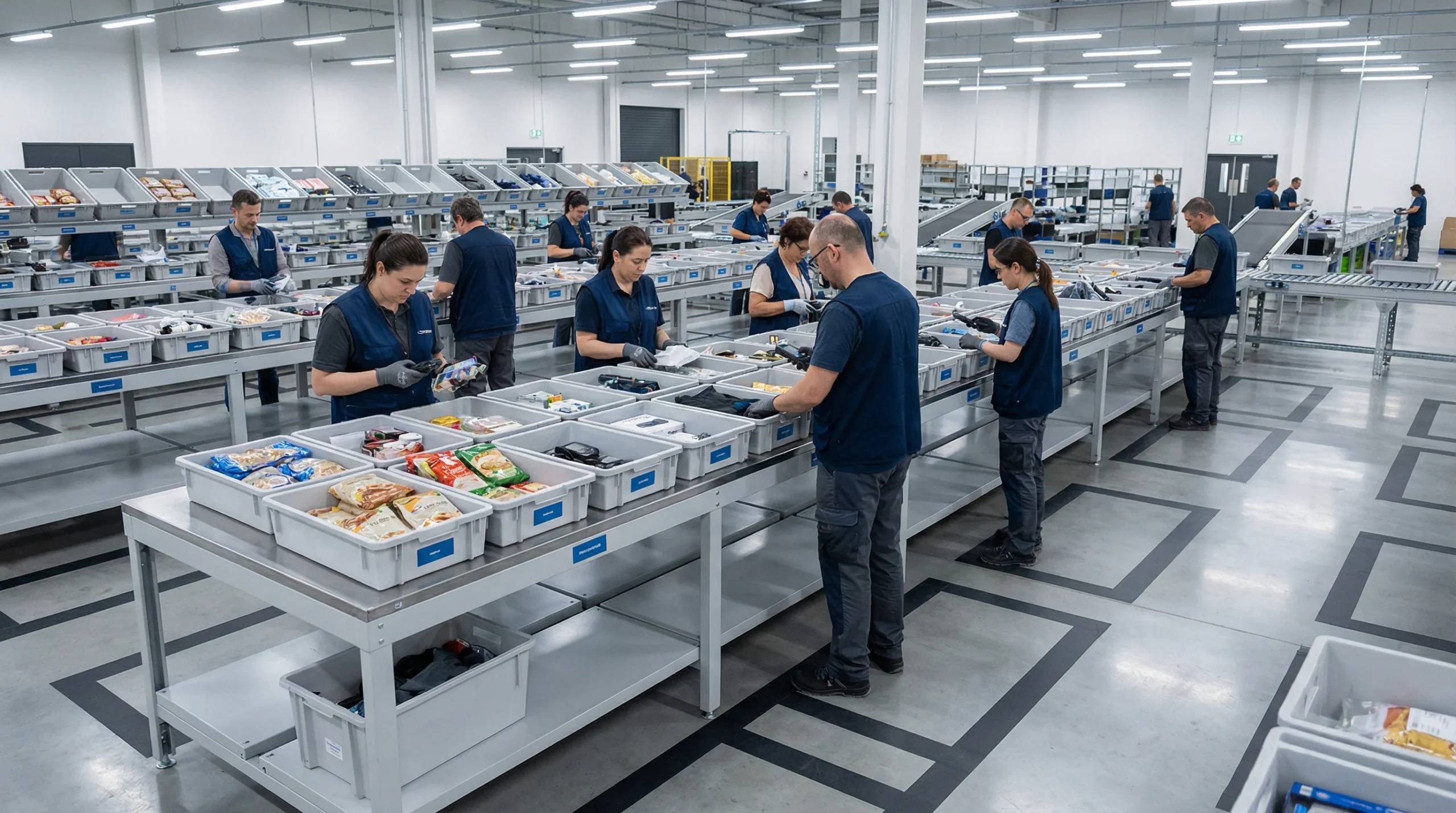
The landscape of supply chain traceability continues to change as new technologies mature and gain adoption. Understanding these developments helps food industry professionals make informed decisions about current investments while preparing for future capabilities. The most significant trends involve enhanced data capture, distributed data management, and sustainability-driven transparency requirements.
IoT Sensors and Real-Time Monitoring
Internet of Things (IoT) technology enables continuous monitoring of conditions that affect food safety and quality. Temperature sensors, humidity monitors, and location trackers can now transmit data continuously rather than requiring manual checks at intervals. This constant stream of information creates more complete traceability records and enables faster response to condition excursions.
Cold chain monitoring represents the most common IoT application in food traceability. Wireless sensors placed in shipping containers, storage coolers, and display cases report temperatures at regular intervals. The data integrates with food safety software to document compliance with temperature requirements and trigger alerts when excursions occur. This capability has become essential for maintaining quality and demonstrating due diligence for temperature-sensitive products.
Beyond temperature, IoT sensors can monitor other parameters relevant to food safety and quality. Ethylene sensors help manage produce ripening. Humidity monitors protect products sensitive to moisture. Vibration and shock sensors document handling conditions during transportation. As sensor costs decrease and connectivity improves, more parameters become practical to monitor continuously.
Blockchain for Distributed Traceability
Blockchain technology offers a new approach to sharing traceability data across supply chain partners. Unlike traditional systems where each participant maintains separate records, blockchain creates a shared, immutable ledger that all authorized parties can access. This distributed architecture addresses trust issues in multi-party supply chains and provides consumers with verifiable product history.
Several major food companies and retailers have piloted blockchain-based traceability systems, particularly for products where origin verification carries significant value. Fresh produce, seafood, and specialty items benefit from the enhanced transparency blockchain can provide. Consumers can scan product codes to access verified information about where their food was grown, processed, and shipped.
However, blockchain adoption faces practical challenges that limit near-term implementation. The technology requires participation from multiple supply chain partners, many of whom lack the technical resources for integration. Data quality remains dependent on accurate input at each stage – blockchain can verify that records have not been altered, but cannot verify that initial entries are accurate. Most food companies are monitoring blockchain developments while focusing current investments on improving their internal traceability foundations.
Sustainability and Transparency Demands
Consumer and regulatory pressure for sustainability information increasingly overlaps with traceability requirements. Companies must document not only product safety attributes but also environmental and social characteristics of their supply chains. Carbon footprint calculations, water usage, labor practices, and sourcing policies all depend on traceability data that extends deep into the supply chain.
Warehouse management software plays a key role in capturing the operational data needed for sustainability reporting. Energy consumption, packaging material usage, and waste generation all occur within warehouse operations. Systems that capture this data alongside inventory and traceability information enable comprehensive sustainability analysis without requiring separate data collection efforts.
Emerging regulations in the European Union and elsewhere will require food companies to demonstrate deforestation-free supply chains for specific commodities. These requirements depend on traceability systems that can track ingredients back to geographic origin and verify compliance with environmental standards. Companies serving international markets should anticipate expanding traceability scope to address these evolving requirements.
Implementation Strategies for Traceability Success
Deploying these solutions for food companies requires careful planning to achieve desired outcomes while minimizing operational disruption. Success depends on clear objective definition, appropriate technology selection, thorough process design, and sustained organizational commitment. Learning from common implementation challenges helps avoid pitfalls that delay or diminish results.
Defining Traceability Objectives and Scope
Before evaluating software options, clarify what you need your traceability system to accomplish. Regulatory compliance provides a baseline, but most organizations pursue additional objectives that shape system requirements. Customer requirements, quality improvement goals, and operational efficiency targets all influence the appropriate solution scope.
Consider these questions when defining your traceability objectives:
- Which regulations apply to your products, and what specific requirements must the system address?
- What traceability information do your customers require, and in what formats?
- How quickly must you be able to complete trace exercises during audits or recall events?
- What quality metrics do you want to track using traceability data?
- Which operational processes could benefit from improved lot-level visibility?
- What integration requirements exist with existing systems for ERP, quality, and production?
The answers to these questions determine the granularity of traceability you need. Some operations require tracking to the individual unit level, while others appropriately track at the pallet or batch level. More granular tracking provides more precise recall targeting and richer quality data, but requires more data capture effort and system complexity.
Process Design and Data Quality
Software cannot compensate for poorly designed processes or inaccurate data entry. Before implementing new technology, map your current processes for receiving, production, storage, and shipping. Identify where traceability data must be captured, who will capture it, and how the information will flow through subsequent operations.
Data quality depends on making accurate entry easy and errors difficult. Barcode scanning eliminates transcription errors that plague manual entry. Validation rules reject illogical entries before they corrupt the database. Mandatory fields ensure critical information is not skipped. These controls should be balanced against workflow efficiency – overly burdensome data requirements lead to workarounds that undermine traceability integrity.
Training plays a critical role in data quality. Production workers and warehouse staff must understand why traceability matters, not just how to use the system. When people appreciate the consequences of inaccurate data – potential safety risks, failed audits, costly recall expansions – they take greater care with their entries. Regular reinforcement and feedback help maintain attention to data quality over time.
Integration with Existing Systems
Traceability software rarely operates in isolation. Manufacturing execution systems, ERP platforms, quality management systems, and customer order systems all contain or require traceability-related data. Planning for integration during system selection ensures the chosen solution can connect with your existing technology landscape.
Integration architecture decisions have long-term implications for data consistency and maintenance effort. Point-to-point connections between individual systems become increasingly complex as the number of integrated systems grows. Middleware or integration platforms can simplify connections but add another technology layer to maintain. Evaluate your current integration approach and consider whether the traceability implementation should follow existing patterns or provide an opportunity to improve integration architecture.
Master data management requires particular attention during integration planning. Product codes, customer identifiers, supplier numbers, and location codes must be consistent across connected systems. Data inconsistencies create traceability gaps and reporting errors that undermine system value. Invest time in data cleanup and governance before implementing integrations.
Measuring Traceability Performance
Once implemented, traceability systems require ongoing monitoring to ensure they continue meeting organizational needs. Performance measurement identifies degradation before it creates compliance gaps and highlights opportunities for continuous improvement. Effective measurement combines operational metrics with periodic verification exercises.
Key Performance Indicators
Regular tracking of operational metrics reveals trends in traceability system performance. Useful indicators include:
- Time required to complete forward and backward trace exercises
- Percentage of lots with complete genealogy documentation
- Data entry error rates identified through audits or reconciliation
- System availability and response time for traceability queries
- Percentage of incoming materials with electronic lot data capture
- Number and duration of traceability data gaps in production records
These metrics should be reviewed regularly by quality and operations leadership. Trending analysis identifies gradual degradation that might not be apparent from individual measurements. Comparison against targets or benchmarks highlights areas requiring attention. Sharing metrics with front-line staff reinforces accountability and provides feedback on their data capture efforts.
Mock Recall Exercises
Periodic mock recall exercises provide the most realistic test of traceability capabilities. These exercises simulate the response to an actual recall event, requiring teams to identify affected products, locate them in the supply chain, and execute retrieval procedures. The time required to complete these exercises and the accuracy of the results reveal the true state of traceability readiness.
Effective mock recalls test different scenarios that stress various aspects of the traceability system. Trace a single ingredient lot forward through multiple finished products. Trace a finished product lot backward to identify all ingredient sources. Identify all distribution points for a specific production date range. Each scenario exercises different system capabilities and organizational response procedures.
Document mock recall results and compare them against regulatory expectations and customer requirements. If your target is completing traces within four hours but exercises consistently take eight hours, identify the bottlenecks and address them before facing a real recall. Mock recall findings should drive improvement initiatives and validate system enhancements.
Conclusion: Building Your Traceability Foundation
Food traceability software has become essential infrastructure for companies operating in today’s food industry. Regulatory requirements, customer expectations, and operational imperatives all demand the ability to track products throughout the supply chain with speed and precision. The investment in traceability capabilities protects your company from recall costs, regulatory penalties, and brand damage while enabling operational improvements that enhance competitiveness.
Building effective traceability requires more than software selection. Success depends on clear objectives, well-designed processes, accurate data capture, and sustained organizational commitment. The technology provides capabilities, but people and processes determine whether those capabilities deliver value. Companies that approach traceability as a strategic capability rather than a compliance checkbox achieve the greatest returns on their investments.
The technology landscape continues to develop, with IoT sensors, blockchain, and sustainability requirements expanding what traceability systems can and must accomplish. Choosing solutions designed for adaptability helps protect current investments as requirements evolve. Focus on strong foundational capabilities while maintaining awareness of emerging technologies that may become relevant to your operations.
Ready to strengthen your food traceability capabilities? Contact ASC Software to discuss how modern traceability solutions can address your specific challenges. Our team can help you assess your current capabilities, identify gaps, and develop a roadmap for improvement. Explore our solutions to learn more about warehouse management and supply chain technologies that support comprehensive traceability programs.
Frequently Asked Questions
What is tracking systems across food operations?
this software in food manufacturing tracks the movement of food products through production, processing, and distribution stages. It enables companies to identify the origin of raw materials and monitor storage conditions. This software helps in responding swiftly to contamination events and quality issues. By providing a digital thread of data, it ensures that any potential problems can be traced back and forward efficiently.
Why is supply chain traceability crucial for food safety?
Supply chain traceability is crucial for food safety as it allows tracking of food products from farm to fork. This visibility helps in identifying contamination sources and ensures compliance with regulations. It also safeguards consumer trust by preventing foodborne illnesses. In case of a recall, traceability enables quick identification of affected batches, minimizing public health risks and financial losses.
How does food safety software prevent costly crises?
Food safety software prevents costly crises by enabling rapid response to food safety issues. It provides detailed records of production and distribution, helping to quickly identify and isolate problems. This proactive approach reduces the risk of widespread contamination and protects brand reputation. By complying with regulatory requirements, it also mitigates potential legal liabilities and financial penalties.
What role does the FDA play in food traceability?
The FDA plays a significant role in food traceability by setting regulatory requirements to ensure food safety. The Food Safety Modernization Act (FSMA) and the Food Traceability Final Rule mandate detailed record-keeping for certain foods. These regulations help in preventing foodborne illnesses and facilitating swift action during recalls. Compliance with these rules is essential for companies to avoid legal issues and maintain consumer trust.
How does traceability software benefit food manufacturers?
Traceability software benefits food manufacturers by enhancing their ability to track and document every stage of production. It helps in maintaining compliance with regulations and improves operational efficiency. By providing real-time data, manufacturers can quickly address quality issues and prevent potential recalls. This software also supports supply chain transparency, which is crucial for building consumer confidence and brand loyalty.