




The Complete Guide to Warehouse Slotting Optimization
Kurt AdamsPublished: April 2, 2026 | Updated: May 2, 202619 minutes
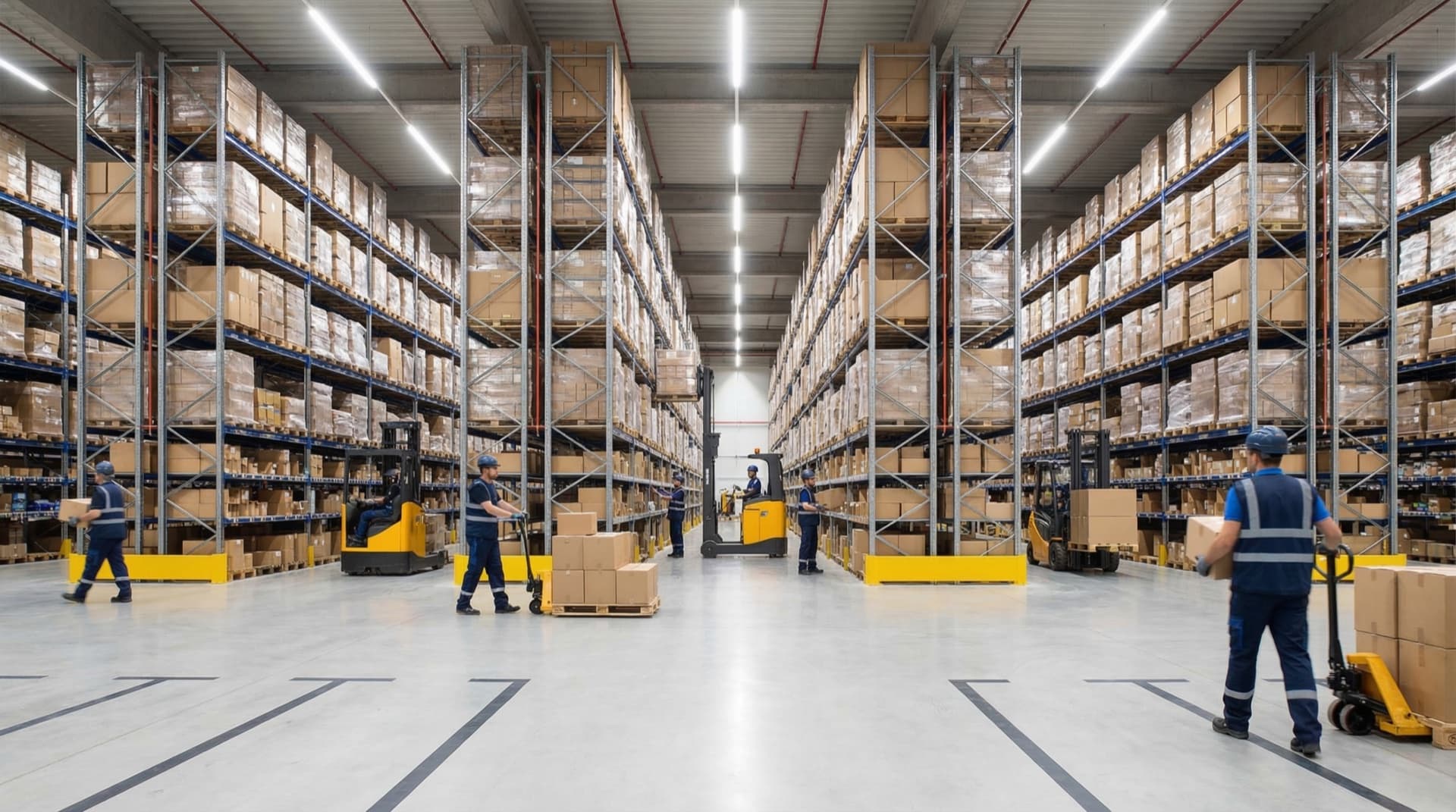
Warehouse slotting optimization has become essential for modern businesses. Imagine a distribution center where pickers walk miles every shift, zigzagging across the facility to fill orders. High-demand items sit in far corners while slow-movers occupy prime real estate near packing stations. The result? Exhausted workers, missed shipping deadlines, and labor costs that climb higher each quarter. This scenario plays out in warehouses across the country, yet the solution often lies not in adding more staff or expanding square footage, but in rethinking how products are positioned within existing space.
Understanding what is warehouse slotting - and more importantly, how to optimize it - can transform chaotic operations into efficient, profitable fulfillment engines. Warehouse slotting strategies determine where every SKU lives within your facility, directly impacting pick times, accuracy rates, and worker fatigue. When paired with modern warehouse slotting software, these strategies become even more powerful, using data and algorithms to continuously refine product placement. This guide explores everything warehouse managers need to know about slotting optimization, from foundational concepts to emerging technologies reshaping the field.
What is Warehouse Slotting Optimization and Why It Matters
At its core, warehouse slotting is the practice of determining the optimal storage location for each product in a facility. Think of it as creating a strategic address system where every item has a designated home based on specific criteria. These criteria might include pick frequency, product dimensions, weight, compatibility with other items, and order patterns.
The practice matters because inefficient slotting creates a cascade of operational problems. When fast-moving items are scattered throughout a warehouse or stored in hard-to-reach locations, pickers spend more time traveling and less time fulfilling orders. Consider a facility handling 10,000 orders daily - even a few extra seconds per pick translates to hours of lost productivity across a shift.
The Real Cost of Poor Slotting
Poor slotting decisions manifest in several measurable ways. Labor costs increase as workers travel farther and work harder to complete the same number of picks. Order accuracy suffers when similar items are stored near each other or when workers rush to meet quotas in poorly organized spaces. Equipment utilization drops when forklifts and other machinery must navigate inefficient paths.
Beyond these direct costs, poor slotting affects worker safety and retention. Repetitive reaching, bending, and lifting in awkward positions leads to injuries. Frustration with disorganized systems contributes to turnover in an industry already struggling to maintain workforce stability.
Effective slotting, by contrast, creates what some call the "golden zone" - positioning the most frequently picked items at waist height and within easy reach. This approach reduces physical strain while speeding up pick times. When a warehouse manager truly understands what is warehouse slotting and its implications, they can begin building systems that work with human capabilities rather than against them.
Slotting’s Connection to Overall Warehouse Performance
Slotting optimization doesn’t exist in isolation. It connects directly to broader warehouse management systems and processes. Inventory accuracy, receiving workflows, replenishment schedules, and shipping deadlines all influence - and are influenced by - slotting decisions.
A well-slotted warehouse responds more gracefully to demand fluctuations. During peak seasons, properly positioned inventory allows facilities to scale throughput without proportional increases in labor. During slower periods, efficient slotting means maintaining service levels with smaller teams.

Smarter Warehouse Management Starts Here
ASCTrac WMS delivers real-time visibility, automated workflows, and seamless ERP integration for warehouses of every size.
Request a Demo
The Foundation of Effective Warehouse Slotting Strategies
Before implementing any slotting approach, warehouse managers must understand the fundamental principles that make optimization possible. These principles guide decision-making regardless of which specific strategy you ultimately choose.
Velocity-Based Analysis
The most common starting point for warehouse slotting strategies involves analyzing product velocity - how quickly items move through your facility. ABC analysis classifies inventory into three categories: A items (fast movers representing roughly 20% of SKUs but 80% of picks), B items (moderate velocity), and C items (slow movers that may sit for weeks or months).
Velocity-based slotting places A items in prime locations with minimal travel distance from staging areas. B items occupy secondary zones, while C items can be stored in more remote locations where longer pick times have minimal impact on overall efficiency. This straightforward approach delivers quick wins for facilities that have never formalized their slotting practices.
Product Affinity and Family Grouping
Beyond velocity, smart warehouse slotting strategies consider which items are frequently ordered together. Product affinity analysis examines historical order data to identify these relationships. Items commonly picked in the same order should be stored near each other, reducing the travel required to complete multi-line orders.
Family grouping takes a similar approach but focuses on product categories rather than order patterns. A facility storing automotive parts might group all brake components together, even if individual SKUs have different velocities. This strategy simplifies worker training and reduces errors when similar items look alike.
Ergonomic Considerations
The best warehouse slotting strategies balance efficiency metrics with human factors. Heavy items belong at heights that minimize lifting strain - typically between knee and shoulder level. Fragile products need protected positions away from high-traffic areas. Items requiring special handling should be accessible without forcing workers into awkward positions.
Ergonomic slotting reduces workplace injuries, which directly impacts insurance costs and worker availability. It also improves picker morale, as workers recognize when management has designed systems with their wellbeing in mind.
Three Core Warehouse Slotting Strategies Explained
While countless variations exist, most warehouse slotting strategies fall into three broad categories. Each offers distinct advantages depending on your operation’s characteristics, and understanding these differences helps managers select the right approach.
Dynamic Slotting: Adapting to Change
Dynamic slotting treats product locations as fluid rather than fixed. Items move to new positions based on changing demand patterns, seasonal trends, or promotional activities. A product that sells slowly in January might shift to a prime location during its peak season in June, then return to secondary storage afterward.
This strategy maximizes efficiency for operations with significant demand variability. E-commerce fulfillment centers often benefit from dynamic slotting because their top sellers change rapidly based on trends, marketing campaigns, and marketplace algorithms.
The challenge with dynamic slotting lies in execution complexity. Frequent product movements require robust tracking systems, clear communication with pickers, and careful management of transition periods. Without proper support from warehouse slotting software, dynamic approaches can create more chaos than they solve.
Dynamic slotting works best when:
-
Demand patterns fluctuate significantly throughout the year
-
Product lifecycles are short or unpredictable
-
The facility has technology infrastructure to support frequent updates
-
Workers are trained to adapt to changing pick locations
Fixed Slotting: Stability and Simplicity
Fixed slotting assigns permanent homes to products, with locations remaining constant regardless of demand changes. Each SKU lives in one designated spot, and workers learn these locations through repetition. Over time, experienced pickers develop mental maps of the warehouse, enabling rapid navigation without consulting pick lists for every item.
This strategy excels in operations with stable product lines and predictable demand. Manufacturing facilities with consistent component requirements often prefer fixed slotting because it simplifies replenishment planning and reduces training time for new employees.
The primary drawback of fixed slotting is inefficiency during demand shifts. When a previously slow-moving item suddenly becomes popular, it remains in its suboptimal location until someone manually reassigns it. This lag can persist for weeks or months if regular slotting reviews aren’t scheduled.
Fixed slotting works best when:
-
Product demand remains relatively stable throughout the year
-
The SKU base changes infrequently
-
Training new workers quickly is a priority
-
Technology infrastructure for dynamic systems is limited
Hybrid Slotting: Best of Both Worlds
Hybrid slotting combines elements of both approaches, applying fixed positions to some products while allowing dynamic placement for others. Typically, core items with predictable demand receive fixed slots while seasonal, promotional, or highly variable products move dynamically.
Consider a facility serving both retail and e-commerce channels. Core retail items with steady reorder patterns might use fixed slotting for efficient case picking. Meanwhile, e-commerce SKUs with volatile demand benefit from dynamic placement that responds to real-time sales patterns.
Hybrid approaches require clear rules defining which products belong in each category. These rules might be based on velocity thresholds, product type, channel, or other business-specific criteria. Regular review ensures products are correctly classified as their demand patterns evolve.
Choosing the Right Warehouse Slotting Software
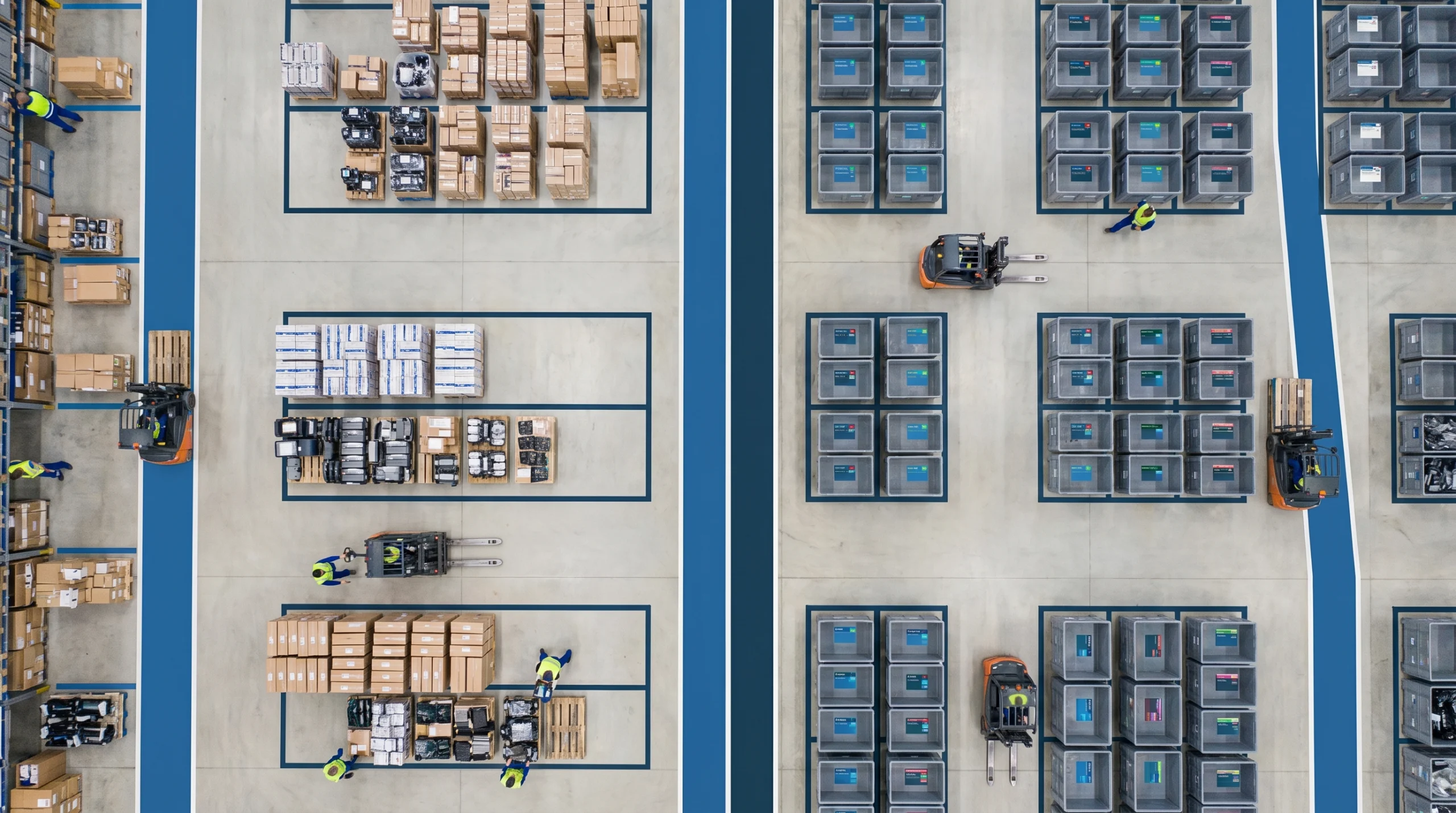
Manual slotting optimization becomes impractical beyond a certain scale. When a facility handles thousands of SKUs with constantly shifting demand patterns, spreadsheets and periodic reviews simply cannot keep pace. This is where warehouse slotting software becomes essential - not as a nice-to-have technology, but as a fundamental tool for maintaining competitive operations.
Key Capabilities to Evaluate
When evaluating warehouse slotting software, focus on capabilities that directly address your operational challenges. Data analysis features should handle your order history depth and complexity, identifying patterns human analysts might miss. The software should consider multiple factors simultaneously - velocity, affinity, ergonomics, space constraints - rather than optimizing for a single metric.
Simulation capabilities allow testing proposed slotting changes before implementation. This "what-if" analysis helps managers understand potential impacts and avoid costly mistakes. Strong slotting software lets you model different scenarios and compare projected outcomes.
Recommendation engines should generate actionable slot assignments, not just abstract insights. The best systems produce pick-ready move lists that workers can execute immediately. They also prioritize changes by impact, helping teams focus effort where it delivers the greatest return.
Essential features to look for include:
-
Multi-factor optimization algorithms that balance competing priorities
-
Real-time data integration with order management and inventory systems
-
Configurable rules engines that reflect your specific business constraints
-
Clear reporting on projected efficiency gains from proposed changes
-
User-friendly interfaces that don’t require IT expertise to operate
Implementation Considerations
Selecting warehouse slotting software is only the first step. Successful implementation requires attention to data quality, change management, and ongoing refinement. Garbage in means garbage out - if your historical data contains errors or gaps, recommendations will reflect those problems.
Change management often proves more challenging than the technical implementation. Workers accustomed to finding products in familiar locations may resist frequent changes. Clear communication about why slotting matters and how changes will affect daily work helps build buy-in. Some facilities phase in slotting changes gradually, allowing workers to adapt incrementally rather than facing wholesale reorganization.
Plan for ongoing maintenance from the start. Slotting optimization isn’t a one-time project but a continuous process. New products enter the catalog, demand patterns shift, and physical warehouse layouts evolve. Software that seemed optimal at launch may need reconfiguration as your operation changes.
Integration with Existing Warehouse Management Systems
Warehouse slotting software delivers maximum value when tightly integrated with your broader technology ecosystem. Standalone slotting tools that operate in isolation create data silos and require manual reconciliation with other systems. Integrated solutions share information automatically, maintaining consistency across platforms.
WMS Integration Essentials
Your warehouse management software platform likely already tracks inventory locations, manages pick tasks, and generates performance reports. Slotting software must communicate seamlessly with these systems to be effective.
At minimum, integration should enable real-time inventory visibility so slotting recommendations reflect actual stock levels. Two-way communication allows slotting changes to update pick lists automatically, eliminating manual updates that introduce errors and delays.
More advanced integration supports closed-loop optimization. Pick performance data flows back to the slotting system, which uses this feedback to refine future recommendations. Over time, this creates a self-improving system that continuously adapts to operational realities.
Automation and Control System Connections
Modern warehouses increasingly rely on automation for material handling. Conveyor systems, automated storage and retrieval systems, and robotic picking solutions all interact with slotting decisions. Warehouse control system integration ensures slotting optimization accounts for automation capabilities and constraints.
For example, automated systems may have specific requirements for product positioning that manual operations don’t share. A storage carousel might need items slotted by bin size rather than velocity. Goods-to-person systems change the travel equation entirely, potentially making traditional slotting logic less relevant. Integrated systems account for these differences rather than applying one-size-fits-all optimization.
Data Flow Architecture
Consider how data will flow between systems before committing to any slotting software. Key questions include:
-
How frequently does order data update in the slotting system?
-
What happens when inventory counts don’t match between systems?
-
Can slotting changes be scheduled during off-hours to minimize disruption?
-
How are exceptions and manual overrides handled?
Clean data architecture prevents the inconsistencies that undermine slotting effectiveness. When every system operates from the same source of truth, optimization decisions reflect reality rather than outdated or conflicting information.
Measuring Slotting Optimization Success
Implementing warehouse slotting strategies without measuring results leaves value on the table. Clear metrics help justify initial investments, guide ongoing refinement, and demonstrate the function’s contribution to broader business goals.
Operational Metrics
Pick productivity - typically measured as lines or units per hour - serves as the primary indicator of slotting effectiveness. Improved slotting should reduce travel time per pick, directly increasing throughput without additional labor. Track this metric consistently over time, accounting for seasonal variations and other factors that affect baseline performance.
Travel distance and time per order provide more granular visibility into slotting impact. Some warehouse management systems can calculate theoretical travel distances for pick routes, enabling comparison between current and optimal scenarios.
Order accuracy often improves with better slotting, particularly when similar products are separated and picking paths become more logical. Measure error rates before and after slotting changes to capture this benefit.
Financial Metrics
Translate operational improvements into financial terms to communicate slotting value to leadership. Labor cost per order combines productivity gains with wage data to show direct savings. Space utilization improvements may defer capital expenditures for facility expansion.
Don’t overlook indirect financial benefits. Reduced injury claims, lower turnover costs, and improved customer satisfaction from faster shipping all contribute to the bottom line even if they’re harder to quantify precisely.
Building a Metrics Dashboard
Create a dashboard that tracks key indicators continuously rather than through periodic reports. This enables rapid response when metrics trend in unexpected directions. Include both leading indicators (such as travel distance, which predicts productivity) and lagging indicators (such as labor cost, which confirms financial impact).
Benchmark against industry standards where available. Publications like Logistics Management periodically report warehouse performance benchmarks that provide useful comparison points. Understanding how your operation compares to peers helps set realistic improvement targets.
Future Trends in Warehouse Slotting Technology
The warehouse slotting landscape continues evolving as new technologies mature and gain broader adoption. Forward-thinking managers should understand these trends to make infrastructure investments that remain valuable over time.
Artificial Intelligence and Machine Learning
Traditional slotting algorithms follow explicit rules programmed by humans. AI-powered systems learn patterns from historical data that rule-based systems might miss. These tools can identify complex relationships between product characteristics, order patterns, and optimal placement that would be impossible to program manually.
Machine learning also enables continuous improvement without constant human intervention. As the system processes more data, its recommendations become more accurate. Seasonal patterns, promotional impacts, and long-term demand shifts are incorporated automatically as they emerge in the data.
Early adopters report promising results from AI-enhanced slotting, though the technology is still maturing. Organizations considering these tools should ensure they have the data infrastructure and technical expertise to implement them effectively.
Internet of Things and Real-Time Visibility
IoT sensors throughout the warehouse provide unprecedented visibility into actual product movement and picker behavior. This data enables slotting optimization based on reality rather than theoretical models. Sensors might reveal that certain slot locations are harder to access than expected, or that products in specific zones experience more damage.
Real-time inventory tracking through RFID or other technologies supports dynamic slotting by maintaining accurate location data even as products move frequently. Without reliable tracking, dynamic slotting becomes operationally impractical because workers can’t trust location information.
Digital Twins and Simulation
Digital twin technology creates virtual replicas of physical warehouses, enabling sophisticated simulation of slotting scenarios. Managers can test proposed changes against months of simulated operations, understanding potential impacts before moving a single product.
These simulations can model scenarios that would be impossible to test in the real world - extreme demand spikes, major product mix changes, or new automation implementations. By exploring these scenarios virtually, organizations can make more confident decisions about physical changes.
Sustainability Considerations
Environmental concerns increasingly influence warehouse operations, and slotting plays a role in sustainability efforts. Optimized slotting reduces energy consumption by minimizing travel distances for powered equipment. Fewer moves mean less wear on equipment, extending asset life and reducing replacement frequency.
Some organizations are exploring slotting strategies that consider environmental impact alongside traditional efficiency metrics. Products with higher carbon footprints in their supply chains might be positioned to minimize additional handling, reducing the facility’s overall environmental impact.
Building Your Slotting Optimization Roadmap
Understanding slotting concepts is valuable, but transforming that knowledge into operational improvements requires a clear implementation path. Most successful slotting initiatives follow a phased approach that builds capabilities over time.
Phase One: Assessment and Foundation
Begin by documenting your current state. Map existing product locations, measure baseline pick times, and identify obvious inefficiencies. This assessment reveals quick wins that can fund subsequent phases while building organizational momentum.
Ensure your data infrastructure supports optimization efforts. Clean up inventory records, establish consistent location naming conventions, and implement processes to maintain data quality going forward. Without this foundation, sophisticated slotting software will generate flawed recommendations.
Phase Two: Strategy Selection and Initial Optimization
Based on your assessment, select the warehouse slotting strategies most appropriate for your operation. Consider starting with hybrid approaches that combine fixed positions for stable items with dynamic management of variable products.
Execute an initial slotting optimization, moving products to improved locations based on velocity, affinity, and ergonomic analysis. Document the before-and-after metrics to demonstrate value and inform future decisions.
Phase Three: Technology Enhancement
With proven processes in place, evaluate warehouse slotting software that can scale and automate your optimization efforts. Prioritize solutions that integrate cleanly with your existing systems and support your chosen strategies.
Implementation should include thorough training for all stakeholders - from warehouse managers who configure the system to floor workers who execute slotting changes and pickers who work in the optimized environment.
Phase Four: Continuous Improvement
Establish regular review cycles to assess slotting effectiveness and make adjustments. Monthly reviews might examine overall metrics and flag products requiring reanalysis. Quarterly reviews could evaluate strategy effectiveness and plan major slotting projects.
Stay current with emerging technologies and industry best practices. Resources like Supply Chain Dive provide regular updates on warehouse technology trends that may influence your optimization approach.
Industry-Specific Slotting Considerations
While core slotting principles apply broadly, certain industries face unique challenges that require specialized approaches.
Food and Beverage Operations
Food and beverage distribution adds temperature and freshness constraints to slotting decisions. Products must be positioned within appropriate climate zones while still optimizing for pick efficiency. FIFO (first-in, first-out) requirements influence slot design, ensuring older inventory ships before newer stock.
Lot tracking requirements mean slotting systems must maintain detailed records of product placement by batch number. Cross-contamination risks between allergens or incompatible products add another layer of complexity to slot assignment.
Pharmaceutical Distribution
Pharmaceutical operations face strict regulatory requirements that influence slotting decisions. Controlled substances require secure storage locations with limited access. Serialization and track-and-trace requirements demand precise inventory positioning to support compliance reporting.
Temperature-sensitive medications need climate-controlled zones, and some products require separation from others to prevent contamination or confusion. Slotting software for pharmaceutical applications must account for these regulatory constraints alongside efficiency optimization.
Third-Party Logistics Providers
Third-party logistics providers manage inventory for multiple clients, each with different product characteristics and requirements. Slotting must balance client-specific needs with overall facility efficiency. Some clients may require dedicated zones while others can share space.
The challenge intensifies when clients have conflicting peak seasons or dramatically different product profiles. Successful 3PL slotting strategies accommodate this diversity while maintaining operational coherence.
Bringing It All Together
Warehouse slotting optimization represents one of the highest-impact improvements available to distribution operations. By strategically positioning inventory, facilities can achieve meaningful productivity gains without major capital investments. The key lies in understanding what is warehouse slotting at a fundamental level, then applying appropriate warehouse slotting strategies supported by capable technology.
Success requires commitment to data quality, willingness to embrace change, and recognition that optimization is an ongoing process rather than a one-time project. Organizations that master slotting gain advantages in speed, accuracy, and cost that compound over time, creating sustainable competitive differentiation.
Whether you’re starting from scratch or refining existing practices, the principles outlined in this guide provide a framework for improvement. The question isn’t whether to optimize slotting, but how quickly you can begin capturing the benefits.
Ready to transform your warehouse operations through intelligent slotting optimization? Contact ASC Software to discuss your specific challenges and explore how modern warehouse management solutions can help. You can also explore our comprehensive solutions to see how integrated systems support slotting excellence alongside broader operational improvements.
Frequently Asked Questions
What is warehouse slotting and why is it important?
Warehouse slotting is the process of determining the best storage location for each product in a facility. It is crucial because efficient slotting reduces pick times, increases order accuracy, and minimizes worker fatigue. Proper slotting ensures that high-demand items are easily accessible, improving overall operational efficiency. Consequently, businesses can save on labor costs and enhance worker safety by reducing unnecessary travel and repetitive motions.
How does warehouse slotting software improve efficiency?
Warehouse slotting software enhances efficiency by using data and algorithms to optimize product placement continuously. It analyzes factors like pick frequency and product dimensions to determine ideal storage locations. This optimization reduces travel time for pickers, increases order accuracy, and lowers operational costs. By automating slotting decisions, the software helps maintain a well-organized warehouse, leading to smoother operations and improved productivity.
What are effective warehouse slotting strategies?
Effective warehouse slotting strategies involve positioning products based on criteria like demand, size, and compatibility. These strategies aim to place fast-moving items in accessible locations to minimize pick times and reduce worker fatigue. By considering order patterns and product characteristics, managers can create efficient layouts that enhance productivity. Implementing these strategies with warehouse slotting software can further refine and adapt product placement over time.
Why do poor slotting decisions increase costs?
Poor slotting decisions lead to increased costs due to longer travel times, decreased order accuracy, and inefficient equipment use. Workers spend more time picking orders when items are poorly organized, raising labor expenses. Additionally, placing similar items together can cause errors, affecting customer satisfaction. Inefficient paths for machinery also contribute to higher operational costs, highlighting the need for strategic slotting to optimize warehouse performance.
How can warehouse slotting software, what is warehouse slotting, warehouse slotting strategies benefit businesses?
Warehouse slotting software, combined with effective slotting strategies, can significantly benefit businesses by streamlining operations and improving efficiency. Understanding what warehouse slotting is allows managers to optimize product placement, reducing pick times and labor costs. The software continuously refines these placements, adapting to changing demand patterns. As a result, businesses experience enhanced productivity, reduced errors, and improved worker satisfaction, ultimately leading to increased profitability.