




Supply Chain Traceability: Essential Guide
Kurt AdamsPublished: February 20, 202621 minutes
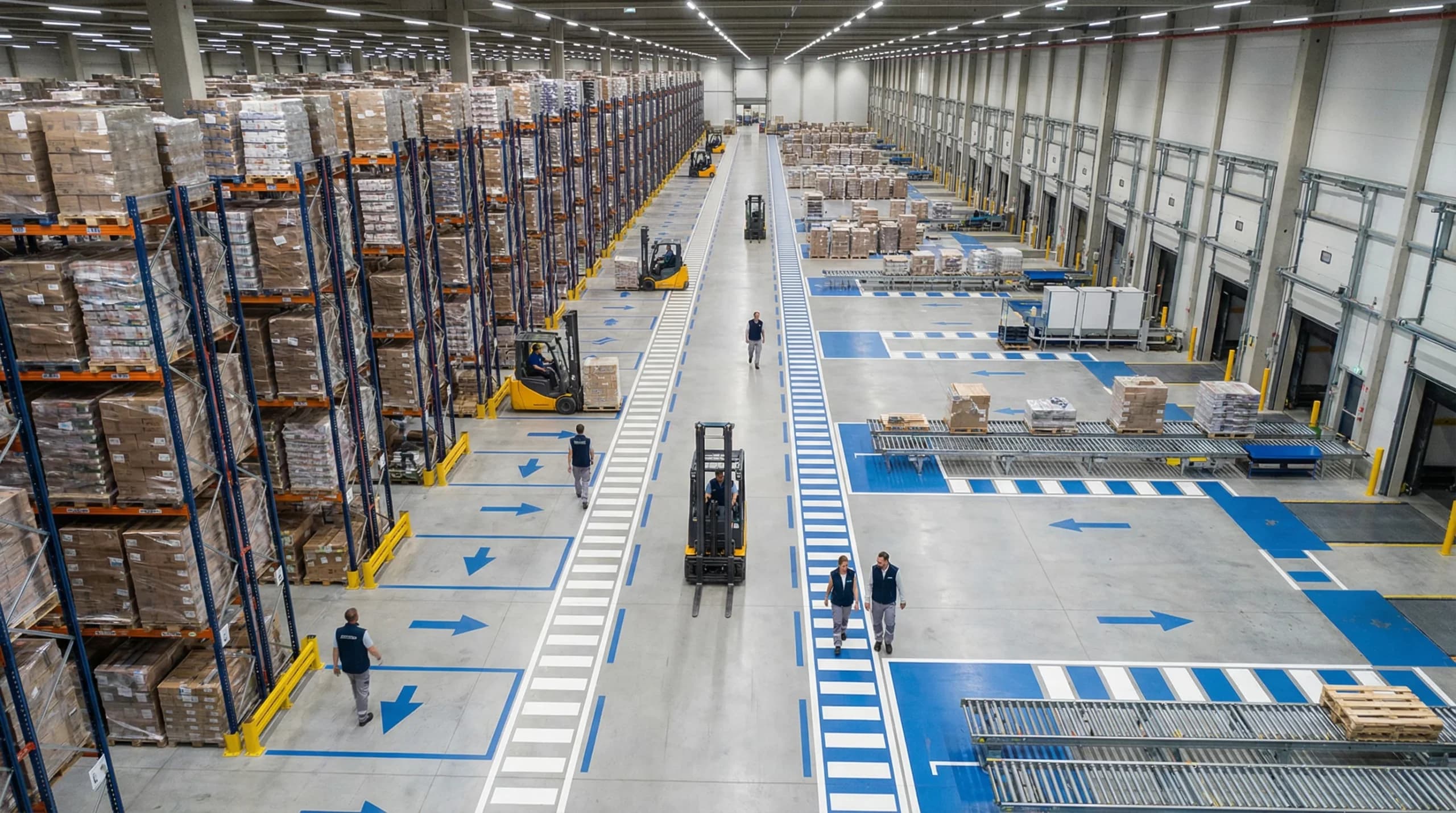
Supply chain traceability enables businesses to track products from origin to consumer. You’ve just received an urgent call from your largest customer. They need to know exactly where a specific batch of product came from, which suppliers were involved, and every stop it made along the way to their facility. Sound familiar? You’re not alone. We’ve all been there – scrambling through spreadsheets, making frantic phone calls to vendors, and piecing together a paper trail that should have been at our fingertips from the start.
The reality is that traceability in supply chain operations has shifted from a “nice-to-have” to an absolute necessity. Whether you’re responding to a recall, satisfying regulatory requirements, or simply trying to understand why a shipment went sideways, having complete visibility into your product’s journey is no longer optional. Supply chain traceability software has become the backbone of modern operations, and those of us who haven’t made the investment are feeling the pressure mounting every single day.
Here’s what we know for certain: the companies winning in their markets right now have one thing in common. They can answer the “where did this come from?” question in seconds, not hours. They’ve implemented supply chain traceability solutions that connect every dot from raw material to final delivery. And honestly? The rest of us need to catch up.
This guide walks through everything supply chain managers and decision-makers need to understand about traceability – from the fundamental concepts to the nitty-gritty challenges you’ll face during implementation. We’ll explore what makes traceability software effective, how to evaluate different solutions, and most importantly, how to make the business case that gets your project funded.
Understanding Supply Chain Traceability and Why It Matters Now
At its core, supply chain traceability is the ability to identify and track products, components, and materials as they move through every stage of your supply chain. This includes tracking forward (from source to consumer) and backward (from consumer back to source). Think of it as creating a complete biography for every item that passes through your operations.
But why has this become so critical right now? The answer lies in how dramatically our operating environment has changed. Consumers demand transparency about product origins and ethical sourcing. Regulations have tightened across virtually every industry. Supply chain disruptions – which used to be rare events – now feel like weekly occurrences. And when something goes wrong, the speed at which information spreads on social media means you have hours, not days, to respond with accurate information.
The Core Components of Effective Traceability
Effective traceability in supply chain operations rests on several interconnected pillars. Understanding these components helps clarify what you’re actually building when you implement a traceability system.
-
Unique identification: Every product, lot, batch, or unit needs a distinct identifier that follows it throughout its journey. This might be a serial number, lot code, barcode, or RFID tag.
-
Data capture points: You need defined moments where information about the product gets recorded – receiving, production, quality checks, packaging, shipping, and everything in between.
-
Linkage between events: The individual data points must connect to form a coherent story. Knowing that Lot A arrived on Tuesday and Lot B shipped on Thursday means nothing unless you can confirm they’re the same lot.
-
Accessible records: All this captured data needs to live somewhere you can actually retrieve it quickly. Paper records in a filing cabinet don’t cut it anymore.
-
Bidirectional tracking: True traceability works both directions – you can trace forward from any supplier input to see all affected products, and backward from any product to identify all contributing inputs.
The companies that struggle most with traceability typically have one or more of these components missing or weak. Maybe they’re capturing data, but it’s siloed in different systems that don’t communicate. Or they have identification schemes, but they change formats between departments. Recognizing where your gaps exist is the first step toward addressing them.
Real Benefits That Impact Your Bottom Line
We’ve all sat through presentations filled with vague promises about “operational excellence” and “enhanced visibility.” Let’s get specific about what traceability actually delivers in measurable terms.
Recall speed and scope reduction: When you can trace products precisely, recalls become surgical rather than scorched-earth. Instead of pulling everything produced in a three-month window, you identify the exact lots affected. Consider a mid-sized food manufacturer that previously would have recalled product worth hundreds of thousands of dollars. With precise lot traceability, that same recall might involve only a fraction of the inventory, saving both direct costs and brand reputation damage.
Supplier accountability: Traceability data creates an objective record of supplier performance. When you can show exactly which batches from which supplier caused quality issues, you transform negotiations and partnership discussions. This isn’t about blame – it’s about having facts that drive improvement.
Inventory accuracy: The same systems that enable traceability tend to dramatically improve inventory counts. When you’re tracking every movement and transformation, you naturally catch discrepancies that would otherwise compound over time. Many organizations see inventory accuracy improvements that alone justify the investment in warehouse management software.
Regulatory compliance confidence: For regulated industries, the documentation requirements can be overwhelming. Traceability systems automate much of this documentation, reducing compliance labor while actually improving the quality and completeness of records. Audit preparation shifts from a multi-week scramble to a routine report generation.
End-to-End Supply Chain Visibility
Connect demand planning, inventory control, and order management with ASCTrac's integrated platform.
Request a Demo
The Real Challenges of Implementing supply visibility Operations
Nobody said this would be easy. If implementing comprehensive traceability were simple, everyone would already have it figured out. Let’s be honest about the obstacles you’re likely to face, because understanding them upfront helps you plan realistically and build the right support structures.
Data Integration Nightmares
Here’s a scenario that might feel painfully familiar: Your ERP system tracks purchase orders and inventory quantities. Your warehouse management system handles locations and picks. Your quality system manages inspection results. Your shipping software generates tracking numbers. And none of these systems were designed to talk to each other in a way that creates a unified product history.
This is the data silo problem, and it’s the single biggest technical barrier to effective traceability. Each system does its job well, but connecting the dots across systems requires either expensive custom integrations or middleware that becomes yet another system to maintain.
The challenge compounds when you consider external partners. Your suppliers have their own systems. Your logistics providers use different platforms. Your customers expect data in their preferred formats. Creating a connected view across this fragmented landscape feels overwhelming – and honestly, for many organizations, it has been.
The Standardization Gap
Even within a single organization, you’d be amazed at how inconsistent data practices can be. One facility identifies products by customer part number. Another uses internal SKUs. A third has a hybrid scheme that made sense to whoever set it up fifteen years ago. Date formats vary between departments. Unit of measure conventions differ.
These inconsistencies create serious problems for traceability. If you can’t reliably match records across locations and time periods, you can’t build a complete product history. Before implementing supply chain traceability software, many organizations need to undergo a standardization effort that touches processes, data definitions, and sometimes organizational culture.
Technology Infrastructure Limitations
Traceability demands capturing data at many points in your operations. That requires hardware – scanners, printers, mobile devices, possibly sensors and RFID readers. It requires network connectivity in areas that might not currently have it. It requires server capacity or cloud infrastructure to store and process growing data volumes.
For facilities that have operated with minimal technology investment, the infrastructure requirements for modern traceability can seem daunting. The capital expense is one thing, but the operational disruption of deploying new technology across active operations adds complexity.
Change Management and Adoption
Perhaps the most underestimated challenge is human. Traceability systems only work if people actually use them. Every scan that doesn’t happen, every manual override, every “I’ll catch it up later” moment creates a gap in your traceability chain.
Warehouse workers who have done their jobs effectively for years suddenly face new procedures. Supervisors have additional data to review. Managers need to enforce compliance with scanning requirements even when it initially slows things down. This cultural shift takes consistent leadership attention over months, not weeks.
Strategies for Overcoming These Obstacles
that every one of these challenges has been solved by organizations that came before you. Here’s what tends to work:
Start with a clear scope and expand deliberately: Trying to achieve perfect end-to-end traceability across all products and all locations on day one is a recipe for failure. Successful implementations typically begin with a single product line or facility, prove the concept, refine the processes, and then expand. This approach builds organizational capability while delivering early wins.
Invest heavily in master data cleanup: Before implementing any software, get your product identifiers, supplier codes, location designations, and unit of measure standards sorted out. This foundational work pays dividends throughout the implementation and beyond.
Choose integration-friendly solutions: When evaluating supply chain traceability solutions, prioritize those with strong integration capabilities. Look for standard APIs, pre-built connectors to common platforms, and proven experience connecting to systems like yours. The ability to integrate with your existing warehouse management system is particularly critical.
Engage frontline workers early: The people who will actually use the system have invaluable insights about workflow realities. Involve them in process design, pilot testing, and problem-solving. Their buy-in determines whether your system captures accurate data or becomes an exercise in creative workarounds.
Plan for the change management investment: Budget time and resources for training, communication, and ongoing reinforcement. The technology implementation is often the easy part; the people implementation requires sustained attention.
What to Look for in Tracking Software
With dozens of traceability solutions options in the market, how do you identify which solutions deserve serious consideration? The feature lists all start to look the same after a while. Here’s a framework for cutting through the marketing language and evaluating what actually matters for your operation.
Core Capabilities That Define Effective Solutions
Real-time data capture and visibility: The value of traceability depends on currency. Systems that batch-process data overnight can’t support rapid recall response or real-time decision-making. Look for solutions that capture and process data as events occur, making information immediately available across the organization.
Flexible lot and serial tracking: Different products and industries require different tracking granularities. Some need serial-level tracking of individual units. Others track by lot or batch. Many need both within the same operation. Your software should accommodate your tracking requirements without forcing awkward workarounds.
Complete genealogy and transformation tracking: In manufacturing and processing operations, inputs transform into outputs. Raw materials become components. Components become finished goods. Finished goods might get repackaged or combined into kits. Effective traceability software maintains these parent-child relationships, enabling you to trace from any point in the product’s history forward or backward.
Automated event capture: Every manual data entry point is a potential failure point. The best systems capture events automatically through barcode scans, RFID reads, system integrations, or IoT sensors. Where manual entry is necessary, they validate data and prompt users to prevent errors.
Query and reporting power: Having all the data means nothing if you can’t extract the answers you need. Evaluate how easily you can run trace queries – both forward and backward. How quickly can you generate reports for auditors or customers? Can you export data in formats others require?
Exception management: No operation runs perfectly. Products get damaged. Shipments arrive incomplete. Quality holds interrupt normal flows. Your traceability software needs to handle these exceptions without breaking the chain of custody. Look for capabilities to manage holds, quarantines, dispositions, and corrections while maintaining accurate history.
Integration Architecture Matters
A traceability system that exists in isolation creates more problems than it solves. Your solution needs to work with the ecosystem of systems already running your business.
ERP integration: At minimum, your traceability software should exchange data with your ERP for orders, receipts, inventory quantities, and transactions. This integration can range from batch file transfers to real-time API connections. More sophisticated integration reduces duplicate data entry and ensures consistency.
Automation and control systems: If you operate conveyors, sorters, automated storage systems, or production equipment, your traceability software should connect to these systems. Modern warehouse control systems serve as the bridge between business systems and physical automation, and traceability data often needs to flow through this layer.
Partner connectivity: Traceability ultimately extends beyond your four walls. Consider how the software handles incoming supplier data, outbound customer requirements, and third-party logistics visibility. EDI solutions often play a role in standardized data exchange with trading partners.
Mobile and device support: Traceability events happen throughout your facility, not just at fixed workstations. Evaluate mobile device support, including both dedicated scanning devices and smartphone/tablet applications. Consider barcode and RFID compatibility with your current and planned hardware.

Industry-Specific Considerations
While the fundamentals of traceability apply broadly, specific industries have distinct requirements that should influence your software selection.
Food and beverage operations face FDA requirements including FSMA’s recordkeeping rules and emerging food traceability requirements. Look for solutions with food and beverage industry experience, including lot control, expiration date management, allergen tracking, and temperature monitoring integration. The one-up, one-back traceability requirement means you need to document both where products came from and where they went.
Pharmaceutical and life sciences operations manage the most demanding regulatory environment, including FDA 21 CFR Part 11 compliance, DSCSA serialization requirements, and strict validation protocols. Pharmaceutical industry solutions must support electronic signatures, audit trails, and documentation practices that satisfy regulatory auditors.
Manufacturing operations often need to track work-in-process through multiple production steps, capture labor and machine data alongside material movements, and maintain bills of material relationships. Manufacturing execution systems often provide the production-floor data capture that feeds comprehensive traceability.
Wholesale distribution operations may not manufacture products but still need lot tracking for regulated goods, first-expired-first-out rotation, and the ability to respond to supplier recalls with affected inventory identification. Wholesale distribution solutions balance traceability requirements with high-volume throughput demands.
Building the Business Case for Traceability Investment
We’ve all been in the position of knowing our operation needs something but struggling to quantify the return in terms that finance will approve. Traceability investments can be particularly challenging because some of the most significant benefits involve avoiding costs that might never materialize. Here’s how to build a compelling case.
Quantifying Risk Reduction
The most dramatic value from traceability often comes from events you hope never happen – recalls, contamination incidents, compliance failures. While these events are unpredictable, you can estimate exposure and risk reduction with reasonable assumptions.
Consider what a major recall would cost your organization. Include direct costs like product retrieval, disposal, and replacement. Add indirect costs like customer notification, overtime labor, expedited shipping, and regulatory reporting time. Factor in longer-term impacts like customer compensation, legal expenses, and brand damage. The total can be staggering.
Now consider how improved traceability changes that equation. If you can identify affected products within hours instead of days, containment costs drop. If you can limit recalls to specific lots instead of broad date ranges, product loss decreases dramatically. If you can demonstrate due diligence in your traceability practices, regulatory penalties and legal exposure often moderate.
Many organizations find that the cost of a single significant recall – or even the realistic possibility of one – justifies substantial traceability investment. The math works particularly well in industries where recall events, while relatively rare, carry severe consequences.
Operational Efficiency Gains
Beyond risk reduction, traceability investments typically deliver ongoing operational benefits that create continuous returns.
Inventory accuracy improvements: The discipline of scanning and tracking every movement catches errors that would otherwise accumulate. Many organizations see inventory accuracy rise from the low 90s to over 99%, reducing both overstock and stockout situations.
Labor efficiency in information retrieval: Think about how much time your team currently spends answering traceability questions. Finding lot information for customers. Researching quality issues. Preparing audit documentation. When this information becomes instantly accessible, those labor hours redirect to productive work.
Quality issue resolution speed: When problems occur, the investigation time drops dramatically with good traceability data. Instead of weeks of detective work, root cause identification might take hours. Faster resolution means less production disruption and faster return to normal operations.
Supplier management improvements: Objective data about supplier lot performance changes supplier conversations. You can identify quality trends, support continuous improvement efforts, and make sourcing decisions based on facts rather than impressions.
Revenue Protection and Growth Opportunities
The positive side of the equation deserves attention too. Traceability capabilities increasingly influence customer decisions and market access.
Customer requirements: Major retailers, food service companies, and industrial customers increasingly mandate traceability capabilities from their suppliers. Without the ability to meet these requirements, you may find yourself excluded from opportunities.
Premium market access: Certain markets – organic foods, sustainably sourced products, premium goods – command price premiums but require documented traceability. The ability to prove provenance opens these higher-margin channels.
Consumer confidence: Brand reputation increasingly connects to transparency. Companies that can answer consumer questions about product origins and handling build trust that translates to loyalty and premium positioning.
Calculating Return on Investment
When building your financial model, consider structuring benefits in three categories:
Hard savings: Quantifiable cost reductions you can confidently predict. Inventory accuracy improvements reducing carrying costs. Labor time savings from automated documentation. Reduced expedited shipping from better product visibility.
Risk-adjusted savings: Potential costs multiplied by probability of occurrence. Recall cost reduction times estimated recall likelihood. Compliance penalty avoidance times audit risk. Insurance premium reductions available with improved traceability.
Strategic value: Harder to quantify but real benefits. Customer retention from meeting their requirements. New market access from capability improvements. Competitive differentiation in your served markets.
A strong business case typically shows payback within 18-24 months from hard savings alone, with risk and strategic benefits providing additional upside. The specific numbers depend heavily on your industry, scale, and current state, but the framework applies broadly.
Comparing Approaches to Visibility Systems
The market offers multiple paths to achieving traceability, each with distinct advantages and tradeoffs. Understanding these approaches helps you identify the right fit for your situation.
Standalone Traceability Applications
Some vendors offer focused traceability applications designed to bolt onto your existing systems. These solutions typically concentrate on capturing traceability events and providing query capabilities, while relying on integrations to exchange data with ERP and operational systems.
Advantages: Often faster to implement than broader system replacements. Can work with existing infrastructure investments. May offer deeper traceability-specific functionality than more general platforms.
Considerations: Integration complexity and cost can be substantial. May create another system to maintain and another database to manage. Organizational adoption can suffer when traceability exists outside core operational systems.
Extended ERP Traceability Modules
Most major ERP systems include or offer traceability modules that extend core inventory and order management functions. These modules use existing ERP data and workflows, adding lot tracking and genealogy capabilities within the familiar ERP environment.
Advantages: No integration required for core data. Familiar user interface for teams already working in the ERP. Single vendor relationship and support structure.
Considerations: ERP traceability modules often lack the depth needed for warehouse operations. May not support granular receiving, put-away, and picking processes. Can struggle with the volume and speed of warehouse-floor transactions. Often require significant customization to meet specific industry requirements.
Integrated Warehouse Management Systems
Modern warehouse management systems increasingly include comprehensive traceability as core functionality. Because these systems control the physical operations where traceability events occur, they capture data naturally as part of normal workflows.
Advantages: Traceability becomes embedded in daily operations rather than an overlay. Scanning and tracking happen as part of efficient picking, packing, and shipping processes. Real-time visibility reflects actual warehouse floor activity. Workers use a single system for both operational execution and traceability compliance.
Considerations: Implementing a new WMS is a more substantial project than adding a point solution. Requires integration with ERP and other enterprise systems. Success depends on selecting a WMS appropriate for your operational complexity and scale.
Industry-Specific Platforms
Certain industries have spawned specialized traceability platforms that deeply understand specific regulatory requirements and operational patterns. Food safety platforms, pharmaceutical track-and-trace solutions, and automotive supply chain systems represent this category.
Advantages: Deep expertise in industry-specific requirements. Pre-built compliance features that address particular regulations. Community of users facing similar challenges.
Considerations: May not flex well if your business spans multiple industries. Can create integration challenges with general business systems. Vendor viability depends on the health of that specific industry niche.
Evaluation Criteria That Matter
Regardless of which approach category makes sense for your situation, certain evaluation criteria apply universally when comparing specific solutions.
Functional fit: Does the solution handle your specific tracking requirements – serial, lot, batch, date? Does it support your product types and transformations? Can it manage the exceptions and edge cases your operation encounters?
Scalability: Will the solution perform acceptably as your transaction volumes grow? Can it handle peak periods? Does the pricing model scale reasonably with business growth?
Implementation approach: What does the vendor’s implementation methodology look like? What resources will you need to commit? What’s the realistic timeline to go live, and what’s the path to full rollout across locations?
Total cost of ownership: Beyond initial license or subscription costs, what ongoing costs should you expect? Consider maintenance fees, infrastructure requirements, integration support, training, and internal administration.
Vendor stability and direction: Is the vendor financially stable? Are they continuing to invest in the product? Do they have a customer base similar to your organization? What do reference customers say about support quality and ongoing partnership?
User experience: Will your warehouse floor workers actually be able to use this effectively? Is the mobile interface intuitive? Does the system support efficient workflows, or does traceability compliance slow down operations?
Maximizing Returns from Your Traceability Investment
Implementing tracking software is just the beginning. Organizations that extract the most value from their investments share certain practices that drive continuous improvement and expanding returns.
Start with Solid Foundation, Then Build
The temptation to capture everything from day one can actually undermine success. Start with the minimum viable traceability scope that addresses your most critical requirements – likely regulatory compliance and recall capability. Get that working reliably across your operation before expanding.
Once the foundation is solid, systematically extend coverage. Add more products, more locations, more data capture points. Each expansion builds on proven processes and trained teams rather than attempting everything simultaneously.
Use Traceability Data Proactively
Many organizations implement traceability primarily as a reactive capability – ready to answer questions when they arise but not actively mining the data for insights. This approach leaves significant value on the table.
Review traceability data regularly for patterns and trends. Which suppliers show the most quality variability? Which products have the most complex genealogies? Where do bottlenecks occur in your traceability data flow? These insights can drive supplier development, process improvement, and operational optimization.
Integrate Traceability into Quality Programs
Traceability and quality management are natural partners. When quality issues arise, traceability data accelerates investigation. When traceability gaps occur, they often signal quality risks. Connecting these functions – organizationally and systematically – multiplies the value of both.
Consider how traceability data can inform incoming inspection priorities, in-process quality checks, and outgoing quality verification. Use lot and genealogy information to stratify quality metrics and identify improvement opportunities.
Extend Traceability Across Your Supply Network
Your traceability chain is only as strong as its weakest link. If your internal operations achieve excellent traceability but suppliers and logistics providers remain black boxes, you still can’t answer the full range of traceability questions.
Work with key suppliers to establish data sharing standards. This might involve providing label specifications so incoming products arrive with scannable lot information. It might mean connecting systems to exchange production and shipping data electronically. Organizations that serve as third-party logistics providers increasingly expect – and deliver – traceability data integration with their customers.
Similarly, understand what traceability data your customers need and ensure your systems can provide it. Proactively offering traceability visibility can differentiate you from competitors and strengthen customer relationships.
Maintain and Improve Continuously
Traceability systems require ongoing attention to maintain their value. Conduct regular audits to verify that data capture is actually happening as designed. Test recall procedures periodically to ensure you can execute when needed. Review system performance and address emerging bottlenecks before they become critical.
Stay current with evolving regulations that affect your traceability requirements. Regulatory expectations tend to increase over time, and proactive compliance preparation beats scrambling to meet deadlines.
Gather feedback from users about what’s
Frequently Asked Questions
Why is end-to-end tracking important now?
visibility across operations is crucial due to increased consumer demand for transparency and tighter regulations. It allows companies to track products from source to consumer, ensuring ethical sourcing and compliance. With frequent supply chain disruptions and fast-spreading information on social media, companies need quick access to product histories to respond effectively. This capability is essential for maintaining trust and competitive advantage.
What is these systems used for?
visibility platforms is used to track products throughout the supply chain. It provides visibility into the entire journey of a product, from raw materials to final delivery, enabling quick response to recalls or disruptions. This software helps companies meet regulatory requirements and consumer expectations for transparency. By connecting data across the supply chain, it allows for efficient problem-solving and strategic decision-making.
How do tracking platforms benefit businesses?
tracking platforms benefit businesses by enhancing product visibility and operational efficiency. They enable companies to quickly trace the origin of products, manage recalls, and ensure compliance with regulations. By providing detailed insights into the supply chain, these solutions help companies improve transparency, build consumer trust, and gain a competitive edge. They also facilitate better risk management and decision-making processes.
What challenges exist in implementing traceability software?
How can companies choose the right traceability solution?
Companies can choose the right traceability solution by evaluating their specific needs and system compatibility. They should consider factors like scalability, ease of integration, and cost-effectiveness. Assessing the solution’s ability to meet regulatory requirements and improve transparency is crucial. Engaging with stakeholders and conducting a pilot test can help ensure the chosen solution aligns with business goals and operational processes.