




The Complete LPN Barcode Guide: Amazon, Scanners, Workflow
Kurt AdamsPublished: October 20, 20269 minutes
What Is an LPN Barcode?
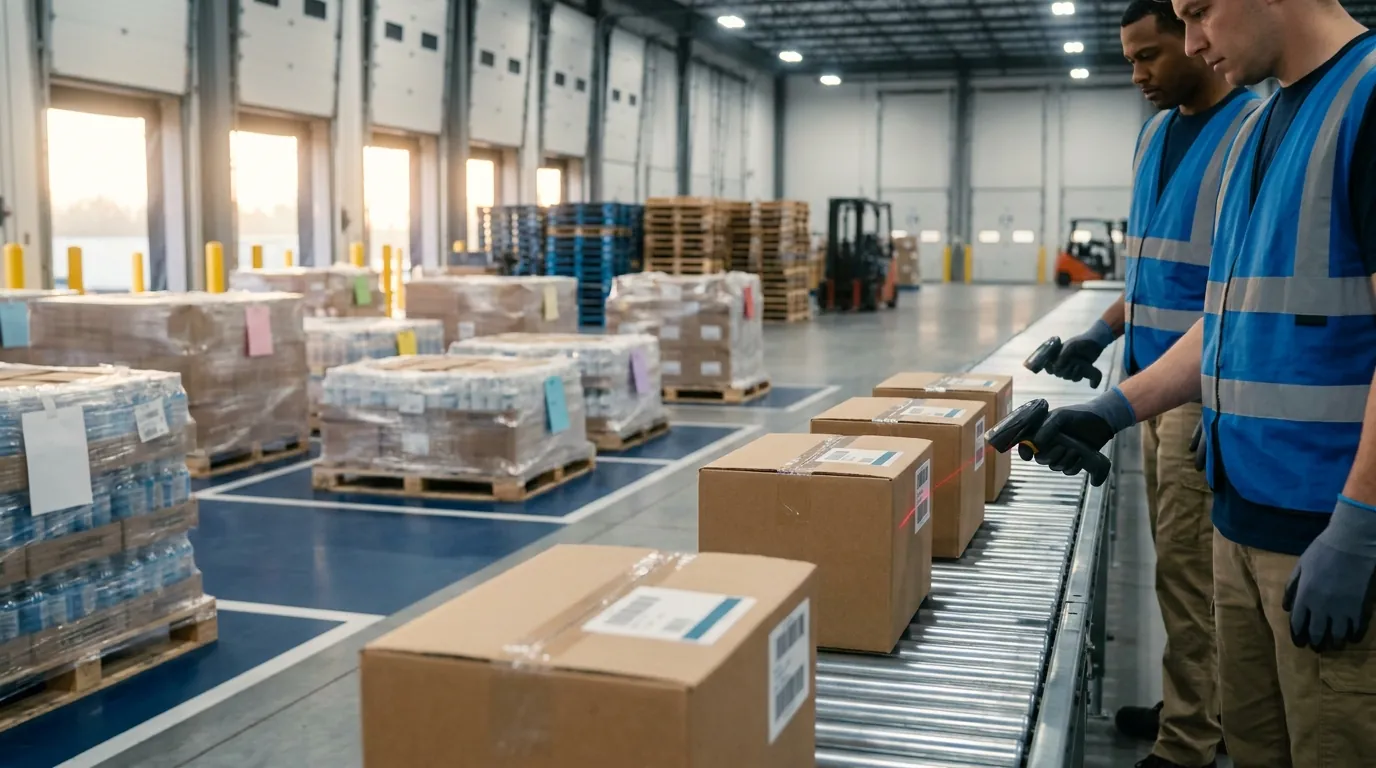
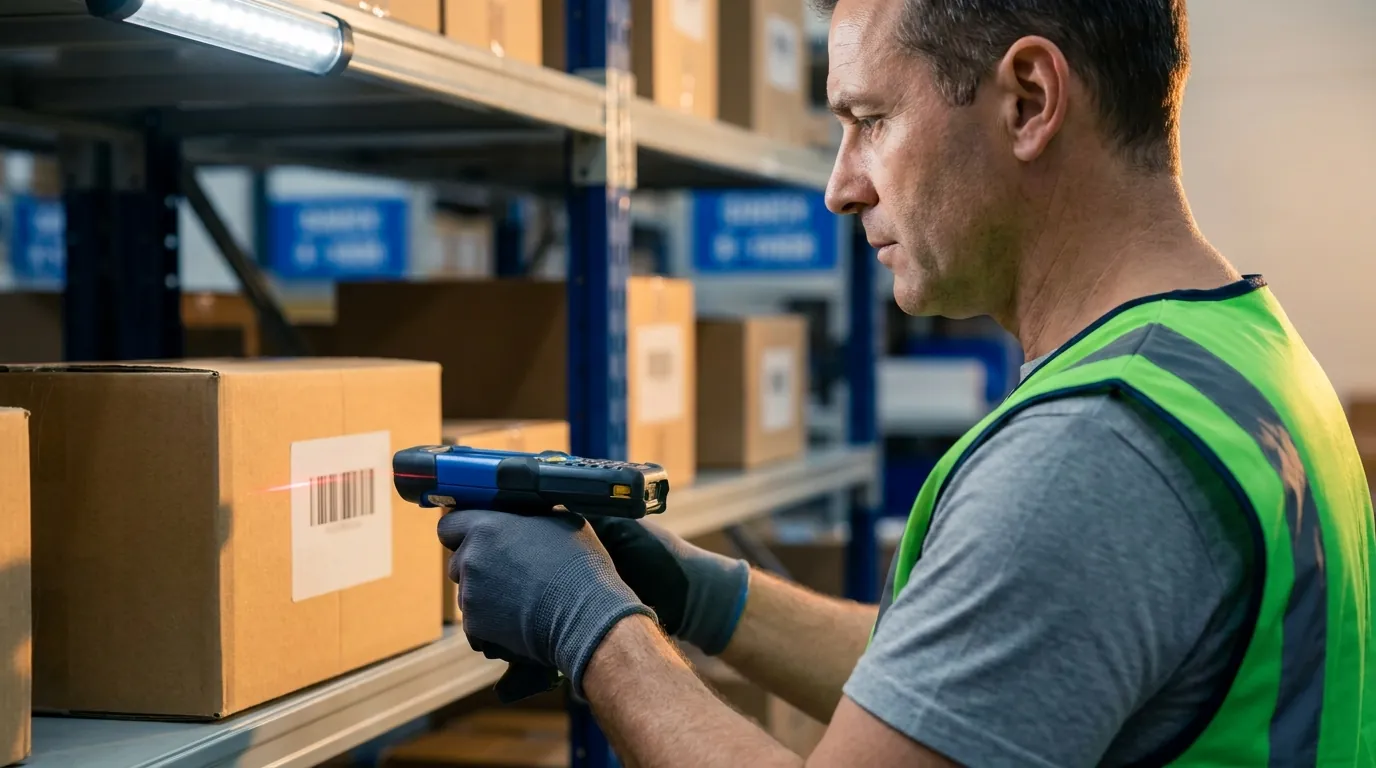
An LPN (License Plate Number) is a unique identifier assigned to a container rather than to a product. The container could be a pallet, a carton, a tote, or a bag holding one returned item. The lpn barcode is the scannable label that carries that number, so a warehouse worker can capture it with one trigger pull.
The name comes from vehicle plates. A plate does not describe the car, but it points to a registration record that does. Scanning an LPN works the same way: your warehouse management system (WMS) pulls up a record showing which SKUs are inside, quantities, lot or expiration data, the date it was received, and where it currently sits.
The practical payoff is container-level tracking. Picture a pallet holding 48 cases. Without labels, an operator scans each case during every move. With one plate, a single scan relocates all 48 cases in one transaction, and the inventory history stays complete.
GS1-128/SSCC vs. Internal LPN Formats
Most operations number their LPNs in one of two ways:
- SSCC on a GS1-128 label: The Serial Shipping Container Code is an 18-digit GS1 identifier for logistic units. It is encoded in GS1-128, a 1D symbology that uses Application Identifiers (AI 00 marks the SSCC field) so any trading partner can parse it. SSCCs make sense when containers leave your building, such as outbound pallets bound for retailers with labeling compliance requirements.
- Internal LPNs: A number your warehouse defines, usually with a prefix (for example, LP0001234), printed as Code 128 or a QR code. These suit totes, internal moves, and inbound pallets that stay on site.
Plenty of warehouses run both: internal plates in storage and SSCCs on outbound freight.
How an LPN Barcode Differs from SKU and UPC Barcodes
A UPC or SKU barcode identifies a product, and every unit of that item carries the identical code. An LPN identifies one physical container, and no two containers ever share a number.
- UPC/SKU answers: "What is this item?"
- LPN answers: "What is inside this container, and where is it?"
Because each plate is unique, it supports traceability that product codes cannot provide, such as confirming exactly which pallet from a given lot went to which customer.
Smarter Warehouse Management Starts Here
ASCTrac WMS delivers real-time visibility, automated workflows, and seamless ERP integration for warehouses of every size.
Request a Demo
How LPN Barcodes Work in the Warehouse
An LPN follows inventory through every transaction. Each scan updates the WMS record, so the system knows a container's contents and position without anyone counting by hand. Barcodes are the most common carrier, though some sites encode the same number on RFID tags; this overview of RFID in manufacturing covers that approach.
The benefits build on each other. Receiving moves faster, putaway becomes verifiable, and cycle counts shift from tallying units to confirming that the right containers sit in their assigned slots.
Receiving and Putaway
Consider a mixed pallet arriving from a supplier. If it carries an SSCC, the receiver scans it and the WMS matches it to the advance ship notice (ASN), pulling expected SKUs and quantities automatically. If it arrives unlabeled, the dock printer produces an internal plate, and the receiver confirms contents once. After that, nobody needs to recount the pallet.
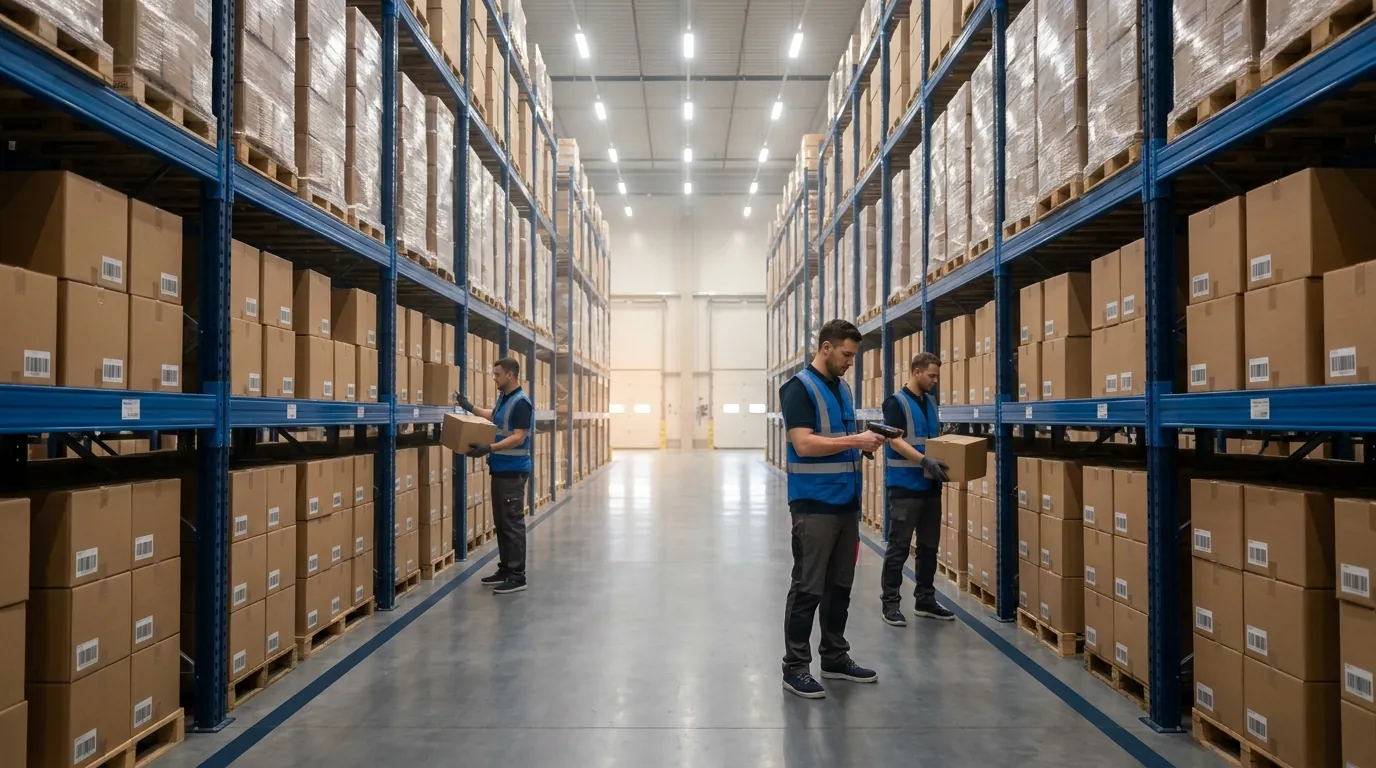
At putaway, the operator scans the plate, the system suggests a storage location, and the operator scans that location's barcode to confirm. The pallet and every unit on it now live in a known bin. If someone drops it in the wrong slot, the mismatch shows up immediately instead of during the next physical count.
Moves, Picking, and Shipping
- Moves: Scan the container, then the destination. Everything inside relocates in one step.
- Full-pallet picks: One scan pulls the entire contents against an order.
- Partial picks: Scan the source plate, pick the required units, and the WMS decrements that plate's quantity.
- Shipping: Build the outbound pallet under a new LPN, print an SSCC label when the customer requires it, and verify each pallet by scanning at the trailer door.
Parent/Child LPN Nesting
Nesting links plates into a hierarchy. A pallet (the parent) can hold cartons (the children), and each child keeps its own contents record. Scanning the parent moves everything at once; scanning a child breaks out one carton without disturbing the rest. This matters most for 3PLs building mixed outbound pallets for retail customers or splitting inbound pallets across several storage locations.
LPN Barcode Amazon: Returns, Liquidation, and FBA Prep
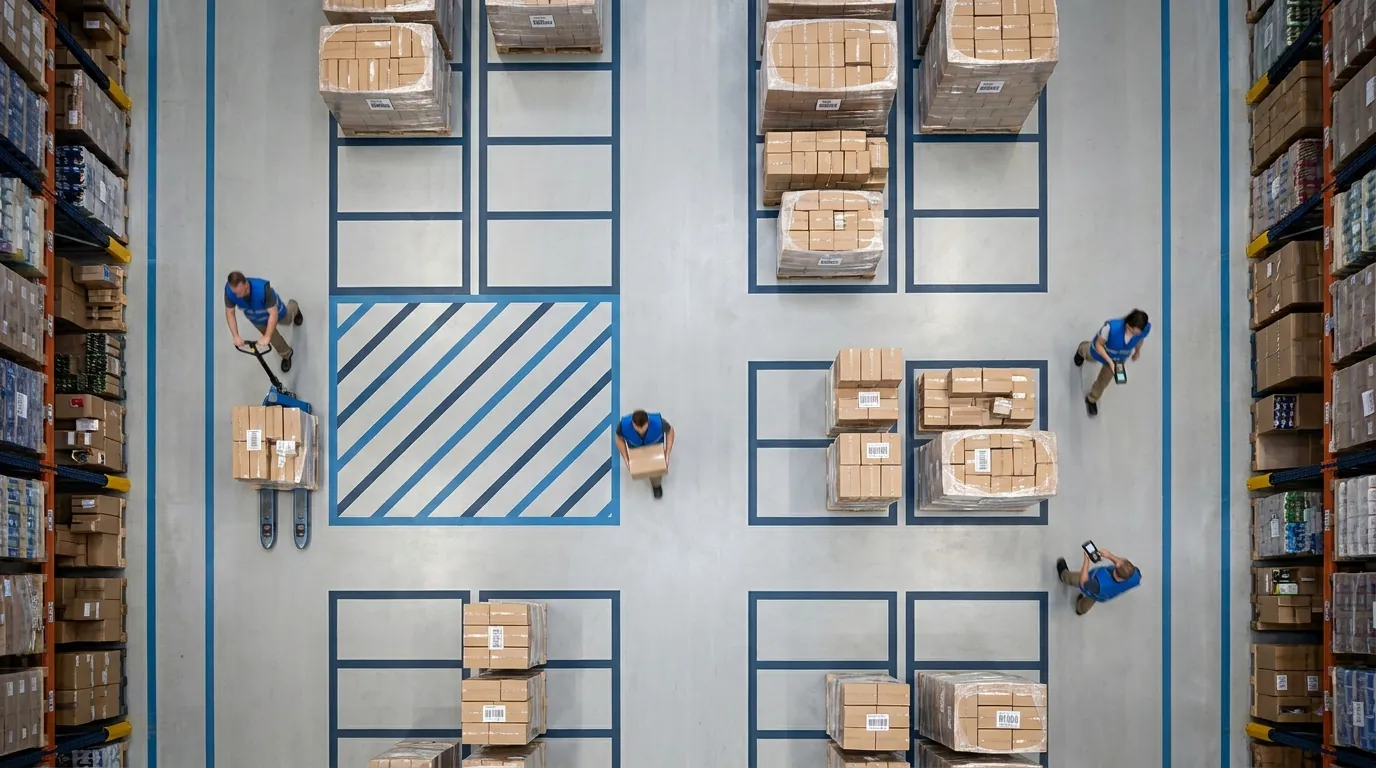
Search "lpn barcode amazon" and the results mix returns, liquidation, and FBA content. That happens because Amazon uses LPNs internally, and those labels turn up in freight that 3PLs handle every day. Knowing which label is which prevents mis-receipts and inventory errors.
Amazon Returns and Liquidation LPNs
Amazon typically assigns an LPN to an individual returned unit so it can follow that specific item through its returns process. These labels usually start with the letters "LPN" followed by an alphanumeric string. When returned or overstock goods get sold through liquidation channels, the manifests often list items by these numbers.
For a 3PL or reseller receiving a liquidation truckload, Amazon's LPN is a handy reference, but it belongs to Amazon, not to you. Capture it as an attribute in your WMS, then assign your own plate or SKU for storage and resale. That way, you can still answer questions about a unit's origin while your own numbering drives every warehouse transaction.
FNSKUs and FBA Box Labels Are Not LPNs
- FNSKU (Fulfillment Network Stock Keeping Unit): Amazon's product-level barcode tying a unit to a specific seller. Like a UPC, many units share the same FNSKU.
- FBA box label: A carton-level label tied to an FBA shipment ID, telling the receiving fulfillment center which shipment and which box has arrived.
The FBA box label behaves most like a license plate, but Amazon generates it for inbound shipments. Your warehouse does not control its numbering, and it means nothing to your own system until you record it.
Where 3PLs Get Confused
Typical errors include:
- Receiving returns by Amazon's LPN as though it were a SKU, which creates thousands of one-unit "products"
- Scanning an FNSKU where the workflow expects a container ID
- Covering internal plates with Amazon's carton labels during prep, which makes the carton invisible to your WMS
A cleaner approach is to use internal LPNs throughout storage and prep, record FNSKUs at the unit level, and apply FBA box labels only at final packout.
Choosing a Barcode Scanner for Inventory
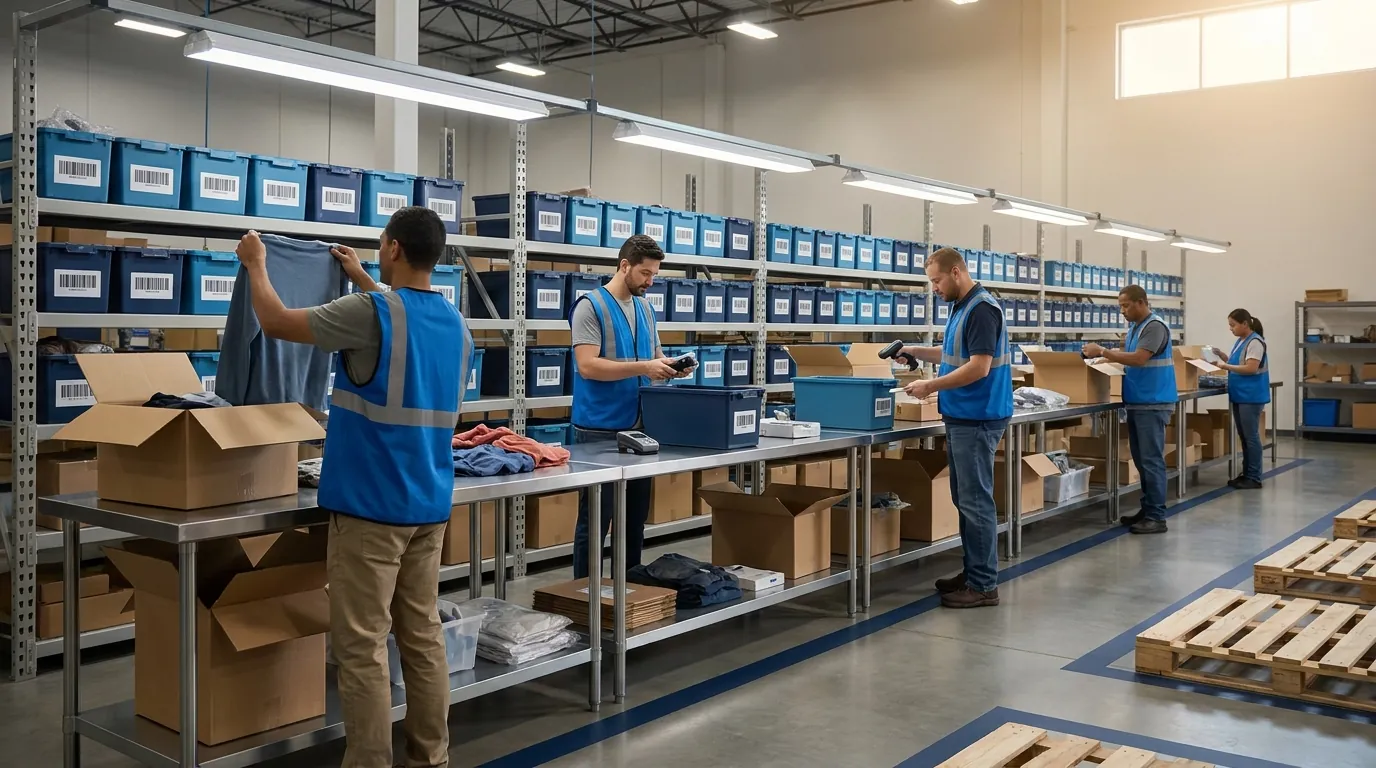
An LPN program is only as reliable as the hardware reading the labels. The right device reads every label type you receive, survives your environment, and communicates directly with your WMS.
1D vs. 2D Imagers
Older laser scanners read only linear codes such as Code 128 and GS1-128. 2D imagers read both linear and matrix codes (QR, Data Matrix) and cope better with damaged, faded, or shrink-wrapped labels. Since inbound labels from suppliers and Amazon vary so widely in print quality and format, a 2D imager is the safer default for most facilities.
Mobile Computers vs. Ring and Handheld Scanners
- Mobile computers: Handheld devices with a screen and built-in scan engine. They fit receiving, putaway, and counting, where operators need to read WMS prompts.
- Ring or wearable scanners: Hands-free units paired with a wrist display. They suit high-volume picking and FBA prep, where both hands handle product.
- Tethered or Bluetooth handhelds: A good match for fixed stations such as packing tables and returns benches.
- Long-range scanners: Necessary for reading plates on upper rack positions from the floor or a forklift seat.
Most warehouses end up with a mix, matched to the task at each station.
Durability and WMS Compatibility Criteria
Before buying, confirm:
- Drop and sealing ratings that fit your floor, plus cold-rated models if you run freezers (condensation and battery drain are real concerns, as covered in the ABCs of cold storage)
- Battery capacity for a full shift, with hot-swap options
- Wi-Fi coverage across the whole building, including dock doors and rack ends
- GS1-128 parsing so the device separates Application Identifiers correctly
- Compatibility with your WMS mobile app or browser-based interface
- Centralized device management for updates and configuration
Implementing LPN Tracking with a WMS
Labels and scanners are the tools; the WMS is the system of record. It generates numbers, enforces scan rules, and keeps each container's contents and location accurate in real time. Without that layer, LPNs become just another spreadsheet column. If you are deciding where LPN logic should live in a larger automation stack, this breakdown of WMS, WCS, and WES roles is a useful starting point.
Label Generation and Numbering Rules
Settle these rules before go-live:
- Which containers get plates (pallets, cartons, totes, returns)
- Internal prefix and length, or SSCC built on your GS1 company prefix
- Label size, symbology, and human-readable text
- Where labels print: at the dock, at the returns bench, or at packout
Never reuse a number while its history still matters for recalls, damage claims, or client disputes. Regulated operations, such as those following good warehousing practices in the pharmaceutical industry, usually need that history retained for long periods.
A Step-by-Step Receive-to-Ship LPN Workflow
- At the dock, scan the inbound SSCC or print an internal plate.
- Verify contents against the ASN or purchase order.
- Complete putaway by scanning the plate and the directed location.
- For replenishment or any move, scan container-to-location.
- Pick by full LPN or a partial quantity from a source LPN.
- Build the outbound parent and nest picked cartons as children.
- Print the SSCC or Amazon carton label, then scan to verify at loading.
How a WMS Manages LPNs End to End
In practice, a WMS can automatically generate internal LPNs and GS1-compliant SSCC labels, record parent/child relationships, and update contents as each scan posts. Operators can work from mobile screens that guide each step, while supervisors review plate history for traceability, returns, and client reporting. For 3PLs handling Amazon work, a capable system can store Amazon LPNs and FNSKUs as reference data next to internal plates, so origin details stay attached to the unit.
When you evaluate a platform, ask to see a few specific scenarios played out on a real handheld: receiving an unlabeled mixed pallet, splitting one child carton off a parent, partially picking units out of a single plate, and reprinting a damaged label without creating a duplicate number. Watching those transactions tells you far more than a feature list, because it shows how many taps each step takes and how the screens handle exceptions.
Request a Demo if you want to compare ASC Software against the criteria above.
Frequently Asked Questions
What does LPN stand for on a warehouse barcode?
LPN stands for License Plate Number, a unique ID assigned to a container such as a pallet, carton, or tote rather than to a product. When scanned, it links to a WMS record listing the SKUs, quantities, lot data, and current location of everything inside that container.
Is an Amazon LPN the same as an FNSKU?
No. An Amazon LPN identifies one specific returned unit as it moves through Amazon's returns process, while an FNSKU is a product-level code shared by every unit of the same item from a given seller. If you receive liquidation goods, store the Amazon LPN as a reference attribute and assign your own identifier for storage.
Should I use SSCC labels or internal LPN numbers?
Use SSCCs on GS1-128 labels when containers leave your building, especially for retailers with labeling compliance rules. Internal LPNs with a simple prefix work well for totes, internal moves, and inbound pallets that stay on site. Many warehouses run internal numbers in storage and switch to SSCCs at outbound packout.
What kind of scanner reads LPN labels best?
A 2D imager is the safest choice because it reads Code 128, GS1-128, QR, and Data Matrix codes, and it handles damaged or shrink-wrapped labels better than older laser scanners. Pair mobile computers for receiving and putaway with long-range models if your operators need to read plates on high rack positions.
Can LPN numbers be reused after a pallet ships?
Avoid reusing an LPN number while its history is still useful for recalls, damage claims, or customer questions. Reusing a number too early can mix two containers' records and break lot traceability. Regulated operations such as pharmaceutical warehouses often need to keep that history for long retention periods.