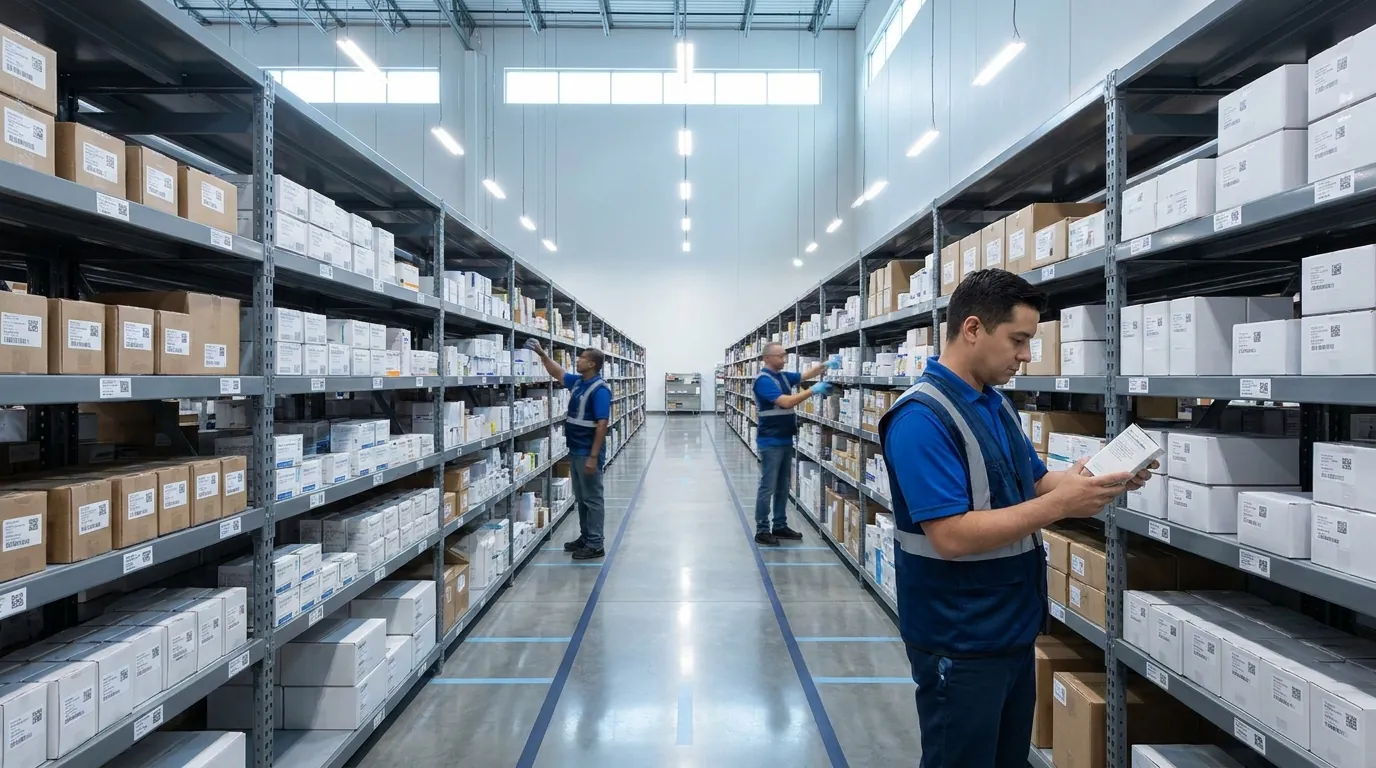





Pharma Manufacturing Software: 5 Handoffs Where Data Breaks
Kurt AdamsPublished: November 24, 202610 minutes

The Compliance Gap: Why Disconnected Systems Put Pharma Batches, Audits, and Shipments at Risk
Most compliance failures in pharma operations are not dramatic. They are a quarantine label nobody updated, a batch record transcribed twice, or a lot released in the quality system that still shows as on hold in warehouse inventory. Choosing pharma manufacturing software is really about closing those small gaps before an inspector finds them. FDA warning letters repeatedly cite data integrity lapses, incomplete batch records, and weak controls over quarantined and rejected materials under 21 CFR Part 211, the US current Good Manufacturing Practice (GMP) regulations for finished pharmaceuticals.
The pressure is compounding. Paper batch records slow disposition. Manual quarantine and release depends on people remembering to update several systems at once. Serialization rules add more weight: the US Drug Supply Chain Security Act (DSCSA) requires interoperable, electronic, package-level tracing of prescription drugs, and the EU Falsified Medicines Directive (FMD) imposes its own safety features and verification. Every data gap upstream gets more expensive downstream.
Practical takeaway: before evaluating any vendor, map every point where data moves between people or systems. That map becomes your requirements list.
What This Software Category Actually Means
In plain terms, the category covers the validated systems that plan, execute, document, and control the production, quality disposition, storage, and distribution of drug products under GxP, the umbrella term for good practice regulations such as GMP, GDP (Good Distribution Practice), and GLP. In practice it spans manufacturing execution or electronic batch records, ERP, a quality management system, and a warehouse management system. No single module covers everything. What matters is whether the pieces share one trustworthy record of each lot's status. Define the category by the lot lifecycle, not by a product brochure.
Where Data Integrity Breaks at the Handoffs
Five handoffs cause most of the trouble:
- Receiving to quarantine: incoming materials are not blocked until QC sampling is complete.
- Production to QA: batch records are reviewed on paper, which delays release.
- QA to warehouse: release, reject, or hold decisions are re-keyed by hand.
- Warehouse to shipping: expiry rules such as FEFO get bypassed under time pressure.
- Shipping to trading partners: serialization and cold chain data arrive incomplete.
Score each handoff as automated, semi-manual, or manual. The manual ones are where your investment should go first.
Purpose-Built for Pharmaceutical Compliance
ASCTrac helps pharmaceutical operations stay GMP-compliant with lot tracking, serialization, and DSCSA-ready workflows.
Request a Demo
What Pharma Manufacturing Software Must Cover: Production, Quality, and Warehouse as One Connected Chain
A connected chain means each system owns a clear part of the lot lifecycle and status flows automatically between them. Production generates the record, quality makes the disposition decision, and the warehouse enforces it physically. When any link relies on manual re-entry, the chain is only as strong as the busiest person on shift.
Regulatory expectations stay consistent from the floor to the dock: records must be attributable, secure, and auditable, and systems must be validated for their intended use. Hold every component to that baseline instead of giving the warehouse a lower bar than production. For more on why storage carries so much compliance weight, see the role of warehousing in pharmaceutical manufacturing.
Practical takeaway: insist on a system-of-record map showing which application owns lot status at every stage.
MES/eBR, ERP, QMS, and WMS: Who Owns What
- MES/eBR (manufacturing execution system / electronic batch record): enforces recipes, captures in-process data, and produces the executed batch record.
- ERP: planning, procurement, costing, and financial inventory.
- QMS: deviations, CAPA, change control, documents, training, and batch disposition.
- WMS: physical location, lot and expiry control, status enforcement, picking, and shipping.
Overlaps are fine, but only one system should own disposition status. The others should consume it, never overwrite it.
The Regulatory Baseline: GMP, Part 11, Annex 11, and ALCOA+
21 CFR Part 11 is the FDA regulation governing electronic records and electronic signatures. It requires secure, computer-generated, time-stamped audit trails and controlled signatures. EU GMP Annex 11 sets equivalent expectations for computerised systems in the EU. ALCOA+ sums up data integrity principles: data must be Attributable, Legible, Contemporaneous, Original, and Accurate, plus Complete, Consistent, Enduring, and Available. When vendors present, have them show audit trails on warehouse status changes, not just on the production floor.
Validation Under GAMP 5: IQ/OQ/PQ Without the Paper Mountain
GAMP 5, ISPE's risk-based guide to computerized system compliance (now in its Second Edition), encourages scaling validation effort to patient risk and reusing supplier documentation where it is sound. Installation, Operational, and Performance Qualification (IQ/OQ/PQ) confirm the system is installed correctly, functions as specified, and performs reliably in your process. FDA's Computer Software Assurance guidance follows the same risk-based thinking, favoring focused testing over exhaustive scripted evidence for low-risk functions. Request the vendor's validation package early, and find out how upgrades are handled without a full revalidation every release.
Pharmaceutical Automation That Delivers Measurable ROI: Where to Automate First
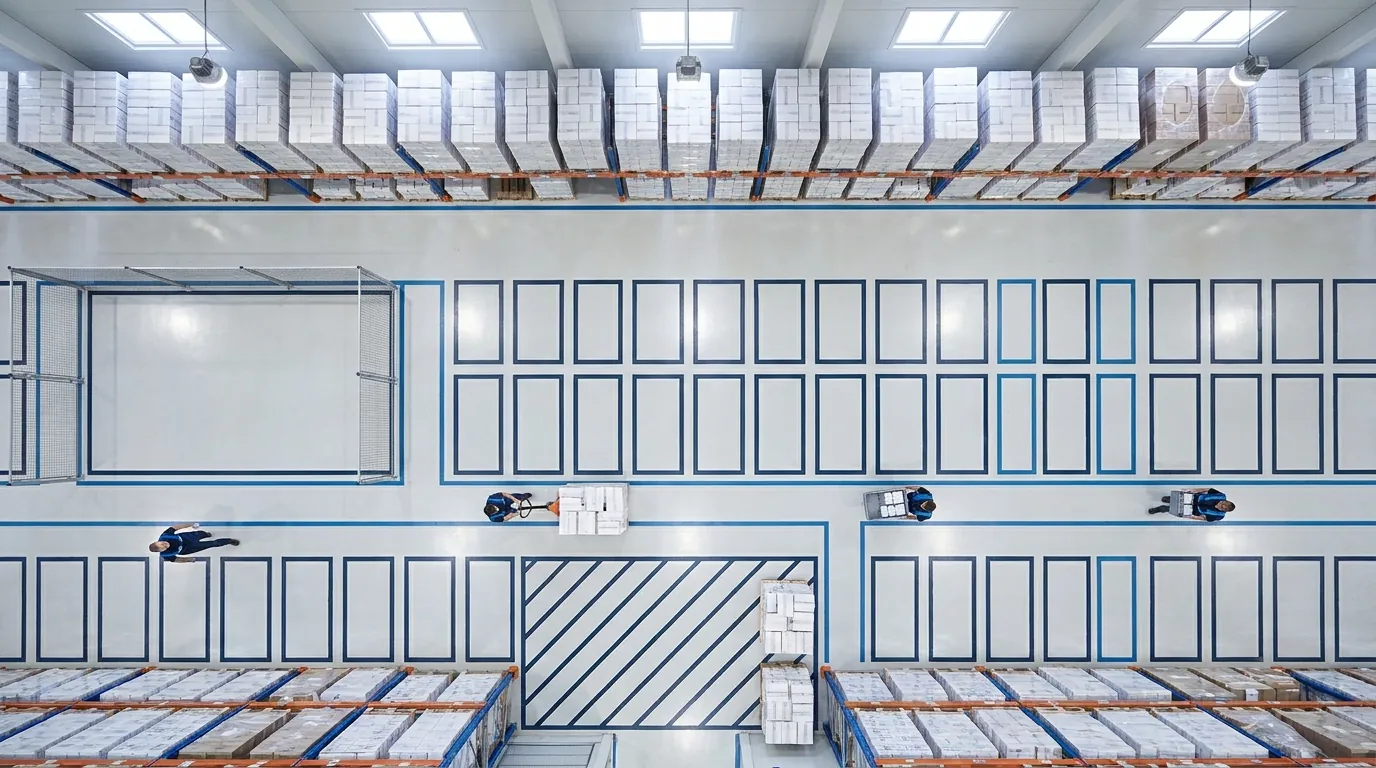
Automation in drug production is often pitched as robots or RPA bots in isolation. The better question is which manual steps create the most deviations, rework, and release delays, and which of those can be automated with the least validation burden. In most mid-market sites, the highest returns sit at the handoffs: data capture at dispensing, batch record review, and status enforcement in the warehouse.
Start where errors are frequent, measurable, and close to the patient. Automating a low-risk report rarely moves your KPIs. Automating lot verification at picking can eliminate an entire class of shipping errors.
Practical takeaway: rank candidate processes by deviation volume and cycle-time impact, then automate the top three first.
Production-Side Automation: Dispensing, Weighing, and Review by Exception
Scale-integrated dispensing with barcode verification prevents wrong-material and wrong-quantity errors at the source. Electronic batch records with review by exception let QA focus on flagged deviations instead of reading every page. Collaborative robots in cleanrooms can reduce human intervention in aseptic areas, but they carry heavier qualification work. For most sites, eBR and verified dispensing deliver faster, lower-risk gains than robotics.
Warehouse-Side Automation: Barcode/RFID, Material Handling, and Cold Chain
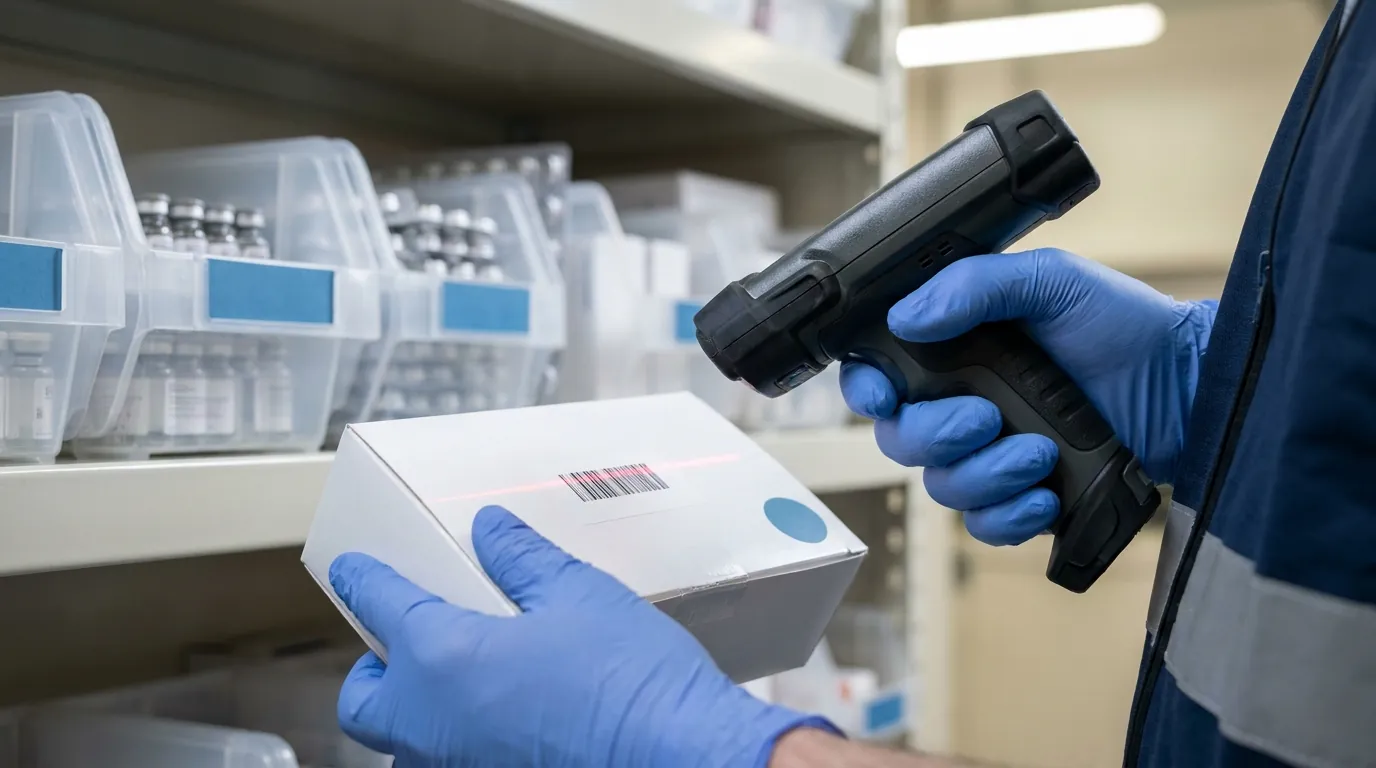
- Barcode or RFID scanning at receiving, put-away, picking, and shipping to verify lot, expiry, and status.
- System-directed FEFO (first expired, first out) picking.
- Automated material handling, such as conveyors or AS/RS, where volume justifies it.
- Continuous temperature monitoring with alarms tied to inventory holds.
Scan-to-confirm at every movement is the cheapest automation with the largest accuracy impact. If you are weighing broader options, this overview of advanced warehouse management for the pharma industry covers related capabilities.
Metrics That Prove the Investment
Baseline these before you buy:
- Batch record errors per batch and right-first-time rate.
- Batch release cycle time (end of production to QA release).
- Picking and shipping accuracy.
- Inventory adjustments caused by status or location errors.
- Repeat audit and inspection observations.
Without a baseline you cannot show ROI, so measure for at least one quarter first.
Pharma QMS Software and the Warehouse: Syncing CAPA, Deviations, and Release Status with Inventory
A quality management system handles the processes that ICH Q10 describes: deviations, CAPA (Corrective and Preventive Action, the structured process for fixing root causes and preventing recurrence), change control, document control, and staff qualification. Many implementations stop there, leaving the warehouse to learn about quality decisions secondhand.
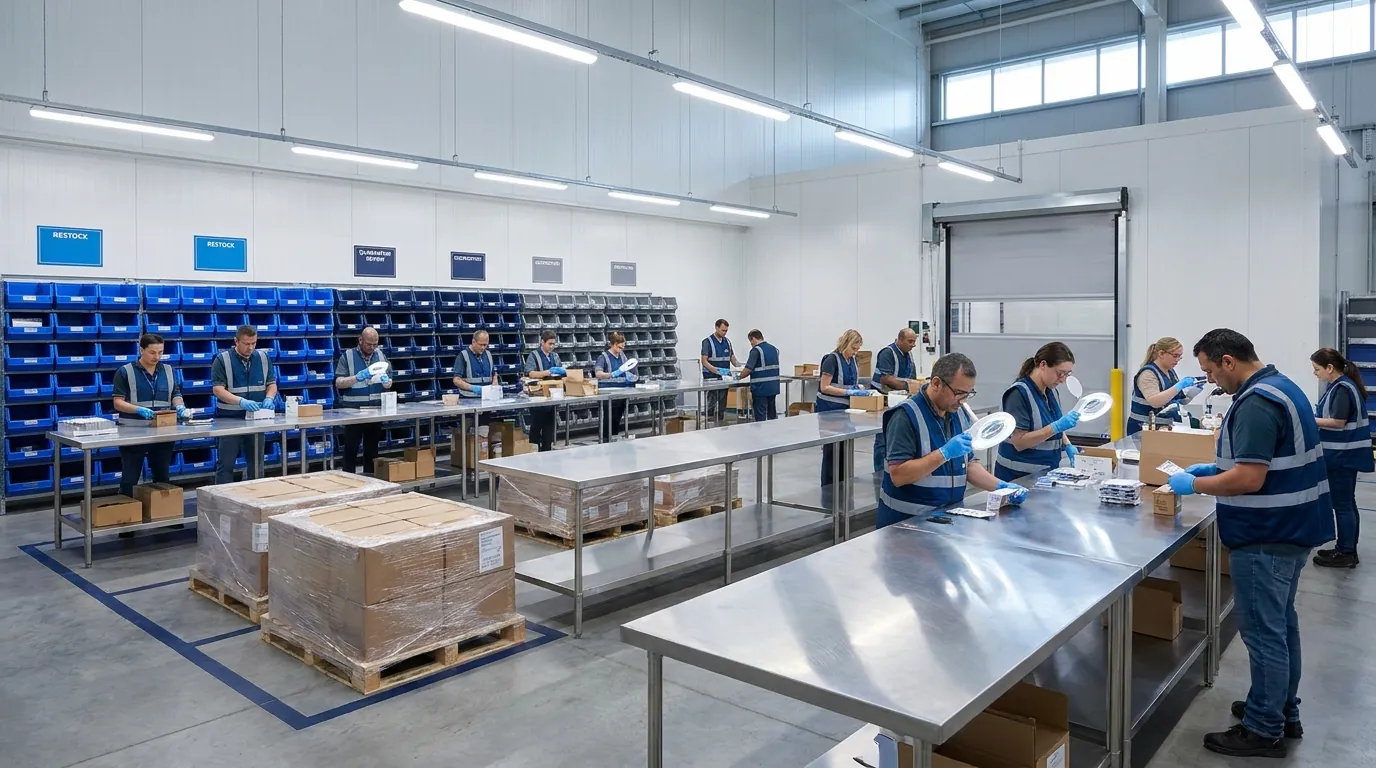
The gap shows up when a deviation should freeze stock, when a CAPA changes a storage condition, or when a release decision sits in the QMS for hours before anyone picks the lot. Integration should make the quality decision and the physical inventory status the same fact, recorded once.
Treat the QMS-to-WMS status interface as a GMP-critical function and validate it accordingly.
Deviations, CAPA, and Change Control That Reach the Shelf
A deviation linked to a lot should be able to trigger a hold in the WMS. A change control that updates storage temperature or shelf life should flow into location rules and expiry calculations. Controlled documents and training records should confirm that only qualified staff perform GMP warehouse tasks. During selection, watch a deviation-to-hold workflow run end to end, from the QMS record to a blocked pick.
Automatic Hold, Quarantine, and Release in the WMS
Effective status control means received material defaults to quarantine, the WMS blocks picking of quarantined or rejected stock, and a QA release in the QMS or ERP updates status automatically with an audit trail showing who, what, when, and why. Rejected material should be segregated by location, not only by a flag. The system, not a label, should prevent unreleased stock from shipping.
Recall Readiness in Hours, Not Days
When every lot movement is scanned and every status change is audit-trailed, a recall becomes a query: which lots went where, to which customers, and what remains on hand. Mock recalls should measure time to full trace, both forward and backward. Set a target trace time and test it quarterly. Better supply chain visibility beyond your four walls shortens the forward trace even further.
Evaluation Checklist and Phased Rollout: Choosing Validated, Integrated Systems
Use the same criteria across every handoff so no link in the chain gets a pass. Weight criteria by patient and compliance risk first, then by operational impact. Have each vendor demonstrate, not describe, every capability using your own scenarios, such as a rejected lot attempting to ship or a temperature excursion during storage.
Score vendors on evidence shown in a scripted demo, not on questionnaire answers.
Handoff-by-Handoff Evaluation Table
Rate every handoff against four criteria: a Part 11 or Annex 11 audit trail, validation support, QMS-to-WMS status sync, and serialization traceability for DSCSA and EU FMD. Spelled out handoff by handoff, the expectations look like this:
- Receiving to quarantine: time-stamped receipt and status records; IQ/OQ scripts covering inbound transactions; automatic quarantine the moment goods are booked in; capture of serialized product identifiers on arrival.
- Production to QA: eBR signatures with change history; a supplier validation package; batch completion that triggers QA review; serial number commissioning records.
- QA release to warehouse: a signed disposition with a reason; interface validation evidence; disposition decisions that update the WMS without anyone re-keying them; status tied to serialized units.
- Storage and picking: a trail of every location and lot movement; risk-based PQ for FEFO rules; picks blocked for anything not yet released; lot and serial verified at the pick face.
- Shipping and distribution: shipment records with user attribution; a defined upgrade and change management process; holds that stop in-flight orders; transaction data exchange and EPCIS support.
Any criterion a vendor cannot demonstrate for a given handoff is a gap to close before go-live.
A Realistic Phased Rollout
- Phase 1, assess and baseline: map handoffs, collect KPI baselines, and define user requirements.
- Phase 2, warehouse status control: lot, expiry, and quarantine enforcement with scanning. Validate this first because it protects shipments immediately.
- Phase 3, QMS and ERP integration: automated release and hold sync.
- Phase 4, production and serialization: eBR plus DSCSA and FMD data exchange.
- Phase 5, optimize: advanced automation and analytics.
Phase by risk reduction, and validate each phase before starting the next.
KPIs to Track After Go-Live
- Release cycle time.
- Picking accuracy and shipping errors.
- Deviations tied to material status or mix-ups.
- Audit trail review findings and repeat observations.
- Mock recall trace time.
- Temperature excursions and response time.
Review these monthly with QA, operations, and supply chain together, so each group works from the same numbers.
How a WMS Supports Compliant Pharma Warehousing, Plus Next Steps
The warehouse and inventory control layer is where released, quarantined, and rejected material has to stay compliant from the receiving dock to shipment. A warehouse management system built for regulated goods can support lot and expiry tracking, status-based inventory control, FEFO picking, and barcode-driven verification at each movement, with audit trails that record who changed what and when.
Because the warehouse is where quality decisions become physical reality, the platform you evaluate should be able to integrate with your ERP and quality systems so disposition status flows into inventory rather than being re-keyed. Find out how it captures lot and serial data so your team can meet DSCSA and EU FMD obligations alongside dedicated serialization and ERP platforms.
Look closely at how quarantine defaults are configured, how rejected stock is kept physically apart, and whether a temperature alarm can place affected pallets on hold without anyone touching a keyboard. Those details decide whether the warehouse enforces quality decisions or merely records them after the fact.
If your biggest gaps sit at the quarantine, release, and shipping handoffs, start your evaluation in the warehouse. Request a Demo to see these scenarios in ASC Software with your own lots, statuses, and workflows.
Frequently Asked Questions
What is the difference between a QMS and a WMS in pharma?
A QMS manages quality decisions such as deviations, CAPA, change control, and batch disposition, while a WMS controls where material physically sits and whether it can be picked. The two must share status: when QA releases or rejects a lot in the QMS, the WMS should update that lot automatically so unreleased stock cannot ship.
Does a warehouse management system need to be validated under GMP?
Yes, if it controls GMP-relevant functions such as quarantine status, shelf-life enforcement, or shipping of released product. Under the GAMP 5 risk-based approach, validation effort scales with patient risk, so the status interface and FEFO picking rules usually get the most rigorous IQ/OQ/PQ testing while low-risk reports receive lighter checks.
What does FDA Part 11 require for warehouse records?
Part 11 expects electronic records to be trustworthy and attributable, with audit trails that capture each change without overwriting the original entry, plus controlled electronic signatures. In a warehouse, every quarantine, release, reject, or hold status change should record the user, date, time, and reason, and that history should be reviewable during an inspection.
How fast should a pharma site be able to trace a recall?
There is no single regulatory number, but many sites set an internal target measured in hours and test it with quarterly mock recalls. Fast tracing depends on scanning every lot movement and audit-trailing every status change, so the trace becomes a database query rather than a hunt through paper records and spreadsheets.
Where should a pharma company start automating?
Start with the steps that generate the most deviations and release delays while carrying the lightest validation burden. For many mid-market sites, that means scan-to-confirm at receiving, picking, and shipping, verified dispensing at the scale, and eBR with exception-based review, before considering robotics or AS/RS.