





Life Science Supply Chain: Where Compliance Is Won or Lost
Kurt AdamsPublished: November 10, 202615 minutes
What Is the Life Science Supply Chain?
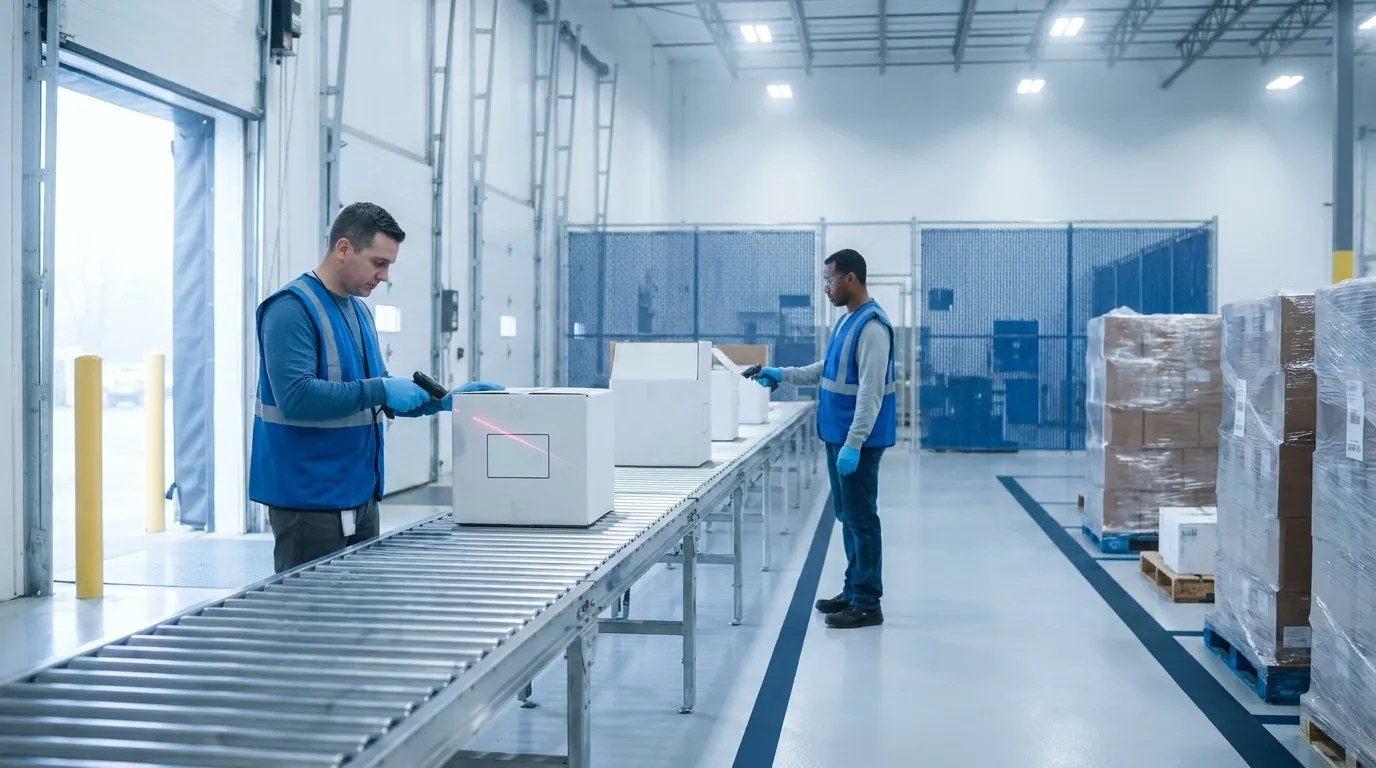
The life science supply chain is the network that sources, manufactures, stores, and delivers pharmaceuticals, biologics, advanced therapies, diagnostics, and medical devices to patients. It runs from raw materials and active pharmaceutical ingredients (APIs) through finished goods, distribution, and dispensing. In many cases it also includes reverse logistics for returns and recalls.
What makes it different is that safety depends on handling at every step. A shirt left in a hot trailer is still a shirt. A vaccine left in that same trailer may be worthless or even dangerous, and nobody can tell by looking at the vial. For that reason, documentation, traceability, and environmental control are built into every handoff rather than added afterward.
Key Stages: From API to Patient
Most products in this sector pass through five broad stages:
- Sourcing: APIs, excipients, and packaging components, frequently purchased from overseas suppliers.
- Manufacturing: Formulation, fill-finish, and packaging, performed in-house or at a contract manufacturer.
- Primary distribution: Finished goods move to company-owned distribution centers or to third-party logistics providers (3PLs).
- Secondary distribution: Wholesalers deliver to hospitals, pharmacies, clinics, and specialty providers.
- Dispensing and administration: Pharmacists and clinicians put the medicine into the patient's hands or arm.
Every one of these transitions is a custody transfer. Someone has to record it, verify it, and be able to reconstruct it months later if a regulator or a recall demands it.
Who's Involved: Manufacturers, CDMOs, Distributors, and 3PLs
Brand manufacturers own the product and its regulatory filings. Contract development and manufacturing organizations (CDMOs) make products on their behalf. Wholesale distributors buy, hold, and resell inventory. Logistics providers that specialize in healthcare store and ship goods under the brand owner's quality agreement. Pharmacies, hospitals, and clinics dispense. Regulators such as the US Food and Drug Administration (FDA) and the European Medicines Agency (EMA) oversee all of these parties.
For warehouse teams, the takeaway is simple: you may not own the inventory, but you are responsible for its condition and its records while it sits on your racks.
How It Differs From Other Supply Chains
Compared with retail or industrial networks, pharmaceutical and medical product flows carry four distinct burdens:
- Regulated handling: Storage and transport conditions come from the product's approval, not from what is convenient for the operation.
- Lot-level traceability: Each unit must trace back to its batch, and increasingly to its individual serial number.
- Expiry control: Orders ship by expiration date (first expired, first out), not simply by receipt date.
- Quality authority: Inventory cannot leave until quality assurance (QA) releases it, no matter how urgent the demand.
Together, these burdens turn routine tasks like putaway, picking, and cycle counting into compliance events. A mis-slotted pallet or a skipped scan is no longer just an efficiency problem. It can become a documented deviation that QA has to investigate and close.

Purpose-Built for Pharmaceutical Compliance
ASCTrac helps pharmaceutical operations stay GMP-compliant with lot tracking, serialization, and DSCSA-ready workflows.
Request a Demo
Inside the Pharma Supply Chain: The Regulatory Backbone
Pharmaceutical distribution operates under layered rules. Some control how products are handled, some how they are identified, and some how the electronic systems recording that work must behave. Warehouse operators don't need to be regulatory lawyers, but they should know which rule drives which task on the floor.
The four pillars below cover most of what US and EU distribution centers deal with daily. Falling short on any one can lead to warning letters, rejected shipments, or saleable stock that has to be destroyed.
GDP and GxP: The Operating Rules
GxP is the umbrella term for "good practice" quality guidelines, including Good Manufacturing Practice (GMP) and Good Distribution Practice (GDP). GDP governs how medicines are stored and transported so their quality holds. The EU GDP guidelines (2013/C 343/01) call for qualified premises, mapped and monitored storage areas, documented procedures, trained staff, and controls covering returns, falsified products, and recalls. In daily operations, this means proving with records that every pallet stayed within its labeled conditions and was handled by the right people, in the right way.
DSCSA and EU FMD Serialization
The US Drug Supply Chain Security Act (DSCSA) requires interoperable, electronic, package-level tracing of prescription drugs. Enhanced requirements took effect on November 27, 2023. An FDA stabilization period followed through November 2024, and staggered exemptions for smaller trading partners extend into 2025 and 2026. Partners must exchange transaction data, verify product identifiers, and quarantine and investigate suspect product. The FDA's DSCSA page tracks current deadlines.
The EU Falsified Medicines Directive (EU FMD), in force since February 2019, requires a unique identifier and an anti-tampering device on most prescription packs, with verification against the European Medicines Verification System. Both regimes push serial-level data directly into receiving, picking, and shipping.
GS1 Standards: The Common Data Language
Serialization only works when every party reads a barcode identically. GS1 standards supply that shared language. A GS1 DataMatrix on a pharmaceutical pack typically encodes the Global Trade Item Number (GTIN), serial number, lot, and expiration date. Serial Shipping Container Codes (SSCCs) identify cases and pallets, while EPCIS is the event data standard widely used for DSCSA exchange. Scanners and software that parse GS1 application identifiers correctly remove manual keying, a frequent source of lot and expiry mistakes. Clean identifiers at this level also make end-to-end tracking possible, a topic covered in our guide to supply chain visibility software.
21 CFR Part 11 and System Validation
Part 11 of Title 21 of the US Code of Federal Regulations is the FDA rule for electronic records and electronic signatures. It requires that systems holding GxP records be validated, restrict access to authorized users, produce secure, time-stamped audit trails, and bind electronic signatures to their records. EU GMP Annex 11 sets comparable expectations. In a warehouse, that scope includes any system recording receipts, status changes, temperature readings, or releases. If your WMS lets someone edit a lot number without leaving a trace, you have a Part 11 gap. In a regulated distribution network, that kind of gap tends to surface during the next inspection.
Beyond Pharma: How the Life Sciences Industry Adds Complexity
Small-molecule tablets stored at controlled room temperature represent only one corner of this field. Biologics, advanced therapies, clinical supplies, and medical devices each bring their own handling, identity, and tracking rules. Many generic warehouse systems were never built with them in mind.
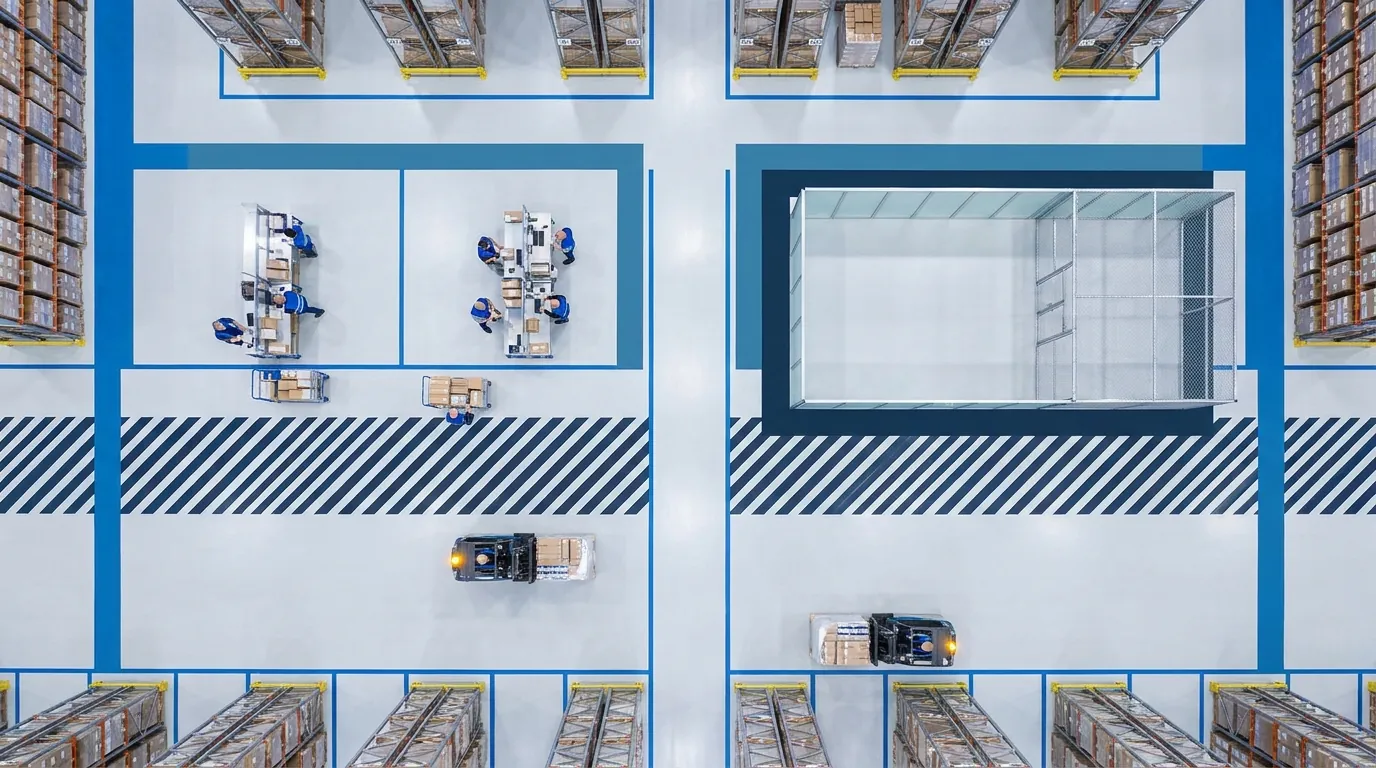
For distributors and 3PLs serving several segments, the problem compounds. A single building might hold frozen biologics, patient-specific cell therapies, blinded trial kits, and implantable devices. Each is governed by different rules for the same basic tasks of receiving, putaway, picking, and shipping. That mix is where a one-size-fits-all process breaks down fastest, and where generic software tends to show its limits.
Biologics and Specialty Cold Chain
Biologics such as vaccines, monoclonal antibodies, and insulin are large, sensitive molecules. Most need storage between 2°C and 8°C, while some require frozen (-20°C) or ultra-cold (-70°C to -80°C) conditions. Because they often carry high value per unit, one temperature excursion on a pallet can mean a serious loss. Facilities need mapped and continuously monitored storage areas, enforced limits on how long product sits on a dock, and system rules that stop a picker from moving cartons into an area with the wrong temperature range.
Cell and Gene Therapy: Chain of Identity
Autologous cell therapies are made from one patient's own cells and must go back to that same person. This adds an identity requirement on top of chain of custody: every handoff has to confirm the material still matches the right patient. These products are frequently held in the vapor phase of liquid nitrogen at or below -150°C, with tight windows between collection, manufacturing, and infusion. Inventory here behaves more like a scheduled appointment than stock on a shelf. Each transfer needs a documented record, the kind of end-to-end visibility covered in our guide to supply chain traceability.
Clinical Trial Supply
Trial materials are investigational products, often blinded, packed into kits and sent to sites around the world. Demand follows patient enrollment, which is notoriously hard to predict. Warehouses have to manage kit-level identifiers, protocol-specific labels, expiry extensions and relabeling, reconciliation of returns and destruction, and import requirements that vary by country. Making too much wastes scarce drug product. Making too little can stall a study.
Medical Devices and UDI
Devices fall under the FDA's Unique Device Identification system and the EU Medical Device Regulation (MDR). Every label carries a device identifier plus production identifiers like lot, serial number, and expiration date. Implantable and sterile products need lot or serial tracking so recalls and other field actions can reach the affected units. Device kits, loaner sets, and consignment stock held at hospitals add tracking demands that pure pharma workflows simply do not address. A warehouse system serving this sector has to treat each product type on its own terms.
Top Challenges Facing Life Science Supply Chains
Every network that moves medicines and medical products runs under steady pressure from product risk, shifting regulation, and global disruption. None of the problems below are new, but each became sharper after the COVID-19 pandemic showed how little slack many networks actually had.
One thread connects them: visibility. The companies that respond well know exactly what inventory they hold, its location, its condition, and its destination once it leaves the building.
Temperature Excursions
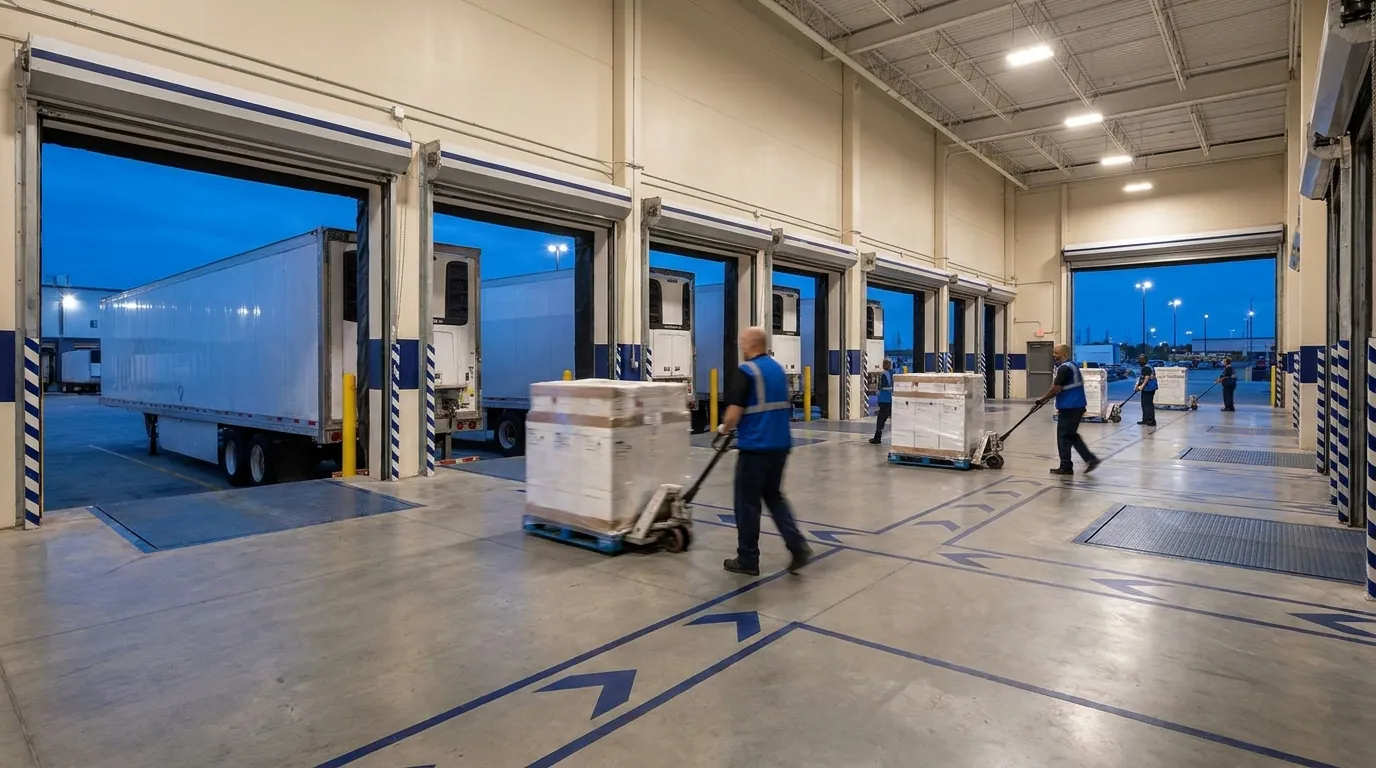
A temperature excursion is any stretch of time when product sits outside its labeled storage range. Many of them happen at handoffs rather than in storage: a dock door propped open during a busy shift, a pallet staged on the floor too long before the truck arrives, or a cooler pack-out designed for a spring lane and shipped in August. Every excursion sets off an investigation, a quarantine, and frequently a review of stability data before the product can be released or destroyed. The excursions nobody catches are worse, because compromised doses can end up in front of patients.
Counterfeiting and Diversion
The World Health Organization estimates that roughly 1 in 10 medical products in low-income and middle-income countries is substandard or falsified. Fakes and diverted goods slip into legitimate channels through weak verification, most often in returns processing and secondary market purchases. DSCSA in the United States and the EU Falsified Medicines Directive were written largely to close those openings. They only work, though, when serial numbers get checked each time custody changes, not just when goods are first shipped and finally dispensed.
Recalls and Drug Shortages
When a recall notice arrives, the real test is speed: how quickly can you find every affected lot, confirm where it sits today, and list every customer who received it? Tracing through paper records or spreadsheets can take days. Shortages push in the opposite direction. The FDA and the American Society of Health-System Pharmacists each track hundreds of active drug shortages, so expired, damaged, or misallocated stock affects patient care, not only margins. Some of the less obvious causes are covered in our look at supply chain shortages you may have overlooked.
API Dependency, Nearshoring, and 3PL Selection
A large share of global active pharmaceutical ingredient production is concentrated in a handful of countries, which leaves manufacturers exposed to export restrictions and freight shocks. The pandemic accelerated interest in nearshoring, dual sourcing, and larger safety stocks. Each of those moves adds sites, partners, and inventory, and that raises the stakes when choosing a third-party logistics provider. Rates matter, but a prospective 3PL should also be judged on GDP certification, temperature mapping of its storage areas, serialization capability, the quality agreement it is willing to sign, and documented validation of the systems that will hold your data.
The Warehouse as Compliance Checkpoint in the Life Science Supply Chain
Regulations describe outcomes. Warehouses produce them. Every GDP clause, DSCSA requirement and Part 11 control eventually becomes a specific action a person or system takes inside the building, which makes the distribution center the place where compliance holds or breaks. Our pharmaceutical supply chain guide covers the rules themselves. Here is how they map to daily workflows:
- GDP temperature control: temperature-zone slotting and staging time limits
- Lot traceability and recalls: lot and batch capture at receiving
- QA authority: quarantine and release status control
- Expiry and shortage risk: FEFO picking
- DSCSA and EU FMD: serialized scanning and aggregation at packing
- FDA electronic records rules: audit-trailed records and electronic signatures
A WMS built for life sciences enforces these rules inside the workflow instead of depending on staff memory. The sections below describe what a warehouse management system can do at each of these control points.
Receiving: Lot and Batch Capture
Traceability starts at the dock. Each inbound unit should be scanned, with GS1 barcodes parsed for GTIN, lot, serial number and expiry rather than keyed by hand. The system validates against the advance ship notice (ASN), flags mismatches and records arrival temperature. Suppose a carton's expiry conflicts with the ASN. A well-configured WMS stops it at the scan and routes it for review before it vanishes into stock. A WMS can capture lot and expiry data on receipt, so every downstream transaction inherits it.
Quarantine and QA Release
Under GxP, new receipts, returns and suspect product stay on hold until QA approves them. Enforce this through system status, not just physical location. Quarantined inventory should be unallocatable, so nobody can pick it even if a pallet lands in the wrong aisle. Release should require an authorized user's electronic signature. With status-based holds and controlled release, a WMS can make quarantine depend on the system rather than tape on the floor.
FEFO Picking and Temperature-Zone Slotting
FEFO (first expired, first out) directs pickers to the lot with the nearest expiry, within customer-specific minimum shelf-life rules. That cuts write-offs and keeps short-dated stock away from customers who would reject it. Zone slotting assigns products only to locations qualified for their storage range, so a 2 to 8°C product cannot go into ambient racking. A capable warehouse system can apply both rules automatically during putaway and picking, so operators do not have to remember them.
Serialized Aggregation at Packing
Aggregation links unit serial numbers to their parent case and pallet (SSCC). A receiver scans one pallet label instead of hundreds of packs, and you know exactly which serials went to which customer. Packing stations must also handle disaggregation when cases are broken, plus verification of suspect returns. These records feed DSCSA transaction data and EU FMD decommissioning. A WMS with serialization support can record serial-level data at pack-out to supply them.
Audit Trails That Meet 21 CFR Part 11
Every status change, adjustment and release should generate a secure, time-stamped record of who did what, when and why. Role-based permissions limit access, and no record should change without a trace. During an inspection or recall, these records are your evidence. Without them, even a well-run operation cannot prove its compliance. The platform you evaluate should maintain audit trails and user controls that support your Part 11 validation efforts.
Measuring Life Science Supply Chain Performance and Next Steps
Compliance and service only improve when someone measures them. Good metrics tie what happens on the warehouse floor to patient safety, regulatory exposure and cost. They also reveal whether your current systems support the operation or slow it down.
Treat the metrics and capability list below as an internal benchmark. If several are hard to measure today, that difficulty is useful information: it usually means visibility, not effort, is the bottleneck.
Five Metrics That Matter
- OTIF (on time, in full): The share of orders delivered complete and on schedule. For pharmaceutical and medical device shipments, also track how many orders met each customer's remaining shelf-life requirement, since a short-dated delivery can be rejected even when it arrives as promised.
- Temperature excursion rate: Excursions per thousand shipments or storage days, broken out by location and lane. A rising rate in one zone or with one carrier points to a specific fix.
- Inventory turns: Cost of goods sold divided by average inventory. Read this figure alongside shortage risk and safety stock policy, because high turns mean little if critical therapies stock out.
- Recall trace time: How long it takes to identify every affected lot, location and customer. Aim for hours rather than days.
- Expired-stock write-offs: The value of product destroyed because it passed its expiry date. This is a direct gauge of how well FEFO picking and allocation rules are working.
WMS Capability Checklist
Ask whether your current system handles each item below without workarounds, side spreadsheets or manual overrides:
- Parse GS1 DataMatrix barcodes and capture lot, expiry and serial number at receipt
- Enforce quarantine through system status, with signature-based QA release
- Apply FEFO with customer-specific minimum shelf-life rules
- Restrict putaway to qualified temperature zones
- Aggregate and disaggregate serials to cases and SSCC-labeled pallets
- Support DSCSA and EU FMD data requirements, including suspect product holds
- Run a full forward and backward lot trace in minutes
- Maintain Part 11-compliant audit trails and role-based access
- Provide validation documentation and controlled change management
- Report on all five metrics without hand-built data assembly
Each "no" on this list represents a gap that people are currently filling by hand, and manual steps are where errors and audit findings tend to start.
How to Modernize Without Disrupting Compliance
Changing a validated environment takes planning, but it does not have to put inspections at risk. Begin by documenting current workflows and mapping gaps against the capability list. Then rank those gaps by risk. Receiving accuracy, quarantine enforcement and recall trace time usually sit at the top because failures there reach patients or regulators fastest.
Bring QA in at the start so validation runs alongside configuration rather than trailing it. Roll out in phases, by building or product family where possible, and run parallel verification before each cutover so you can compare outputs from the old and new systems. Train operators on the new process before go-live, not during it.
The goal is a system where the compliant path is also the easiest one for every operator on every shift. Request a Demo to see ASC Software's warehouse management system in action.
Frequently Asked Questions
What is the life science supply chain?
It is the network that sources, manufactures, stores, and delivers pharmaceuticals, biologics, advanced therapies, diagnostics, and medical devices to patients. It runs from active pharmaceutical ingredients through manufacturing, primary and secondary distribution, and dispensing. Each handoff is a custody transfer that must be recorded, verified, and reconstructable later if a regulator or recall demands it.
What does DSCSA require from a pharmaceutical warehouse?
The Drug Supply Chain Security Act requires interoperable, electronic, package-level tracing of prescription drugs in the United States. Trading partners must share transaction information, confirm product identifiers, and isolate and look into suspect product. On the floor, this means scanning serial numbers at receiving, linking unit serials to their parent cases and pallets at packing, and holding suspect returns until verified.
What is FEFO picking and why does it matter for pharma?
FEFO stands for first expired, first out, a picking rule that sends workers to the lot with the nearest expiration date rather than the oldest receipt. It reduces expired-stock write-offs and keeps short-dated product away from customers who would reject it. A capable WMS can apply FEFO automatically, along with shelf-life minimums set by each customer.
What does FDA Part 11 mean for a warehouse management system?
Part 11 is the FDA regulation covering electronic records and signatures in GxP environments. A WMS that records receipts, status changes, temperature readings, or QA releases must be validated, limit access to authorized users, and keep tamper-evident, dated logs of every change. If someone can edit a lot number without leaving a trace, that is a gap an inspector could find.
What is chain of identity in cell and gene therapy?
Chain of identity is the requirement that patient-specific material, such as an autologous cell therapy, always stays matched to the correct patient. It sits on top of chain of custody, so every handoff confirms both who handled the material and whose it is. These products are often kept in liquid nitrogen vapor at -150°C or colder, with tight timing windows.
How should I choose a 3PL for life science products?
Judge a life science 3PL on compliance capability, not just rates. Check for GDP certification, temperature mapping of storage areas, serialization capability, and validation records for any system that will store your data. Also review the quality agreement it is willing to sign, since the provider handles your inventory under your quality requirements even though you own the product.